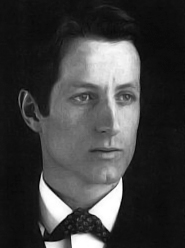
Why Maxfield Parrish matters
Maxfield Parrish was one of the most widely reproduced American artists of the early twentieth century, an illustrator and painter whose luminous, idealized landscapes and figures reached mass audiences through magazine covers, advertisements, and calendars long before museums took his work seriously. For a collector, he is a case study in delayed critical recognition: an artist dismissed for decades as merely commercial who has since been reclaimed by museums and whose top works now command seven-figure auction prices, topped by a $7.6 million result for Daybreak.
- Born
- 1870-07-25, Philadelphia, USA
- Nationality
- American
- Media
- Painting, Illustration
- Movement
- Golden Age of Illustration
- Education
- Haverford College, architecture studies, circa 1888 to 1890, no degree documented. Pennsylvania Academy of the Fine Arts, art studies, circa 1891 to 1894, no degree documented. Drexel Institute of Art, Science and Industry, 1895, brief study under Howard Pyle, no degree documented.
- Signature motifs
- Idealized landscapes, Neoclassical figures
By the numbers
- USD 7.63MAuction highDaybreak, Christie's New York, 22 May 2019
- 1870 to 1966LifespanBorn Philadelphia, died Plainfield, New Hampshire
- USD 1.39MRecent auctionSolitude (Girls Viewing a Magnificent Landscape), Sotheby's New York, 21 Nov 2025
- No current gallery or estate representation identifiedRepresented byWorks trade primarily through major auction houses
Biography
Maxfield Parrish was born on July 25, 1870, in Philadelphia, Pennsylvania. He attended Haverford School before enrolling at Haverford College around 1888 to study architecture, a field his Quaker-affiliated college considered more respectable than fine art. He left without a degree and turned to formal art training, studying at the Pennsylvania Academy of the Fine Arts from roughly 1891 to 1894 under teachers including Thomas Anshutz and Robert Vonnoh, then briefly auditing a class taught by the illustrator Howard Pyle at the Drexel Institute of Art, Science and Industry in 1895.
Parrish built his career as a magazine and book illustrator, producing covers and interior art for publications including Collier's, Life, and Scribner's, alongside advertising work. His calendars for the Edison Mazda lamp division of General Electric reportedly sold more than a million copies a year, and by the 1910s he was described as among the highest paid artists in America, with his prints said to hang in a large share of American households. He settled in the art colony at Cornish, New Hampshire, where he lived and worked for most of his adult life, increasingly favoring landscape painting over commercial illustration in his later decades.
Maxfield Parrish died on March 30, 1966, in Plainfield, New Hampshire, at the age of 95.
Critical reception
Parrish's critical standing has moved in two distinct waves. During his working life he was regarded primarily as a hugely popular commercial illustrator rather than a gallery-validated fine artist, and much mid-century criticism treated his work as decorative rather than serious. That view shifted with a wave of renewed institutional interest around the turn of the millennium, including a 2000 retrospective at the Memorial Art Gallery, University of Rochester, which reintroduced his paintings to a fine-art audience. Museums including the Flagler Museum have continued this reassessment, mounting a 2025 solo exhibition of his original paintings drawn largely from the National Museum of American Illustration's holdings.
Watch
Market
Parrish's auction record is Daybreak, which sold for USD 7,632,000 at Christie's New York on May 22, 2019, a record price for the artist that remains unbroken. More recent sales have not approached that figure but confirm continued strong demand: Solitude (Girls Viewing a Magnificent Landscape) sold for USD 1.39 million at Sotheby's New York on November 21, 2025, and There Was an Old Woman Who Lived in a Shoe, a 1919 Fisk Tire advertisement image, brought USD 1,156,250 at Heritage Auctions on November 15, 2024. There is no evidence of a gallery or estate that currently represents Parrish; his work circulates primarily through major auction houses rather than a single dealer relationship.
Top auction results
| Work | Price | Sale |
|---|---|---|
| Daybreak | USD 7,632,000 (USD 7,632,000) | Christie's, New York, 2019-05-22 |
| Solitude (Girls Viewing a Magnificent Landscape) | USD 1,390,000 (USD 1,390,000) | Sotheby's, New York, 2025-11-21 |
| There Was an Old Woman Who Lived in a Shoe (Fisk Tire advertisement) (1919) | USD 1,156,250 (USD 1,156,250) | Heritage Auctions, Dallas, 2024-11-15 |
Selected exhibitions
| Years | Exhibition | Venues |
|---|---|---|
| 2025 | The Ethereal Worlds of Maxfield Parrish | Flagler Museum, Palm Beach, Florida, traveling from the National Museum of American Illustration |
| 2000 | Maxfield Parrish, 1870 to 1966 | Memorial Art Gallery, University of Rochester |
Museum collections
- Philadelphia Museum of Art
- Metropolitan Museum of Art, New York
- Cleveland Museum of Art
- High Museum of Art, Atlanta
- Hood Museum of Art, Hanover, New Hampshire
- Cornish Colony Museum, Windsor, Vermont
- National Museum of American Illustration, Newport, Rhode Island
Authentication and provenance
No catalogue raisonne.
No catalogue raisonne has been identified for Parrish, and no gallery or estate body currently authenticates or represents his work. Attribution relies on signature, provenance, exhibition history, and the original period publication (magazine, calendar, or advertisement) a given image appeared in.
Primary reference: https://americanart.si.edu/artist/maxfield-parrish-3690
What collectors should know
Parrish's market has no catalogue raisonne and no current gallery or estate representation, so provenance and publication history, tracing a work to the specific magazine cover, calendar, or advertisement it illustrated, carry unusual weight in establishing both attribution and value. Buyers should also be alert to his son, Maxfield Parrish Jr., whose name sometimes appears in inscriptions or on the verso of works and should not be confused with the artist himself. Prices vary widely by subject and medium, from record-setting large oil paintings like Daybreak to more modestly priced advertising and calendar images, so any single sale should be read in the context of that specific work's category rather than as a market-wide benchmark.
Further reading and resources
Data current as of 2026-07-09.

