Mira Schendel
Brazilian (born in Switzerland), 1919 to 1988
Drawing · Painting · Sculpture · Works on paper
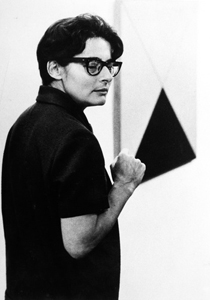
Why Mira Schendel matters
Mira Schendel is one of the central figures of postwar Brazilian art, a maker of drawings, monotypes, sculptures, and installations who worked with unusually humble materials, rice paper, thread, oil-based ink, knotted paper, to build a body of work concerned with language, presence, and absence. Institutional recognition has arrived in waves since her death, from a 2008 pairing with Leon Ferrari at MoMA to a 2013 to 2014 retrospective that traveled from Tate Modern to Serralves and the Pinacoteca do Estado de Sao Paulo, and her work continues to be represented by Galeria Luisa Strina in Sao Paulo, her longtime gallery, alongside international exhibition history at Hauser and Wirth. For collectors, she represents a market still working through a relatively thin public sales record even as museum stature has grown substantially.
- Born
- 1919-06-07, Zurich, Switzerland
- Nationality
- Brazilian (born in Switzerland)
- Media
- Drawing, Painting, Sculpture, Works on paper
- Movement
- Postwar Brazilian abstraction
- Education
- No completed degree confirmed. Studied art briefly, then philosophy at the Universita Cattolica del Sacro Cuore, Milan, until 1939, when Fascist racial laws forced her to leave the university; she was largely self-taught as an artist thereafter.
- Signature motifs
- Rice-paper monotypes, "Droguinhas" knotted-paper sculptures, Calligraphic and textual abstraction
- Representation
- "Galeria Luisa Strina, Sao Paulo", "Hauser & Wirth (exhibition history)"
By the numbers
- USD 1.51MAuction highUntitled, from the Droguinhas series, Sotheby's New York, 2017
- 1919 to 1988LifespanBorn Zurich, Switzerland; died Sao Paulo, Brazil
- 1968Venice BiennaleSelected for the official exhibition
- Galeria Luisa Strina, Sao PauloRepresented by
Biography
Mira Schendel was born Myrrha Dagmar Dub on 7 June 1919 in Zurich, Switzerland. In the mid-1930s she began art studies in Milan, then turned to philosophy at the Universita Cattolica del Sacro Cuore. Fascist racial laws introduced in 1938 classified her as Jewish, stripped her of Italian citizenship, and forced her out of the university in 1939, and she fled Italy that year without completing a degree. She spent roughly a decade in itinerant exile across Europe before settling, by around 1949, in Brazil, where she eventually based herself in Sao Paulo for the remainder of her career. Largely self-taught as an artist, she developed a practice centered on drawing and works on paper: the "Droguinhas" (little nothings), knotted sculptures made from twisted paper, the "Toquinhos," and monotypes and "Objetos graficos" on thin rice paper that treated letterforms and marks as material and metaphysical presence at once.
Her international profile grew steadily through the 1960s, including a first solo exhibition abroad in Lisbon in 1966 and selection for the official exhibition of the Venice Biennale in 1968. Museum recognition expanded significantly after her death: the Museum of Modern Art paired her with Leon Ferrari in the 2008 exhibition "Tangled Alphabets," which traveled to Porto Alegre and Madrid, and a major retrospective organized around 2013 to 2014 traveled to Tate Modern in London, the Museu de Arte Contemporanea de Serralves in Porto, and the Pinacoteca do Estado de Sao Paulo. She died in Sao Paulo on 24 July 1988, at age 69; Wikipedia and other biographical sources attribute her death to lung cancer.
Critical reception
Critics and curators consistently place Schendel among the most significant Latin American artists of the twentieth century, an assessment echoed in Hauser and Wirth's own framing of her work. The critical throughline is her treatment of paper, ink, and knotted thread as carriers of philosophical and linguistic meaning rather than mere support, a reading reinforced by her 2008 MoMA pairing with Leon Ferrari around shared concerns with language and script, and by the scale and seriousness of the 2013 to 2014 Tate-led retrospective.
Market
Schendel's auction market is comparatively thin relative to her museum standing, but it has strengthened over the past decade. Market databases including MutualArt and Artsy identify her all-time auction record as USD 1,512,500, paid at Sotheby's New York in 2017 for an untitled work from her "Droguinhas" series; the exact sale date is not published in these sources. A single trade report describes an earlier high of USD 845,000 for "Sem titulo (Objeto grafico)," circa 1967 to 1968, reportedly sold at Sotheby's New York in May 2014, though this figure has not been independently corroborated across additional auction-market sources. No later public sale has been documented to exceed the 2017 result as of this writing.
Top auction results
| Work | Price | Sale |
|---|---|---|
| Untitled, from the series Droguinhas (Little Nothings) (2017) | USD 1,512,500 | Sotheby's, New York |
| Sem titulo (Objeto grafico), ca. 1967 to 1968 (2014) | USD 845,000 | Sotheby's, New York |
Selected exhibitions
| Years | Exhibition | Venues |
|---|---|---|
| 1966 | First solo international exhibition | Lisbon |
| 1968 | Official exhibition | Venice Biennale |
| 2001 | Mira Schendel | Galerie nationale du Jeu de Paume, Paris |
| 2008 to 2009 | Tangled Alphabets: Leon Ferrari and Mira Schendel | Museum of Modern Art, New York; traveled to Porto Alegre and Madrid |
| 2010 | Sao Paulo Biennial | Sao Paulo (posthumous presentation) |
| 2013 to 2014 | Mira Schendel | Tate Modern, London; Museu de Arte Contemporanea de Serralves, Porto; Pinacoteca do Estado de Sao Paulo |
| 2014 | Mira Schendel | Hauser & Wirth, New York (East 69th Street) |
| 2018 | Sinais/Signals de Mira Schendel | MAM, Sao Paulo |
Museum collections
- Museum of Modern Art, New York
Awards and honors
- Selected for the official exhibition, Venice Biennale (1968)
Authentication and provenance
No catalogue raisonne.
No published catalogue raisonne has been confirmed for the artist. Galeria Luisa Strina in Sao Paulo has represented the artist since the 1980s and remains a primary reference point for her work, and Hauser and Wirth has also exhibited her work internationally. Authentication questions are generally referred to these galleries and the artist's estate.
Primary reference: https://www.moma.org/collection/artists/7961
What collectors should know
There is no confirmed catalogue raisonne for Mira Schendel, and questions of authenticity and provenance are generally directed to her estate and the galleries most closely tied to her work, principally Galeria Luisa Strina in Sao Paulo, her longtime gallery, with additional exhibition history at Hauser and Wirth. Her public auction record remains built on a small number of high-value results rather than a deep, continuous trading history, so any single sale should be read in the context of that thin supply rather than as a settled trend line. Museum holdings and touring exhibitions, at institutions such as MoMA, remain the strongest and best-documented signal of her standing.
Further reading and resources
Data current as of 2026-07-11.

