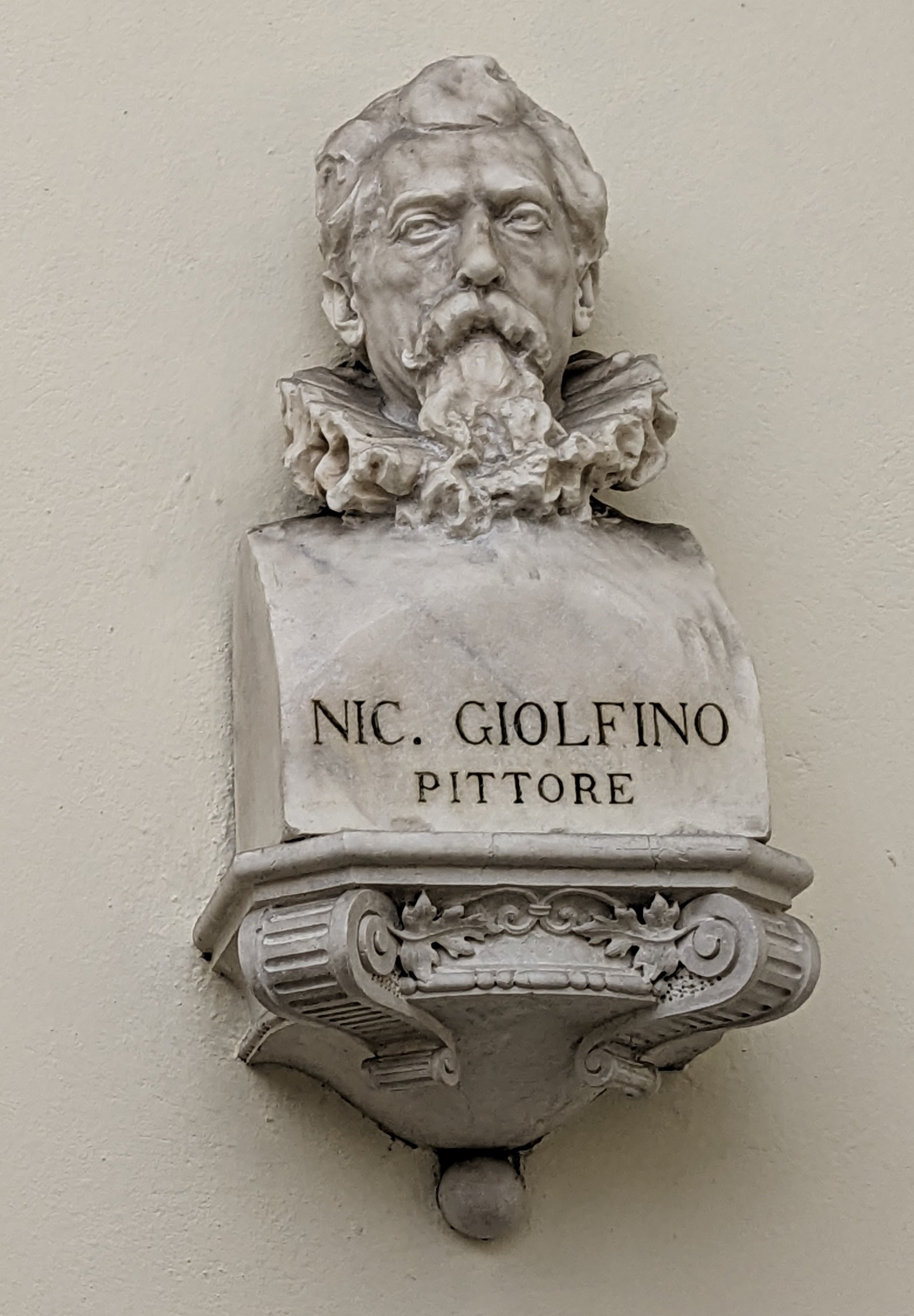
Why Nicola Giolfino matters
Nicola Giolfino, more often catalogued internationally as Niccolo Giolfino, was a leading painter of the Veronese school in the first half of the sixteenth century. His Madonnas, fresco allegories, and drawings survive today in museums from Verona to Paris and New York, which makes him a useful case study for collectors who are curious about how a well-documented regional Renaissance master trades, or fails to trade, in the modern auction market.
- Nationality
- Italian
- Media
- Painting, Fresco, Drawing
- Movement
- Italian Renaissance, Veronese school
- Education
- No formal school or academic degree documented. Trained in his family's woodcarving workshop in Verona, then apprenticed under Liberale da Verona from 1492.
- Signature motifs
- Madonna and Child devotional panels, Fresco allegories of the Liberal Arts, Veronese Renaissance religious commissions
By the numbers
- c. 1492 to 1555ActiveVerona, Veronese school
- 7 major institutionsMuseum collectionsIncludes the Louvre, the Met, and Museo di Castelvecchio
- None publishedCatalogue raisonneAttribution via connoisseurship and archival record
- USD 100,800 (2021, unconfirmed)Auction marketSotheby's New York, single-source figure; not verified as an all-time record
Selected works
Click any work to view it full screen.
Biography
Nicola Giolfino was born in Verona in 1476, the son of a woodcarver, and began his training in the family workshop. From 1492 he apprenticed with Liberale da Verona, one of the leading painters of the Veronese school, and went on to build an independent practice centered on devotional panels and large fresco commissions across Verona.
Among his documented works are the Madonna dei Gelsomini, painted around 1510 and now in the Museo di Castelvecchio, a fresco cycle at the church of San Bernardino in Verona whose exact dates are not documented in the sources reviewed, and an allegorical fresco cycle on the Liberal Arts from around 1530, originally made for the Teatini convent of San Nicolo and now also held at Castelvecchio. He is documented working until the end of his life: a signed drawing dated 3 May 1555, depicting the Valverde area near Verona's Porta Nuova, was his last known commission, and the delivery record from about a month later notes that the artist had already died. Giolfino died in Verona in 1555. No source in the surviving record gives an exact death date beyond the year, and no evidence of any later activity exists, so his status as a historical, deceased artist is not in question.
Critical reception
Art-historical sources place Giolfino firmly within the school of Liberale da Verona and describe him as one of the more active Veronese painters of the early sixteenth century, working across devotional panels, fresco cycles, and drawings. Museum and scholarly references (the Web Gallery of Art, the UniCredit Art Collection, and the University of St Andrews' Venice in Blue project) consistently frame him as a significant, if regionally focused, figure of the period. No exact, attributable critical quotation from a named critic in a major outlet could be confirmed in the available research, so none is reproduced here.
Market
No all-time auction record can be confirmed with certainty for Nicola Giolfino. The best documented result available is a pair of paintings, The Murder of the Magus Smerdis and The Coronation of Darius, which an aggregator listing records as realizing USD 100,800 at Sotheby's New York in May 2021, against an estimate of USD 80,000 to 120,000. The exact day of sale is not given in that source and no second source could confirm it, so this should be treated as the most complete data point found rather than a verified record. A separate old-master saleroom listing, a Madonna col Bambino offered by Wannenes in Italy, carried a pre-sale estimate of 20,000 to 30,000 euros with no confirmed result available in the dossier. Taken together, this points to a market that is thin and largely routed through European old-master specialists rather than major international day sales, with most known works already resting in museum collections rather than circulating privately.
Selected exhibitions
| Years | Exhibition | Venues |
|---|---|---|
| n.d. | Fresco cycle | Church of San Bernardino, Verona |
| c. 1510 | Madonna dei Gelsomini | Museo di Castelvecchio, Verona |
| c. 1530 | The Liberal Arts, Allegory of Rhetoric | Museo di Castelvecchio, Verona, from the former Teatini convent of San Nicolo |
| c. 1545 to 1546 | The Arrest of Christ, preparatory drawing | Metropolitan Museum of Art, New York |
| n.d. | Predella fragment | Philadelphia Museum of Art |
| c. 1530 to 1535 | Madonna and Child | Accademia Carrara, Bergamo |
| n.d. | The Seven Liberal Arts | Musee du Louvre, Paris |
Museum collections
- Musee du Louvre, Paris
- Metropolitan Museum of Art, New York
- Museo di Castelvecchio, Verona
- Philadelphia Museum of Art
- Accademia Carrara, Bergamo
- Allen Memorial Art Museum, Oberlin, Ohio
- Staatliche Museen, Berlin
Authentication and provenance
No catalogue raisonne.
No published catalogue raisonne has been identified for this artist. Attribution rests on connoisseurship, museum scholarship, and surviving archival documents, including a 1555 record that his final commissioned drawing was delivered after his death.
Primary reference: https://en.wikipedia.org/wiki/Niccol%C3%B2_Giolfino
What collectors should know
There is no published catalogue raisonne for Nicola Giolfino, and attribution of individual works depends on connoisseurship, museum scholarship, and the limited archival record that survives from his lifetime. His name also appears in several spellings across sources, including Niccolo Giolfino, Nicolo Giolfino, Golfino, and the signature form Ursino Veronensis, all of which refer to the same artist. Given the absence of a confirmed, well-documented auction record, collectors should treat any online price figure attached to his name with caution until it can be tied to a specific work, house, and sale date.
Further reading and resources
Data current as of 2026-07-18.

