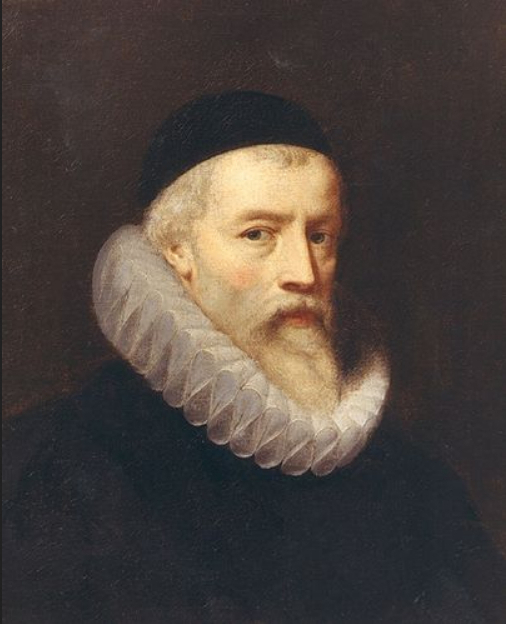
Why Otto van Veen matters
Otto van Veen is a hinge figure between Italian Mannerism and the Flemish Baroque: a classically trained humanist painter, court artist, and emblem-book author whose Antwerp workshop trained Peter Paul Rubens. He matters to collectors less for market scale, his auction footprint is modest and thinly documented, than for his place in art history as the last significant teacher of Rubens and a rare painter-scholar whose allegorical and emblematic inventions shaped visual culture across early modern Europe.
- Nationality
- Flemish (Dutch-born)
- Media
- Painting, Drawing, Emblem book design
- Movement
- Northern Mannerism, Humanist emblem tradition
- Education
- Latin school, Leiden; apprenticed to Isaac Claesz van Swanenburg, Leiden, to about 1572; page and pupil of Dominicus Lampsonius and Jean Ramey, Liege, from 1572; study in Rome, circa 1575 to 1580, reportedly in the circle of Federico Zuccari.
- Signature motifs
- Emblematic allegory, Group and family portraiture, History and religious painting
By the numbers
- 1556 to 1629LifespanBorn Leiden, died Brussels
- EUR 220,000Best-documented auction resultLa Penitence de saint Jerome, reported at Sotheby's London, 2009; single-source, not independently corroborated
- Peter Paul RubensTeacher ofcirca 1594 to 1598, Antwerp
- Master, 1593Guild of St. LukeAntwerp
Selected works
Click any work to view it full screen.
Biography
Otto van Veen (also Latinized as Otto Venius or Octavius Vaenius) was born in Leiden around 1556. He attended a Latin school there while apprenticing in drawing and painting under Isaac Claesz van Swanenburg. Around 1572 he moved to Liege, where he served for about two years as a page at the court of the Prince-Bishop, Gerard de Groesbeek, and studied under the humanist scholar Dominicus Lampsonius and the painter Jean Ramey. Lampsonius is credited with introducing him to classicist-humanist literature and with encouraging the Latinized form of his name.
From roughly 1575 to 1580 he studied in Rome, where he is said to have worked in the circle of Federico Zuccari, absorbing late Italian Mannerism. On returning north he served as court painter, first to Alexander Farnese, Duke of Parma, and later to the Archdukes Albert and Isabella in the Spanish Netherlands. He settled in Antwerp around 1592 and became a master in the city's Guild of St. Luke in 1593. From about 1594 or 1595 to 1598, Peter Paul Rubens trained in his workshop, an apprenticeship widely cited as decisive for Rubens's early development.
Van Veen was also active as a humanist and legal figure, described in reference sources as a doctor of law who advised the city of Leiden and represented the County of Holland before the States General, though the institution and date of that legal training are not documented in available sources. He is best known today for his emblem books, including Amorum Emblemata (1608) and Amoris Divini Emblemata (1615), which combined moralizing verse with allegorical engravings and influenced emblem literature across Europe. He moved to Brussels in 1615 and died there on 6 May 1629.
Critical reception
Art historians treat Otto van Veen primarily through two lenses: his role as Rubens's most important teacher, and his standing as a pictor doctus, a classically educated humanist painter whose work fused Italian Mannerist form with Northern moral and allegorical content. His emblem books are regarded as a significant contribution to the European emblematic tradition. No specific recent museum exhibition or verbatim critical assessment from a named critic in a major outlet could be independently confirmed for this profile.
Market
Otto van Veen's secondary market is that of a documented but minor Old Master: sales are infrequent and concentrated at Continental European auction houses. Results at Lempertz, Dorotheum, Van Ham, Hampel, and Im Kinsky in recent years have ranged from roughly EUR 4,900 to EUR 32,000 for panel and canvas works, mostly religious and allegorical subjects. One specialist valuation source reports a considerably higher result, EUR 220,000, for La Penitence de saint Jerome at Sotheby's London on 8 July 2009, which would be his highest documented auction price if confirmed. That figure comes from a single aggregator rather than a primary Sotheby's or major auction-database record, so it should be treated as the best-documented but not fully corroborated high point of his market. Separately, a painting attributed to van Veen and rediscovered in Iowa has been reported as valued in the millions, but as of this writing it has not been sold at public auction and cannot be counted as a record sale.
Top auction results
| Work | Price | Sale |
|---|---|---|
| La Penitence de saint Jerome (The Penitence of Saint Jerome) | EUR 220,000 | Sotheby's, London, 2009-07-08 |
Museum collections
- Royal Museums of Fine Arts of Belgium, Brussels
Authentication and provenance
No catalogue raisonne.
No catalogue raisonne has been published for Otto van Veen and there is no gallery or estate-run certificate program. As a historical Old Master who died in 1629, his works are authenticated through provenance research, connoisseurship, and museum scholarship rather than a modern authentication protocol.
Primary reference: https://artuk.org/discover/artists/van-veen-otto-15561629
What collectors should know
Van Veen has no catalogue raisonne, no gallery, and no managed estate; his paintings and drawings circulate through public museum collections, church holdings, and occasional appearances at Old Master auctions rather than through dealer representation. Because sale volume is low and the best-known high price is sourced from a single specialist database rather than a primary auction record, any headline figure for his market should be treated with caution pending corroboration. Cataloguers should also note that German-language auction houses often index him under the inverted form "Veen, Otto van," and that this is the sole art-market artist of that name, a Flemish Old Master and Rubens's teacher, not to be confused with any unrelated modern namesake.
Further reading and resources
Data current as of 2026-07-16.

