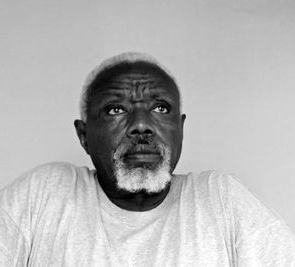
Why Ousmane Sow matters
Ousmane Sow is the most internationally recognized sculptor to have emerged from postcolonial West Africa, an entirely self-taught artist who built monumental, textured figures out of clay, jute, and rebar and placed them inside the biggest rooms in world art: documenta, the Venice Biennale, the Pont des Arts, and the Smithsonian. In 2012 he became the first African artist elected a foreign associate member of France's Academie des Beaux-Arts. For a collector, he represents a rare case of a non-Western sculptor with deep museum validation but a thin, still-developing secondary market.
- Born
- 1935-10-10, Dakar, Senegal
- Nationality
- Senegalese
- Media
- Sculpture, Mixed-media figurative sculpture
- Movement
- Contemporary African sculpture
- Education
- No formal art school training. Studied physiotherapy and nursing in Paris, including a nursing diploma at Laennec Hospital and study under Boris Dolto, circa 1957 to the mid-1960s.
- Signature motifs
- Monumental mixed-media figures, Ethnographic and historical tableaux
- Representation
- "Maison Ousmane Sow, Dakar (estate)"
By the numbers
- 1935 to 2016LivedBorn and died in Dakar, Senegal
- Elected 2012Academie des Beaux-ArtsFirst African artist elected as a foreign associate member
- 2008Prince Claus AwardHonored for Culture and the human body
- EUR 528,695Reported auction highParis, as reported by Le Figaro, 2014; auction house not named in source
Biography
Ousmane Sow was born on 10 October 1935 in Dakar, in what was then French West Africa. He attended French colonial school and Koranic school as a child, and by his own later account considered studying at the Ecole des Beaux-Arts after moving to Paris around 1957. He set that path aside and instead trained in physiotherapy and nursing, earning a diploma at the Laennec Hospital in Paris and studying under the orthopedist Boris Dolto. He supported himself as a physical therapist for close to three decades while sculpting on the side, working with clay, horsehair, straw, jute, and pigment, and hardening his figures with a mixture that included rubber-based glue rather than firing them like conventional ceramics.
His public breakthrough came in 1987, when the Centre Culturel Francais de Dakar showed his Nuba series, monumental wrestlers modeled on the peoples of southern Sudan. Recognition abroad followed quickly: participation in documenta IX in Kassel in 1992, an exhibition tied to the 1995 Venice Biennale at the Palazzo Grassi, and, in 1999, a vast open-air display of his African-themed sculptures and a tableau of the Battle of Little Bighorn on the Pont des Arts in Paris, reported to have drawn roughly three million visitors. In 2003 part of the Little Bighorn installation was shown at the Whitney Museum of American Art in New York, and in 2011 his sculpture of the Haitian revolutionary Toussaint Louverture was the centerpiece of the National Museum of African Art's African Mosaic exhibition in Washington, D.C. He was elected to the Academie des Beaux-Arts in 2012, occupying the seat previously held by Andrew Wyeth, and had earlier received the Prince Claus Award in 2008 for his treatment of the human body in figurative art. He died in Dakar on 1 December 2016, at the age of 81.
Critical reception
Sow was described in Artforum's 2016 obituary as known to some as "the Auguste Rodin of Senegal," a shorthand for the scale and physical presence critics associated with his figures. Curator Emmanuel Dayde, writing for the artist's own biography, credited the Nuba series with reintroducing a monumental African presence to the Paris art scene when it debuted in 1987. Johnnetta Betsch Cole, then director of the Smithsonian's National Museum of African Art, publicly championed his sculpture Toussaint Louverture and the Old Slave when it anchored the museum's 2011 African Mosaic exhibition. Critical discussion of Sow has also engaged, sometimes pointedly, with the ethics of his ethnographic and historical series, including his renderings of the Nuba, Maasai, and Zulu peoples and his interpretation of Native American history at Little Bighorn, weighing his technical and emotional power against questions of representation.
Market
Sow's secondary market is small and irregularly documented compared with his institutional profile. The most concrete public figure available is a Le Figaro report from 19 November 2014 describing a large-scale work from his Zulu (Zoulous) series selling at a Paris auction, house not named in that report, for EUR 528,695 including fees on a EUR 410,000 hammer price, described in the French press at the time as a record for the artist; the exact work title was not specified either. A bronze cast of his Nelson Mandela, numbered 1 of 8, later sold for EUR 132,565 through Gazette Drouot. No single auction database entry could be confirmed as his definitive, current all-time high, and collectors should treat any cited "record" for Sow as provisional pending a fuller market survey.
Top auction results
| Work | Price | Sale |
|---|---|---|
| Large-scale work, Zoulous series (exact title not confirmed) (2014) | EUR 528,695 with fees; EUR 410,000 hammer | Not specified in source, Paris, 2014-11-19 |
Selected exhibitions
| Years | Exhibition | Venues |
|---|---|---|
| 2026 to 2028 | Ousmane Sow, Intemporel | Musee des Civilisations noires, Dakar |
| 2021 to 2031 | Little Bighorn (installation) | Fortified village of Mont-Dauphin, France |
| 2011 | African Mosaic | National Museum of African Art, Smithsonian Institution, Washington, D.C. |
| 2003 | Battle of Little Bighorn (installation) | Whitney Museum of American Art, New York |
| 1999 | Ousmane Sow on the Pont des Arts | Pont des Arts, Paris |
| 1995 | Venice Biennale | Palazzo Grassi, Venice |
| 1992 | documenta IX | Kassel, Germany |
| 1987 | Nuba series (debut) | Centre Culturel Francais de Dakar |
Museum collections
- Smithsonian National Museum of African Art, Washington, D.C.
- Musee du quai Branly, Jacques Chirac, Paris
- Musee des Civilisations noires, Dakar
Awards and honors
- Elected foreign associate member, Academie des Beaux-Arts, Institut de France (first African artist elected) (2012)
- Prince Claus Award, Culture and the human body (2008)
Authentication and provenance
No catalogue raisonne.
No published catalogue raisonne has been identified for the artist. Provenance is traced primarily through exhibition history, auction house catalogues, and the artist's estate at Maison Ousmane Sow in Dakar, which since 2026 has also placed a large body of work on long-term deposit at the Musee des Civilisations noires.
Primary reference: https://en.maisonousmanesow.com/biographie
What collectors should know
There is no published catalogue raisonne for Sow, and no clearly documented commercial gallery currently represents his estate; stewardship runs primarily through Maison Ousmane Sow, the artist's former Dakar home turned museum, which in 2026 placed roughly fifty works on a three-year deposit with the Musee des Civilisations noires in Dakar. Public auction data for Sow is sparse and unevenly reported, so any single sale result, including the widely cited 2014 report, should be checked against primary sale records rather than taken as a settled benchmark. Given the gap between his museum standing and the depth of his auction history, collectors should prioritize provenance tied to the artist's estate and documented exhibition history over any single reported price.
Further reading and resources
Data current as of 2026-07-13.

