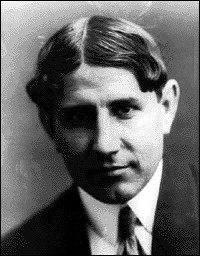
Why Pablo Gargallo matters
Pablo Gargallo is one of the pioneering figures of early twentieth century Spanish sculpture, credited with treating cut and folded sheet metal as a drawing medium and with introducing Pablo Picasso to metal sculpture. For a collector, he represents a historically important but market thin case: deep museum validation and a dedicated artist museum in Zaragoza, set against a sparse and only partially documented auction history.
- Born
- 1881-01-05, Maella, Zaragoza, Aragon, Spain
- Nationality
- Spanish
- Media
- Sculpture, Painting, Drawing
- Movement
- Cubism, Spanish avant-garde
- Education
- Escuela de Bellas Artes de La Lonja, Barcelona; 1903 scholarship for several months of study in Paris. No degree documented.
- Signature motifs
- Cut and folded sheet metal, Portrait masks, Void as sculptural form
By the numbers
- USD 700,190Reported auction highSculpture; specific work, sale date, and house not publicly documented (MutualArt)
- Museo Pablo GargalloDedicated museumZaragoza, opened 1985
- 4 major exhibitionsPosthumous honorsMadrid and Paris 1935, Paris 1947, Venice Biennale 1955
Biography
Pablo Gargallo Catalan, also recorded as Pau Emili Gargallo, was born on 5 January 1881 in Maella, in the Zaragoza province of Aragon, Spain. He trained in drawing and sculpture in Barcelona at the Escuela de Bellas Artes de La Lonja, and in 1903 received a scholarship that allowed him to spend several months studying in Paris, where he moved among the Spanish and French avant garde artists working in the city, including Pablo Picasso. No university degree is documented for him.
Gargallo became known for an approach to sculpture built from thin sheets of iron, copper, and other metals, cut, folded, and welded so that the empty space within a figure carried as much meaning as the solid metal itself. Encyclopaedia Britannica credits him as among the first artists to work extensively in iron sculpture and as the artist who introduced Picasso to the medium. His subjects ranged from portrait masks to major standalone figures such as The Prophet, held today by the Museo Reina Sofia in Madrid.
Gargallo suffered from bronchial pneumonia and died on 28 December 1934 in Reus, in the Tarragona province of Spain, at the age of fifty three. In the years immediately after his death, Encyclopaedia Britannica records that he was honored with four major posthumous exhibitions: in Madrid and in Paris in 1935, in Paris again in 1947, and at the Venice Biennale in 1955. The Museo Pablo Gargallo opened in Zaragoza in 1985, in the Palacio de Argillo, as the museum devoted entirely to his work and archive.
Critical reception
Gargallo is treated in standard reference sources, including Encyclopaedia Britannica, as a transitional figure between academic modeling and Cubist informed abstraction in sculpture, notable for pushing sculptural form toward drawing in space and for using absence and void as compositional elements rather than only solid mass. His introduction of Picasso to metal sculpture is repeatedly cited as one of his most consequential contributions to twentieth century art. Institutional attention has continued through retrospective exhibitions, including a survey at IVAM in Valencia covering his sculpture and drawings.
Market
Gargallo's market is thin and only partially documented in public sources. Auction databases including Artprice record hundreds of public sale appearances for his sculptures, drawings, and works on paper over time, and dealer estimates such as those published by Mr Expert put typical sculpture prices in a range of roughly EUR 10,000 to 200,000. MutualArt's market summary cites realized prices as high as USD 700,190 for a sculpture and USD 245,000 for a painting, but the specific work, sale date, auction house, and location behind that top figure are not identified in the publicly available records reviewed here, and no more recent sale has been confirmed to exceed it. Collectors should treat the USD 700,190 figure as a market data point rather than a fully verified auction record until the underlying lot can be located.
Selected exhibitions
| Years | Exhibition | Venues |
|---|---|---|
| 1985 to present | Permanent collection | Museo Pablo Gargallo, Zaragoza |
| 1955 | Posthumous exhibition | Venice Biennale |
| 1947 | Posthumous exhibition | Paris |
| 1935 | Posthumous exhibition | Paris |
| 1935 | Posthumous exhibition | Madrid |
Museum collections
- Museo Pablo Gargallo, Zaragoza
- Museo Reina Sofía, Madrid
- Museu Nacional d'Art de Catalunya (MNAC), Barcelona
- Institut Valencia d'Art Modern (IVAM), Valencia
Awards and honors
- Scholarship for several months of study in Paris (1903)
Authentication and provenance
No catalogue raisonne.
No published catalogue raisonne is confirmed. The Museo Pablo Gargallo in Zaragoza, built around the artist's own studio holdings and archive, is the closest institutional authority. Secondary-market works are typically authenticated through gallery and auction-house provenance research rather than a single certifying body.
Primary reference: https://www.britannica.com/biography/Pablo-Gargallo
What collectors should know
There is no published catalogue raisonne for Gargallo, and no single gallery or estate is publicly documented as his exclusive representative; his work moves through multiple dealers and auction houses. The Museo Pablo Gargallo in Zaragoza functions as the closest thing to a central authority on his body of work and archive. Given the thin and only partially documented auction record, and the absence of a confirmed catalogue raisonne, collectors should weight provenance research and museum or specialist opinion heavily, and treat any single reported auction price, including the widely cited USD 700,190 sculpture figure, with caution until its underlying sale can be verified.
Further reading and resources
Data current as of 2026-07-10.

