Paul Dupré-Lafon
French, 1900 to 1971
Furniture design · Interior architecture · Decorative arts
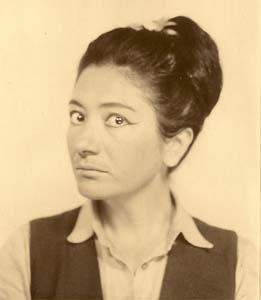
Why Paul Dupré-Lafon matters
Paul Dupré-Lafon (1900 to 1971) was one of the defining decorators of French Art Deco, prized today for the same qualities that made him sought after among interwar Paris's wealthiest clients: architectural precision, rare materials, and a taste for discretion over display. He built almost no public exhibition record, so his reputation rests on documented private commissions, a long partnership with Hermes, and a specialist secondary market rather than institutional retrospectives. For a collector, he is a case study in a market driven by connoisseurship and a small number of dealers rather than broad public visibility.
- Born
- 1900-06-17, Marseille, France
- Nationality
- French
- Media
- Furniture design, Interior architecture, Decorative arts
- Movement
- Art Deco
- Education
- Jesuit secondary school, Marseille; École des Beaux-Arts de Marseille, completed 1923 (sources describe the credential variously as architecture, painting, or decoration)
- Signature motifs
- Geometric, cubist-influenced forms, Stone, chromed steel, and exotic-hardwood combinations
- Representation
- Galerie Jacques Lacoste, Galerie Maxime Flatry
By the numbers
- EUR 823,230Auction high (reported)Bureau (desk); auction house and exact sale date not documented in available sources (Barnies market guide)
- EUR 667,890Best-documented auction resultCoffee table, 1937, wood and steel, Sotheby's, 2021
- Galerie Jacques Lacoste; Galerie Maxime FlatryRepresented bySpecialist dealers; no formal estate representation documented
- Avenue Foch hôtel particulier, Paris, 1938Signature commissionWidely cited as his most important private commission
Biography
Paul Dupré-Lafon was born on 17 June 1900 in Marseille, France. He was educated at a Jesuit secondary school in Marseille, then studied at the École des Beaux-Arts de Marseille, completing his studies in 1923; sources describe the resulting credential variously as a qualification in architecture, painting, or decoration, but agree on the school and the year.
He established himself in Paris as a decorator in 1924 with the design of the Maison Weill headquarters, and secured his reputation in 1929 when he designed the complete furnishing of a four story hotel particulier overlooking the Parc Monceau. In 1938 he completed a second major private mansion on the avenue Foch, a commission repeatedly singled out by later critics and dealers as his most important work. Unlike most of his Art Deco contemporaries, Dupré-Lafon avoided the exhibition circuit: he did not take part in the 1925 Exposition internationale des arts decoratifs et industriels modernes or in the salons that followed it, and his work reached the public mainly through private commissions and occasional magazine features, including in Art et Decoration.
From the 1920s into the 1930s he also began designing accessories, ashtrays, and lamps for Hermes, a relationship that deepened after the war and reached its peak in the 1950s and 1960s with the production of desk accessories and the Hermes valet de nuit. Paul Dupré-Lafon died in December 1971. Most sources place his death in Deauville, France, though at least one source cites Boulogne-Billancourt, and no source consulted gives an exact day.
Critical reception
Dupré-Lafon built his reputation without the benefit of exhibitions, so critical assessment has come largely after the fact, through dealers, design historians, and journalists revisiting his private commissions. Coverage in outlets such as Le Journal des Arts has placed him among the most significant decorators of French Art Deco, and both French and English language coverage has settled on the epithet "decorator of millionaires" to describe the exclusivity of his clientele. No major state honors or design prizes are documented for him; his standing rests on these commissions and on the critical and market attention his work has attracted since.
Market
Dupré-Lafon's market is thin, specialist, and concentrated in French and international design sales rather than broad contemporary art auctions. The highest price identified for his work is EUR 823,230 for a bureau, cited as his auction record by the French market tracking site Barnies; the auction house and exact sale date behind that figure are not documented in the available sources, so it should be read as a reported high rather than a fully verified line item. A more fully documented result is a 1937 wood and steel coffee table that sold for EUR 667,890 at Sotheby's in 2021. Other cited results include a Macassar ebony minister's desk that brought EUR 343,056 in a 2020 sale; the auction house behind that sale is not documented in the available sources. Recent gallery attention, including a dedicated 2023 exhibition and a 2024 Design Miami/Paris presentation from Galerie Maxime Flatry, has raised his profile without materially increasing the volume of public sales.
Top auction results
| Work | Price | Sale |
|---|---|---|
| Bureau (desk) | EUR 823,230 | |
| Coffee table, 1937, wood and steel (2021) | EUR 667,890 | Sotheby's |
Selected exhibitions
| Years | Exhibition | Venues |
|---|---|---|
| 2026 | PAD Saint-Tropez | Galerie Jacques Lacoste, Place des Lices, Saint-Tropez |
| 2026 | TEFAF New York | Galerie Marcilhac, booth 335 |
| 2024 | Design Miami/Paris | Galerie Maxime Flatry, Hotel de Maisons, Paris |
| 2023 | From Paul to Paul | Galerie Maxime Flatry, Paris |
| circa 2000 | Centenary exhibition | Galerie De Vos, Paris |
Authentication and provenance
No catalogue raisonne.
No catalogue raisonne has been published and there is no certificate-of-authenticity program. Attribution and verification are handled by specialist dealers, chiefly Galerie Jacques Lacoste and Galerie Maxime Flatry, and by the design departments of major auction houses.
Primary reference: https://www.artnet.com/artists/paul-dupr%C3%A9-lafon/
What collectors should know
No catalogue raisonne of Dupré-Lafon's work has been published, and there is no formal estate or certificate program; attribution and verification run through specialist dealers, chiefly Galerie Jacques Lacoste and Galerie Maxime Flatry, and through the design departments of major auction houses. Because relatively few of his pieces reach the market, and because some reported high prices are not fully documented with an auction house and date, collectors should treat any single reported record with caution and confirm provenance directly with a specialist dealer or an auction house design department before relying on it.
Further reading and resources
Data current as of 2026-07-13.

