Paul Dupré-Lafon
French, 1900 to 1971
Furniture design · Interior architecture · Decorative arts
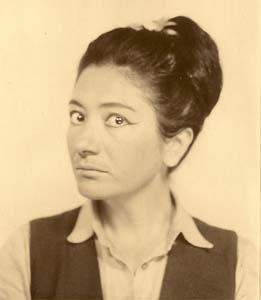
Why Paul Dupré-Lafon matters
Paul Dupré-Lafon occupies a singular place in twentieth-century French design: an architect-decorator who built an entire career on private commissions and a long collaboration with Hermès rather than public exhibitions, becoming known in the market as "the decorator of millionaires." For a collector, he represents a case study in provenance-driven value, where documented private commissions, specialist gallery expertise, and market rarity matter more than a conventional institutional exhibition history.
- Born
- 1900-06-17, Marseille, France
- Nationality
- French
- Media
- Furniture design, Interior architecture, Decorative arts
- Movement
- Art Deco
- Education
- École des Beaux-Arts de Marseille, graduated 1923
- Signature motifs
- Bespoke luxury furniture for private clients, Leather and metal accessories for Hermès
- Representation
- Galerie Marcilhac, Galerie Chastel Maréchal, Maison Gerard
By the numbers
- USD 882,000 (unconfirmed lot)Auction highCited by MutualArt as a category peak for architecture and design; the specific work, auction house, and sale date are not documented in available sources
- The decorator of millionairesKnown asRecurring epithet in market and gallery literature
- Paris, 1923 to 1971Active
- Galerie Marcilhac; Galerie Chastel Maréchal; Maison GerardRepresented by
Biography
Paul Dupré-Lafon was born on 17 June 1900 in Marseille, France, to a family of traders. He studied at the École des Beaux-Arts de Marseille, graduating in 1923; sources differ on whether his training there was oriented toward painting or architecture. That same year he moved to Paris and set up his own design workshop, building a clientele of private collectors and industrialists rather than working through public salons.
Dupré-Lafon avoided exhibitions and salons throughout his career, showing his furniture only to the private clients who commissioned it. His reputation grew instead through major private commissions: interiors for the headquarters of the Weill clothing company in Paris in 1924, a four-story private mansion near Parc Monceau on Rue Rembrandt in 1929, and a second mansion on Avenue Foch in 1938, which the critic Michel Dufet praised for its sense of luxury. From around 1929 he also produced accessories, desk sets, lighting, and furniture for Hermès, extending his practice from one-off commissions to editioned objects. He continued working into his seventies, completing the decoration of a villa in Deauville in 1971. He died in December 1971 in Deauville, France, at the age of 71; the cause of death is not documented in available sources. A minority of sources places his death in 1970, but the weight of contemporary market and gallery documentation supports December 1971.
Critical reception
Since his death, Dupré-Lafon has been consistently framed by design historians and dealers as one of the most exacting decorators of French Art Deco, prized for restrained, expensive materials and bespoke craftsmanship made for an exclusive clientele rather than public display. He is widely referred to in the market as "the decorator of millionaires," a label repeated across auction house and gallery literature describing his work for private mansions and for Hermès. The critic Michel Dufet praised his 1938 Avenue Foch commission for its sense of luxury. Because Dupré-Lafon refused to exhibit in salons and expositions, most critical attention has arrived retrospectively, through gallery scholarship and decorative arts auction catalogues rather than contemporaneous museum reviews.
Market
Paul Dupré-Lafon's market centers on furniture, architectural fittings, and Hermès-related accessories, sold mainly through French auction houses and specialist Art Deco design galleries. The market tracker MutualArt cites realized prices reaching as high as USD 882,000 for architecture and design lots, but does not identify the specific work, auction house, or sale date behind that figure, so it cannot be confirmed as a verified record for a named work. The bulk of his documented auction activity falls well below that figure, with individual furniture pieces and small Hermès-made accessories more commonly trading from several thousand to several hundred thousand dollars depending on scale and rarity.
Top auction results
| Work | Price | Sale |
|---|---|---|
| Unconfirmed lot (MutualArt cites this figure as a category maximum for architecture and design, without naming the specific work) | USD 882,000 |
Selected exhibitions
| Years | Exhibition | Venues |
|---|---|---|
| 1924 | Headquarters interiors for the Weill company | Paris |
| 1929 | Private mansion, Rue Rembrandt, near Parc Monceau | Paris |
| 1929 to 1960s | Design collaboration with Hermès | Paris |
| 1938 | Private mansion, Avenue Foch | Paris |
| 1971 | Villa decoration, final commission | Deauville, France |
| 2014 | Galerie L'Arc en Seine at The Salon: Art + Design | Park Avenue Armory, New York |
| 2020 | Galerie Marcilhac at Masterpiece Online | Masterpiece Online (international fair) |
Authentication and provenance
No catalogue raisonne.
No catalogue raisonne has been published and no certificate-of-authenticity program is documented. Attribution and condition are handled by specialist Art Deco design galleries, including Galerie Marcilhac, Galerie Chastel Maréchal, and Maison Gerard, and by the design departments of major auction houses.
Primary reference: https://www.artnet.com/artists/paul-dupr%C3%A9-lafon/
What collectors should know
Dupré-Lafon's market is decentralized. There is no single estate gallery and no published catalogue raisonne, so specialist Art Deco design galleries such as Galerie Marcilhac, Galerie Chastel Maréchal, and Maison Gerard, together with the design departments of major auction houses, are the primary sources for attribution and condition assessment. Public museum holdings of his work are not well documented, so collectors should expect most available pieces to come from private collections or design-focused auctions rather than institutional deaccessions. Because he refused to exhibit and worked almost entirely on private commission, exhibition history and gallery provenance research matter more for this artist than they would for one with a conventional exhibition record.
Further reading and resources
Data current as of 2026-07-10.

