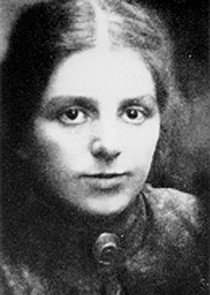
Why Paula Modersohn-Becker matters
Paula Modersohn-Becker is widely credited as a foundational figure of German modernism, an artist who compressed a radical development, from provincial teacher training to direct exposure to Cezanne and Gauguin in Paris, into a working life of barely a decade before her death in 1907 at age 31. She is frequently described in art-historical sources as the first woman to paint a nude self-portrait and the first woman artist to paint herself pregnant, claims that place her at the start of a lineage now central to modern and contemporary art. For collectors, she represents an unusual category: a long-deceased artist whose market is still actively being rediscovered, most visibly through her first full-scale United States museum retrospective in 2024 to 2025 and a new auction record set in late 2025.
- Born
- 1876-02-08, Dresden-Friedrichstadt, German Empire
- Nationality
- German
- Media
- Painting, Drawing
- Movement
- Worpswede Colony, Precursor to German Expressionism
- Education
- St. John's Wood Art School, London, 1892; teacher-training seminar, Bremen, 1893 to 1895; School of Drawing and Painting of the Association of Berlin Women Artists, 1896 to 1898; private study under Fritz Mackensen, Worpswede, from 1898; Academie Colarossi, Paris, 1900. No formal art degree is documented in the sources reviewed.
- Signature motifs
- Self-portraiture, Nude self-portraits, Mother-and-child imagery, Worpswede peasant subjects
- Representation
- Paula Modersohn-Becker Museum, Bremen (primary estate authority)
By the numbers
- EUR 1.27MAuction highSelbstbildnis nach halblinks (1906), Grisebach Berlin, 27 Nov 2025, artist auction record
- First museum devoted to a woman painterMuseum honorPaula Modersohn-Becker Museum, Bremen, founded 1927
- 2024 to 2025First U.S. museum retrospectiveArt Institute of Chicago and Neue Galerie New York, 'I Am Me'
- Paula Modersohn-Becker Museum, BremenEstate steward
Selected works
Click any work to view it full screen.
Biography
Born Minna Hermine Paula Becker on 8 February 1876 in Dresden-Friedrichstadt, she received her first drawing instruction in London at St. John's Wood Art School in 1892, then completed a teacher-training seminar in Bremen between 1893 and 1895, a credential intended to give her a fallback profession as a governess or teacher. From 1896 to 1898 she studied at the School of Drawing and Painting of the Association of Berlin Women Artists, one of the few formal art-training paths open to women at the time.
In 1898 she moved to the artists' colony of Worpswede near Bremen to study with Fritz Mackensen, and there met the landscape painter Otto Modersohn, whom she married in 1901, taking the combined name by which she is now known. Between 1900 and 1906 she made repeated trips to Paris, studying at the Academie Colarossi and absorbing the work of Cezanne, Gauguin, and Rodin's circle, an exposure that pulled her painting away from Worpswede naturalism toward a flatter, more exploratory modern idiom. Over her short working life she produced more than 700 paintings and over 1,000 drawings, including an extensive series of self-portraits and studies of Worpswede women, mothers, and children.
She gave birth to a daughter, Mathilde, on 2 November 1907, and was ordered to prolonged bed rest afterward. On 20 November 1907, she died in Worpswede of a postpartum pulmonary embolism, a documented complication of the deep vein thrombosis that can follow extended bed rest after childbirth. She was 31.
Critical reception
During her lifetime, Modersohn-Becker's reception was poor: the Saint Louis Art Museum notes that she showed in only three exhibitions, all of which were panned, and sold almost nothing. Recognition came posthumously and grew steadily. In 1927 the Bremen coffee merchant Ludwig Roselius founded the Paula Modersohn-Becker Museum, described by multiple sources as the first museum in the world devoted entirely to a woman painter. Since then she has been consistently characterized as a pioneer of modern art in Germany and an early figure in the history of Expressionism.
That reassessment reached a new high point with "Paula Modersohn-Becker: I Am Me," organized jointly by the Art Institute of Chicago and Neue Galerie New York in 2024 to 2025, billed as her first full museum retrospective in the United States. The show, together with a 2026 survey at the Hall Art Foundation and a paired presentation with Edvard Munch at the Albertinum in Dresden marking her 150th birthday, has renewed critical focus on her self-portraits and on her place at the start of European modernism.
Market
Modersohn-Becker's market is thin by volume but has recently reached a new peak. Her auction record was set on 27 November 2025 at Grisebach in Berlin, where her 1906 self-portrait Selbstbildnis nach halblinks sold for EUR 1,270,000 including fees, the highest price recorded for her work. Press coverage of that sale, including in ArtNews and Artmajeur, frames it partly against the historical fact that her work was labeled "degenerate art" by the Nazi regime in the 1930s, a designation that affected many German modernist artists of her generation and that can still complicate provenance research on works with a wartime-era chain of title.
Supply is structurally limited. She reportedly sold only three or four paintings during her own lifetime, and the bulk of her surviving output is now held by museums rather than circulating privately. The 2025 record followed, and appears connected to, a wave of institutional attention beginning with her first full US retrospective in 2024.
Top auction results
| Work | Price | Sale |
|---|---|---|
| Selbstbildnis nach halblinks (Self-Portrait Looking Slightly to the Left) (1906) | EUR 1,270,000 | Grisebach, Berlin, 2025-11-27 |
Selected exhibitions
| Years | Exhibition | Venues |
|---|---|---|
| 1927 to present | Permanent collection | Paula Modersohn-Becker Museum, Boettcherstrasse, Bremen (opened 1927, first museum devoted to a woman painter) |
| 2024 to 2025 | Paula Modersohn-Becker: I Am Me / Ich bin Ich | Art Institute of Chicago; Neue Galerie New York |
| 2026 | Becoming Paula: London Berlin Worpswede Paris, 150 Years of Paula Modersohn-Becker | Hall Art Foundation, with the Paula Modersohn-Becker Museum, Bremen |
| 2026 | Paula Modersohn-Becker und Edvard Munch: Die grossen Fragen des Lebens | Albertinum, Staatliche Kunstsammlungen Dresden |
Museum collections
- Paula Modersohn-Becker Museum, Bremen
- Kunsthalle Bremen
- Neue Galerie New York
- Museum of Modern Art, New York
Awards and honors
- Founding of the Paula Modersohn-Becker Museum, Bremen, described as the first museum devoted to a woman painter (1927)
Authentication and provenance
No catalogue raisonne.
No published catalogue raisonne has been confirmed as of this writing. Works are primarily authenticated through the Paula Modersohn-Becker Museum in Bremen, the principal custodian of her archive and estate.
Primary reference: https://en.wikipedia.org/wiki/Paula_Modersohn-Becker
What collectors should know
No catalogue raisonne for Paula Modersohn-Becker has been confirmed. Verification of a work's authenticity and history relies primarily on the Paula Modersohn-Becker Museum in Bremen, which functions as the closest thing to an estate authority for a deceased artist with no living representation. Because her lifetime output was small and most of it sits in institutional hands, the number of works that can realistically come to market is limited, and any individual sale, such as the November 2025 Grisebach record, should be read against that scarcity rather than as a broad market trend.
Collectors should also be alert to provenance gaps tied to the Nazi-era "degenerate art" campaign of the 1930s, which affected German modernists as a group; works with unclear chain of title through the 1930s and 1940s warrant closer diligence. Renewed museum programming since 2024 has clearly lifted attention and prices, but the underlying trading volume remains thin, so recent results are best treated as data points rather than a settled trend line.
Further reading and resources
Data current as of 2026-07-11.

