Pavel Tchelitchew
Russian, naturalized American (1952), 1898 to 1957
Painting · Drawing · Stage and costume design
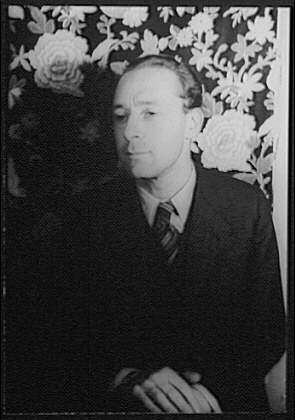
Why Pavel Tchelitchew matters
Pavel Tchelitchew is a Russian-born painter and stage designer whose career bridged the Neo-Romantic circles of interwar Paris and the Surrealist-adjacent art world of mid-century New York. He is best known for anatomical, biomorphic paintings that treat the human body as landscape and puzzle, most famously in Hide-and-Seek (1940 to 1942), a work long associated with the Museum of Modern Art. For collectors, he is a case study in an artist with deep institutional standing, a 1942 MoMA retrospective, holdings at MoMA, the National Gallery of Art, and the Art Institute of Chicago among others, paired with a thin and unevenly documented auction market.
- Born
- 1898-10-03, Dubrovka, Kaluga Governorate, Russian Empire (some sources give Moscow; see note)
- Nationality
- Russian, naturalized American (1952)
- Media
- Painting, Drawing, Stage and costume design
- Movement
- Neo-Romanticism, Surrealism (associated)
- Education
- Study under Alexandra Exter, Kiev Academy, 1918 to 1920, is the best-documented part of his formal training. One auction-house biography also cites art classes at the University of Moscow, 1916 to 1918, a claim not corroborated elsewhere. No formal degree is documented.
- Signature motifs
- Anatomical and biomorphic imagery, Multi-perspective ('metamorphic') portraiture
- Representation
- Michael Rosenfeld Gallery
By the numbers
- USD 1.7M (reported)Auction highThe Concert; exact sale date and auction house not confirmed in available public sources
- 1942MoMA retrospectiveMuseum of Modern Art, New York
- 1952US citizenshipNaturalized American citizen
- Michael Rosenfeld GalleryRepresented by
Biography
Pavel Fyodorovich Tchelitchew was born into an aristocratic Russian family on 3 October 1898 (21 September 1898 by the old Julian calendar). Sources differ on the exact birthplace: gallery and specialist market sources point to the village of Dubrovka in the Kaluga region, while a shorter auction-house biography gives Moscow. He was educated privately as a child; after his family fled the Russian Revolution he studied at the Kiev Academy under Alexandra Exter from 1918 to 1920, the best-documented part of his formal training. One auction-house biography also states that he took art classes at the University of Moscow from 1916 to 1918, but this claim is not corroborated by other sources.
He worked as a stage designer in Odessa and Berlin before settling in Paris in 1923, where he became part of a Neo-Romantic circle that included Christian Berard, Eugene Berman, and Andre Lanskoy, and drew early notice from critics such as Edith Sitwell. An early one-man exhibition in 1929 drew public criticism from Jean Cocteau. Tchelitchew later moved between Europe and the United States, becoming closely associated with Lincoln Kirstein and the American ballet and museum world; MoMA gave him a retrospective in 1942. He became a naturalized United States citizen in 1952 while continuing to live largely in Europe, eventually settling near Rome. He died on 31 July 1957 at Salvator Mundi International Hospital in Grottaferrata, Italy, at age 58; The New York Times reported his death in an obituary published 2 August 1957.
Critical reception
Tchelitchew drew serious critical attention from the start of his career, including early support from the poet and critic Edith Sitwell. His 1929 Paris exhibition provoked public criticism from Jean Cocteau, and by 1942 his standing was strong enough for the Museum of Modern Art to give him a full retrospective. MoMA has continued to place his work in later thematic exhibitions, including shows on drawing, disfiguration, and stage design, though later critical writing has sometimes framed his best-known painting, Hide-and-Seek, as a work that has moved out of the museum's most prominent display and into a more historical position within its collection. His reputation today rests heavily on institutional holdings, including MoMA, the National Gallery of Art, the Art Institute of Chicago, the Courtauld Institute of Art, the Philadelphia Museum of Art, and the Spencer Museum of Art at the University of Kansas.
Market
Tchelitchew's best-documented auction result is The Concert, for which MutualArt's market database reports a price of USD 1,715,368, the highest figure recorded there for a painting by the artist; the exact sale date and auction house are not confirmed in the public sources reviewed for this profile. Away from that figure, public sale prices for his work are typically far lower, often in the low five figures; a work on paper, Anatomical Pondering 5 to 7, sold for USD 12,700 at Rago Arts in 2025.
Top auction results
| Work | Price | Sale |
|---|---|---|
| The Concert | USD 1,715,368 |
Selected exhibitions
| Years | Exhibition | Venues |
|---|---|---|
| 1929 | Early one-man exhibition | Paris (gallery not further specified in available sources) |
| 1942 | Pavel Tchelitchew, retrospective | Museum of Modern Art, New York |
| Dates not specified in available sources | Lincoln Kirstein's Modern; Exquisite Corpses: Drawing and Disfiguration; Gifted: Collectors and Drawings at MoMA, 1929 to 1983; Stage Pictures | Museum of Modern Art, New York |
Museum collections
- Museum of Modern Art, New York
- National Gallery of Art, Washington, D.C.
- Art Institute of Chicago
- Courtauld Institute of Art, London
- Philadelphia Museum of Art
- Spencer Museum of Art, University of Kansas
Authentication and provenance
No catalogue raisonne.
No published catalogue raisonne has been identified for this artist in current market sources. Authentication generally runs through galleries handling the estate, such as Michael Rosenfeld Gallery, and through documented provenance and exhibition history.
Primary reference: https://michaelrosenfeld.com/artists/pavel-tchelitchew
What collectors should know
No published catalogue raisonne has been identified for Tchelitchew, so provenance and gallery-level verification, including through Michael Rosenfeld Gallery, matter more than they would for an artist with a settled scholarly catalogue. His auction market is thin and uneven: the best-documented result is a seven-figure price for The Concert, whose exact sale date and house are not confirmed in available sources, and it sits well above a broader pattern of low five-figure sales. Collectors should treat any single Tchelitchew price, high or low, as a data point from a market with very few comparable transactions rather than as evidence of a smooth trend line.
Further reading and resources
Data current as of 2026-07-10.

