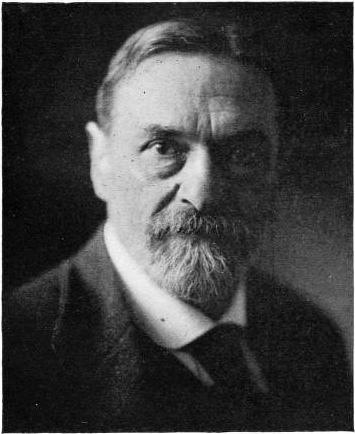
Why Pedro Figari matters
Pedro Figari is one of the founding figures of modern Latin American painting and the artist most closely associated with the visual memory of Afro-Uruguayan candombe culture and the gaucho life of the Rio de la Plata pampas. He came to painting late and without formal training in art, after a full first career as a lawyer, journalist, politician, and arts educator, and produced almost his entire mature body of work in roughly the last fifteen years of his life. His paintings hold permanent places in the national museums of Uruguay and Argentina and in MASP in Sao Paulo, and his image and work appear on Uruguay's currency. For a collector, he represents an artist of confirmed regional historical importance whose auction market remains comparatively thin, fragmented across many small houses, and not anchored by a single authoritative catalogue or estate.
- Born
- 1861-06-29, Montevideo, Uruguay
- Nationality
- Uruguayan
- Media
- Painting, Drawing
- Movement
- Early Modernism
- Education
- Doctorate in Jurisprudence, Universidad de la Republica, Montevideo, graduation year given as 1885 to 1886 depending on source. Informal painting study with Godofredo Sommavilla in Montevideo. No formal fine art degree is documented.
- Signature motifs
- Candombe scenes, Gaucho and rural pampas scenes, Afro-Uruguayan cultural life
- Representation
- Galeria Estacao, Sao Paulo, Juan E. Gomensoro, since 1835, Punta del Este
By the numbers
- USD 218,500Highest identified auction priceCandombe, Sotheby's New York, 25 May 2011. Not confirmed as the current record.
- Grand Prize and Gold Medal1930 honorsCentennial Exhibition, Montevideo, and Ibero-American Exhibition, Seville
- 5 major institutionsMuseum collectionsMuseo Figari, MNAV, Museo Blanes, MNBA Buenos Aires, MASP
- No exclusive representativeGallery representationWorks circulate via multiple dealers, including Galeria Estacao, Sao Paulo
Selected works
Click any work to view it full screen.
Biography
Pedro Figari was born on 29 June 1861 in Montevideo, Uruguay. He completed his secondary studies in Montevideo and went on to earn a doctorate in jurisprudence at the Universidad de la Republica, graduating in the mid 1880s (sources give either 1885 or 1886) with a thesis on agrarian law. He built a career as a criminal and civil defense lawyer, journalist, and politician, and later directed Uruguay's national school of arts and trades, where he promoted an industrial arts curriculum grounded in local craft traditions. Alongside this career he took informal drawing and painting lessons with the Italian painter Godofredo Sommavilla in Montevideo. He had no formal academy training in fine art.
Figari did not turn to painting seriously as a full-time pursuit until his sixties. His mature work, built from memory rather than direct observation, depicts candombe dances and gatherings, Afro-Uruguayan family and social life, gauchos, rural estancias, and colonial-era interiors and patios, rendered in a loose, flattened, intensely colored style. In 1925 he moved to Paris, where he continued to paint and exhibit and where, according to later biographical accounts, his work drew the attention of French critics including Louis Vauxcelles, Andre Salmon, Andre Warnod, Andre Lhote, and Jean Cassou, though no exact verbatim critical statement from any of them has been located and verified in available sources. In 1930 he received Uruguay's Grand Prize of Painting at the Centennial of Uruguayan Independence Exhibition in Montevideo and a Gold Medal at the Ibero-American Exhibition in Seville, where he served as his country's official delegate. He returned to Montevideo in 1933 and continued to paint until his death. According to an account from the director of the Museo Figari, he was found dead in his bed on the morning of 24 July 1938, at his home on Bulevar Artigas in Montevideo, at age 77.
In 1995 Uruguay's Banco Central established the Premio Figari, an annual prize named in his honor for outstanding contemporary Uruguayan visual artists, later administered by the Museo Figari; his portrait and a reproduction of one of his paintings have appeared on Uruguayan banknotes since that year.
Critical reception
Figari's reputation rests substantially on institutional recognition rather than a continuous critical literature. His Paris years reportedly brought him into contact with prominent French critics of the period, though no exact quotation from that circle has been verified for this profile. Museum programming has done the heavier work of establishing his standing: he was included in the Museum of Modern Art's "Latin American Artists of the Twentieth Century" in 1993 and "Drawings in Latin America" in 1998, and MASP in Sao Paulo mounted a dedicated exhibition, "Pedro Figari: African Nostalgias," exploring his imagining of Afro-Uruguayan life. A 2024 Sao Paulo exhibition, "Leste do Eden," placed him in dialogue with later artists, suggesting continued curatorial interest in situating him within a broader genealogy of Latin American modernism.
Market
The clearest documented high-value sale identified for Figari is "Candombe," reported sold for USD 218,500 at Sotheby's, New York, on 25 May 2011, with a second high result of "El Palito," USD 216,000, also at Sotheby's New York, on 31 May 2007. Neither figure could be independently confirmed against a primary auction-house or press record, so both are presented as the highest specific sales identified in current research rather than as a definitively confirmed all-time record.
Beyond those two documented results, Figari's market is large in volume and thin in reliable public price history. Auction aggregators list well over 2,200 recorded sales attributed to him across many small and mid-sized houses, reflecting decades of steady production and broad regional collecting interest, particularly in Uruguay, Argentina, and Brazil. There is no single gallery or estate representative; recent gallery activity has come from exhibiting dealers such as Galeria Estacao and Millan Gallery in Sao Paulo and Juan E. Gomensoro in Punta del Este, drawing on works from private collections rather than from a controlled primary market.
Top auction results
| Work | Price | Sale |
|---|---|---|
| Candombe (2011) | USD 218,500 | Sotheby's, New York, 2011-05-25 |
| El Palito (2007) | USD 216,000 | Sotheby's, New York, 2007-05-31 |
Selected exhibitions
| Years | Exhibition | Venues |
|---|---|---|
| 1925 to 1933 | Paris exhibitions (various venues) | Paris, France |
| 1930 | Exposicion del Centenario del Uruguay | Montevideo, Uruguay. Grand Prize of Painting awarded. |
| 1930 | Exposicion Iberoamericana de Sevilla | Seville, Spain. Gold Medal awarded; Figari served as Uruguay's official delegate. |
| 1947 | Paintings by Pedro Figari | Museum of Fine Arts, Houston |
| 1993 | Latin American Artists of the Twentieth Century | Museum of Modern Art, New York |
| 1998 | Drawings in Latin America | Museum of Modern Art, New York |
| 2018 | Pedro Figari: African Nostalgias | Museu de Arte de Sao Paulo Assis Chateaubriand (MASP), Sao Paulo |
| 2024 | Leste do Eden (East of Eden) | Galeria Estacao and Millan Gallery, Sao Paulo |
Museum collections
- Museo Figari, Montevideo
- Museo Nacional de Artes Visuales, Montevideo
- Museo Juan Manuel Blanes, Montevideo
- Museo Nacional de Bellas Artes, Buenos Aires
- Museu de Arte de Sao Paulo Assis Chateaubriand (MASP), Sao Paulo
Awards and honors
- Grand Prize of Painting, Exposicion del Centenario del Uruguay, Montevideo (1930)
- Gold Medal, Exposicion Iberoamericana de Sevilla (1930)
Authentication and provenance
No catalogue raisonne.
No published catalogue raisonne has been identified for Figari. Given the very large volume of works attributed to him in the secondary market, attribution and verification are best anchored to museum holdings, principally the Museo Figari collection in Montevideo, and to established auction house specialists.
Primary reference: https://www.museofigari.gub.uy/innovaportal/v/6227/20/mecweb/pedro-figari?topmenuid=6227&leftmenuid=0
What collectors should know
There is no published catalogue raisonne for Figari, and no single gallery or estate representative controls his market, which places extra weight on provenance and on cross-checking against known museum holdings, particularly the Museo Figari collection in Montevideo. The sheer volume of works attributed to him across small auction houses means quality and attribution confidence vary widely from lot to lot. Collectors should also treat any single record price with caution: the highest figure identified in current research is a 2011 New York sale of "Candombe" that could not be independently corroborated against a primary auction-house record, so it should be read as indicative rather than definitive.
Further reading and resources
Data current as of 2026-07-16.

