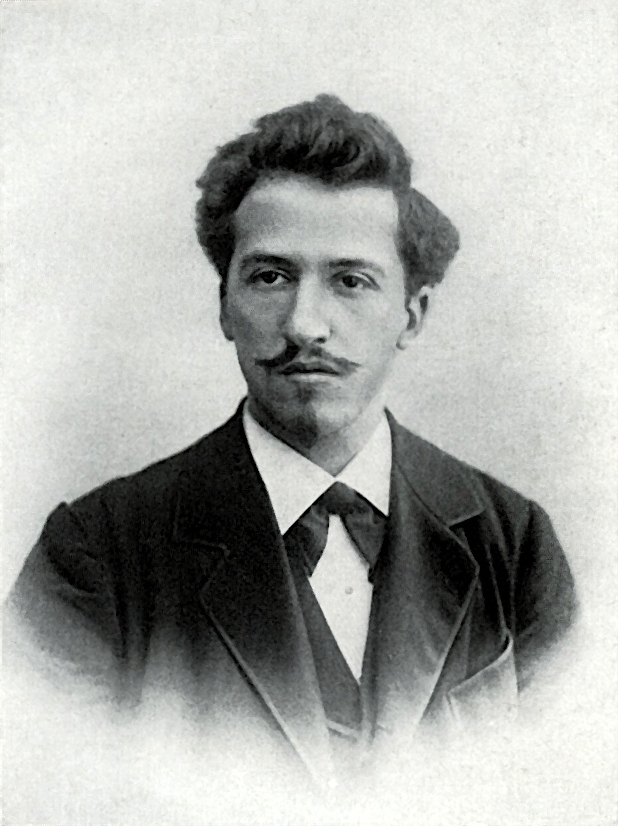
Why Piet Mondrian matters
Piet Mondrian is one of the founding figures of abstract art and the source of one of the most recognizable visual languages of the twentieth century: the grid of black lines and planes of red, blue, and yellow. His influence runs far beyond painting, into architecture, design, and fashion. For a collector, he represents the rarest tier of the modern market, a canonical name with a finite supply of mature grid paintings, where the few works that reach auction can command prices reserved for the most established blue-chip artists.
- Born
- 1872-03-07, Amersfoort, Netherlands
- Nationality
- Dutch
- Media
- Painting
- Movement
- De Stijl, Neoplasticism, Modernism
- Education
- Rijksakademie van beeldende kunsten (Academy of Fine Arts), Amsterdam, from 1892
- Signature motifs
- Grid of black lines, Primary-color planes, Pure abstraction
- Representation
- Mondrian/Holtzman Trust
By the numbers
- USD 51MAuction highComposition No. II (1930), Sotheby's New York, 2022
- De Stijl; NeoplasticismMovement
- Broadway Boogie Woogie (1942 to 1943), MoMAFinal works
- Mondrian/Holtzman TrustEstate
Selected works
Click any work to view it full screen.
Biography
Piet Mondrian was born in Amersfoort, the Netherlands, in 1872, and trained at the Rijksakademie in Amsterdam from 1892. His early work was naturalistic, rooted in Dutch landscape, but a series of influences reshaped it: the Theosophical Society, which he joined in 1909, and Cubism, which he encountered after moving to Paris in 1911. Over the following years he reduced the landscape to its structural essentials, and by the late 1910s he had arrived at full abstraction.
With Theo van Doesburg and others he co-founded the De Stijl movement in 1917 and developed the theory he called Neoplasticism, or new plastic art: a vocabulary restricted to straight horizontal and vertical lines, the three primary colors, and the non-colors black, white, and gray. The mature grid paintings, produced from the early 1920s, are the works most associated with his name.
Mondrian lived in Paris through the interwar years, moved to London in 1938, and emigrated to New York in 1940 to escape the war. The city and its music energized his late work. His final completed painting, Broadway Boogie Woogie of 1942 to 1943, broke the black grid into rhythmic blocks of color and now hangs at the Museum of Modern Art. He died in New York in 1944, leaving the related Victory Boogie Woogie unfinished.
Critical reception
Mondrian is treated by historians and institutions as a foundational figure of abstraction, ranked among the most consequential artists of the twentieth century. Critical writing emphasizes the discipline of his reduction, the way a deliberately narrow vocabulary of line and primary color was meant to express universal order rather than decoration. When Broadway Boogie Woogie was first shown at the Museum of Modern Art in 1943, the critic Clement Greenberg admired the daring of the late work while noting how far it departed from the precise execution of the earlier grids. Later scholarship, including the major 1995 retrospective organized with the Gemeentemuseum and MoMA and the 2022 anniversary survey at the Fondation Beyeler, framed his development as a steady logical progression from landscape to pure abstraction. The recurring theme is Mondrian as a theorist as much as a painter, whose work carried a philosophical program rooted in Theosophy and a search for equilibrium. Debate centers less on his importance than on how literally to read the spiritual ambitions behind the grids.
Watch
Market
Mondrian's auction high is Composition No. II of 1930, which sold for USD 51 million at Sotheby's New York on 14 November 2022, narrowly surpassing his previous record. That earlier mark, USD 50.6 million, was set in 2015 by Composition No. III, with Red, Blue, Yellow, and Black (1929) at Christie's. In May 2025 a 1922 grid painting, Composition with Large Red Plane, Bluish Gray, Yellow, Black and Blue, sold for USD 47.6 million at Christie's, short of the record but confirming sustained demand at the top of his market. The defining feature of that market is scarcity: the supply of fully mature grid paintings in private hands is very small, and the strongest examples appear at auction only rarely.
Top auction results
| Work | Price | Sale |
|---|---|---|
| Composition No. II (1930) | USD 51,000,000 (USD 51,000,000) | Sotheby's, New York, 2022-11-14 |
| Composition No. III, with Red, Blue, Yellow, and Black (1929) | USD 50,565,000 (USD 50,565,000) | Christie's, New York, 2015-05-12 |
| Composition with Large Red Plane, Bluish Gray, Yellow, Black and Blue (1922) | USD 47,560,000 (USD 47,560,000) | Christie's, New York, 2025-05-12 |
Selected exhibitions
| Years | Exhibition | Venues |
|---|---|---|
| 1995 | Piet Mondrian: 1872 to 1944 | Gemeentemuseum Den Haag; National Gallery of Art, Washington; Museum of Modern Art, New York |
| 1971 | Piet Mondrian | Solomon R. Guggenheim Museum, New York |
| 2014 to 2015 | Mondrian and his Studios | Tate Liverpool |
| 2022 to 2023 | Mondrian. Evolution | Fondation Beyeler, Riehen (150th anniversary) |
Museum collections
- Kunstmuseum Den Haag, The Hague (formerly Gemeentemuseum)
- Museum of Modern Art, New York
- Tate, London
- Solomon R. Guggenheim Museum, New York
- The Art Institute of Chicago
- Centre Pompidou, Paris
Authentication and provenance
Catalogue raisonne published.
A catalogue raisonne of Mondrian's work exists. The Mondrian/Holtzman Trust manages the estate and intellectual property; provenance and literature history are central to attribution.
Primary reference: https://www.tate.org.uk/art/artists/piet-mondrian-1651
What collectors should know
Mondrian sits in the thinnest and most canonical part of the modern market. The supply of mature grid paintings outside museums is extremely limited, which means his market is defined by scarcity rather than volume, and a handful of major sales carry the entire price history. A catalogue raisonne and the role of the Mondrian/Holtzman Trust give the market a firm documentary basis, placing weight on provenance and literature for any individual work, and the breadth of museum holdings, from Kunstmuseum Den Haag to MoMA, signals durable institutional standing. For a collector, the practical implication is that headline results reflect specific, rarely available works rather than a liquid market, and any single figure should be read in that light.
Further reading and resources
Data current as of 2026-06-20.

