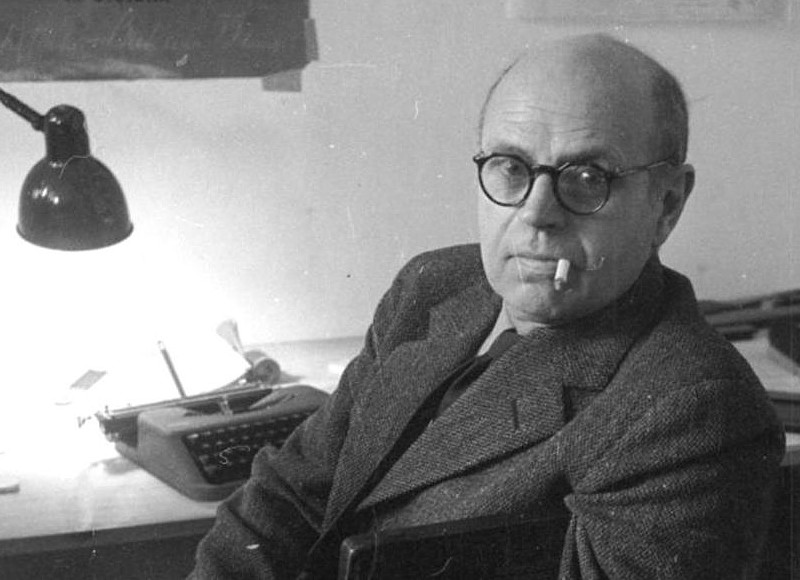
Why Poul Henningsen matters
Poul Henningsen, universally known in Denmark by his initials PH, is the architect, designer, and cultural critic behind the multi-shade, glare-free lighting system that Louis Poulsen has manufactured continuously since 1925. He is a foundational figure in Danish Modern design, and his lamps, most famously the layered PH pendant and the later PH Artichoke, sit in the permanent design collections of the Museum of Modern Art, the Metropolitan Museum of Art, the Victoria and Albert Museum, and Designmuseum Danmark. For a collector, he is a study in a different kind of market than a painter's: there is no catalogue raisonne, the works are industrially produced rather than unique, and value depends heavily on period, edition, and condition rather than a single artist's hand.
- Born
- 1894-09-09, Ordrup, Denmark
- Nationality
- Danish
- Media
- Lighting design, Architecture, Industrial design
- Movement
- Danish Modern, Scandinavian design
- Education
- Realeksamen, 1910; technical and architectural studies at Det tekniske Selskabs Skole (Frederiksberg Technical School / Copenhagen Technical College), 1911 to 1917; three semesters at Polyteknisk Laereanstalt (Technical University of Denmark) from 1914. Left without a final examination or degree.
- Signature motifs
- Multi-shade PH lamp system, PH Artichoke lamp, Glare-free layered shade design
- Representation
- Louis Poulsen
By the numbers
- USD 225,000Auction highRare Spiral ceiling light, Phillips; exact sale date not published in source
- Gold medal1925 Paris ExpositionAwarded for the Paris Lamp, precursor to the PH lamp system
- MoMA, The Met, V&A, and moreMuseum collectionsLighting designs held in major international design collections
- Louis PoulsenManufacturer and stewardContinuous production and archival stewardship of PH lighting since 1925
Selected works
Click any work to view it full screen.
Biography
Poul Henningsen was born on 9 September 1894 in Ordrup, Denmark. He took his realeksamen, a lower secondary school exam, in 1910 and entered a masonry apprenticeship the same year. From 1911 to 1917 he pursued technical and architectural studies, first at what is variously described as the Frederiksberg Technical School and Det tekniske Selskabs Skole, and, beginning in 1914, for three semesters at Polyteknisk Laereanstalt, the forerunner of the Technical University of Denmark. He left this course of study without a final examination or degree, and Danish biographical sources are consistent on this point even though at least one commercial source claims he graduated in 1920.
Henningsen was a genuinely multidisciplinary figure in Danish public life between the world wars: architect, journalist, cultural and social critic, film director, and writer of revue songs. His defining achievement was the "Paris Lamp," a shade system designed to eliminate glare by controlling the direction and distribution of light, which won a gold medal at the 1925 International Exhibition of Modern Decorative and Industrial Arts in Paris. That award launched a lifelong collaboration with the Danish manufacturer Louis Poulsen, which continued to develop and produce his lamps, including the System PH and the PH Artichoke, through the following decades. His lamps were shown at subsequent world's fairs in Barcelona in 1929, Brussels in 1935, and New York in 1939. Poul Henningsen died on 31 January 1967 in Hillerod, Denmark.
Critical reception
Henningsen is treated by museums and design historians as one of the central figures of Danish Modern design, credited with turning the technical problem of glare into a defining aesthetic and social idea: light that served people rather than showing off a bulb. Louis Poulsen has framed him, in its own designer materials, as the "Original Master of Light," language that reflects manufacturer and institutional consensus rather than a single critic's verdict. His parallel career as a sharp-tongued social critic, journalist, and revue songwriter is consistently noted in Danish biographical sources as inseparable from his design work, reinforcing the view that his lamps were conceived as much as social commentary as engineering. No verbatim critical quotation from a named critic in a major outlet could be confirmed for this profile, so none is reproduced here.
Market
Henningsen's market runs through design auction houses and dealers that handle twentieth century Scandinavian design, chiefly Bruun Rasmussen in Copenhagen and Phillips, rather than through fine art salerooms. The highest documented price identified in current research is USD 225,000, paid at Phillips for a rare Spiral ceiling light originally made for the Headquarters Assembly Hall of the Danish Consumers' Cooperative Society in Albertslund; the exact sale date is not published in the available source record. Bruun Rasmussen has separately recorded a PH piano from 1931 that fetched DKK 250,000 and a PH Spiral lamp, designed in 1942 for the Grand Assembly Hall at Aarhus University, that set a hammer price record of DKK 220,000; neither sale's exact date is documented in the sources reviewed. Because auction results for design objects are unevenly archived across houses and currencies, a definitive worldwide top three cannot be established with confidence, and individual lamps have also traded for far smaller sums, reflecting a market where scale, rarity, and period of manufacture drive price more than they would for a unique work.
Top auction results
| Work | Price | Sale |
|---|---|---|
| Rare Spiral ceiling light, designed for the Headquarters Assembly Hall, Danish Consumers Cooperative Society, Albertslund | USD 225,000 (USD 225,000) | Phillips |
Selected exhibitions
| Years | Exhibition | Venues |
|---|---|---|
| 2026 | Poul Henningsen Centennial: 100 Years of PH Lighting with Louis Poulsen | Louis Poulsen, 3daysofdesign, Copenhagen |
| 1939 | New York World's Fair | New York |
| 1935 | Brussels International Exposition | Brussels |
| 1929 | Barcelona International Exposition | Barcelona |
| 1925 | International Exhibition of Modern Decorative and Industrial Arts | Paris |
Museum collections
- Museum of Modern Art, New York
- The Metropolitan Museum of Art, New York
- Victoria and Albert Museum, London
- Designmuseum Danmark, Copenhagen
- Art Institute of Chicago
- Nationalmuseum, Stockholm
- National Gallery of Victoria, Melbourne
- Cooper Hewitt, Smithsonian Design Museum, New York
Awards and honors
- Gold medal, International Exhibition of Modern Decorative and Industrial Arts, Paris, for the Paris Lamp (1925)
Authentication and provenance
No catalogue raisonne.
No catalogue raisonne exists for Poul Henningsen. Because most of his surviving output is industrially produced lighting rather than unique objects, authentication rests on manufacturing records and archival documentation held by Louis Poulsen, on period-correct construction details, and on provenance through recognized design dealers and auction houses.
Primary reference: https://www.louispoulsen.com/en-us/professional/about-us/designers/poul-henningsen
What collectors should know
Because Louis Poulsen still manufactures many PH designs today, the market draws a sharp line between vintage, period-correct examples and current production, and that distinction, more than any signature, is what authentication turns on in the absence of a catalogue raisonne. Prices vary enormously by object type, from modest sums for standard production lamps to results of USD 225,000 or more for rare, early, or exhibition-specific pieces such as the Spiral ceiling light or the PH piano. Provenance through a recognized design house such as Bruun Rasmussen, Phillips, or Sotheby's, and documentation tying a piece to a specific production period, matter more here than they would for a unique painting, and collectors should treat any single top-price claim with caution given how unevenly design-auction results are archived and converted across currencies.
Further reading and resources
Data current as of 2026-07-16.

