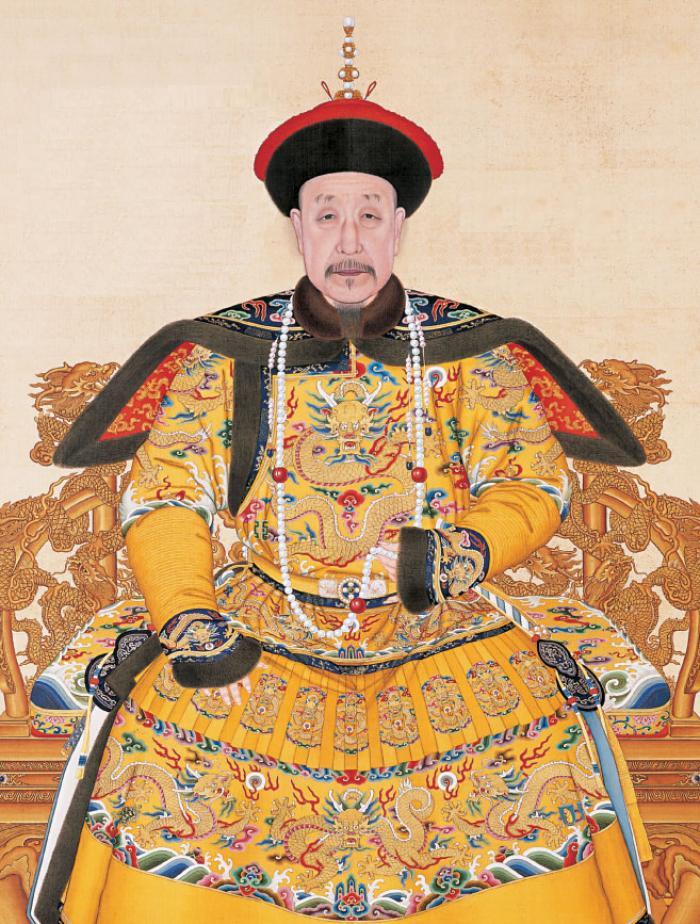
Why Qianlong Emperor matters
The Qianlong Emperor, sixth ruler of the Qing dynasty, is the single most important patron and connoisseur in the history of Chinese imperial art, and he is also, by his own hand, a prolific calligrapher and poet whose works occasionally appear at auction. For collectors, his name sits at the center of two very different markets: a small, rarefied trade in works actually written or inscribed by the emperor, and a much larger, more liquid trade in "Qianlong period" decorative arts made by his imperial workshops and bearing his reign mark, which are not personally authored objects at all.
- Born
- 1711-09-25, Beijing, China
- Nationality
- Chinese (Qing dynasty)
- Media
- Calligraphy, Painting, Poetry
- Movement
- Qing dynasty imperial art
- Education
- No formal degrees. Imperial court education under the Kangxi and Yongzheng emperors: classical tutoring from Hanlin Academy scholars from about age six, instruction at the Palace School from about age ten, and a special imperial examination on the Confucian classics passed at age twenty two.
- Signature motifs
- Poem colophons and calligraphic inscriptions added to paintings, Personal connoisseurship seals such as "Qianlong Yubi"
By the numbers
- 1736 to 1795ReignSixth emperor of the Qing dynasty; remained paramount ruler as Retired Emperor until his death in 1799
- USD 18.9MTop price, authored workWhite Dagoba Hill calligraphic handscrolls, Poly International Auction, Beijing, 2 December 2014
- GBP 53.1M (reported)Qianlong-period decorative arts (reign mark, not authored)18th-century porcelain vase, Bainbridges, London, 11 November 2010; an anonymous imperial-workshop object, not a work by his hand
- NoneRepresented byNo gallery or estate; works are held and exhibited chiefly through the Palace Museum, Beijing
Selected works
Click any work to view it full screen.
Biography
Aisin-Gioro Hongli, known by his reign title Qianlong, was born on 25 September 1711 in Beijing. His grandfather, the Kangxi Emperor, identified him early as an exceptional heir and personally arranged his education, having him tutored in the Chinese classics by Hanlin Academy scholars from about age six and moving him into instruction at the Palace School around age ten. His curriculum ran from Confucian philosophy in the early morning to calligraphy and painting in the late afternoon, and he was trained in Chinese, Manchu, Mongolian, Tibetan, and Chagatai. At twenty-two he passed a special imperial examination on the Confucian classics.
Qianlong reigned from 1736 to 1795, presiding over the Qing empire at its territorial and cultural height. He was a serious practitioner as well as a patron: he wrote an enormous body of poetry and inscriptions, practiced calligraphy modeled on masters such as Wang Xizhi, and frequently added poem colophons and personal seals to paintings in the imperial collection. His court integrated European Jesuit painters, notably Giuseppe Castiglione, whose hybrid style blending Western realism with Chinese brushwork became a hallmark of Qianlong-era court painting.
In 1795 he abdicated in favor of his son, the Jiaqing Emperor, but retained effective power as Retired Emperor. He died on 7 February 1799 at Yangxin Hall in the Forbidden City, Beijing.
Critical reception
Emperor Qianlong's fondness for calligraphy and painting laid an important foundation for the development of the two art forms within the court.
Museums and scholars consistently treat Qianlong as the central figure of Qing court art: a ruler who used his personal practice of calligraphy, poetry, and painting, together with his patronage of hybrid Sino-European court painting under Giuseppe Castiglione, to shape the aesthetic identity of his reign. Palace Museum curator Zhao Ziru, quoted in China.org.cn in 2019, said "Emperor Qianlong's fondness for calligraphy and painting laid an important foundation for the development of the two art forms within the court." His enormous personal literary output, including tens of thousands of poems and inscriptions recorded in palace archives, has kept him a subject of active museum programming, most recently a 2026 exhibition at the Art Museum of the Chinese University of Hong Kong drawn from the Huaihaitang Collection.
Market
Works genuinely written or inscribed by Qianlong himself are rare at auction, since the great majority of his personal output remains in museum hands, chiefly the Palace Museum in Beijing. The clearest benchmark for this authored market is a set of calligraphic handscrolls, White Dagoba Hill, sold for CNY 116,000,000 (about USD 18.9 million) at Poly International Auction in Beijing on 2 December 2014, reported at the time as the highest price paid that year for a work written by the emperor.
A separate and far larger market exists for "Qianlong period" or "Qianlong mark" decorative arts: porcelain, jade, and other objects produced by imperial workshops during his reign and bearing his reign mark, but not made or written by him personally. That category has produced much higher headline prices, including a reported GBP 53.1 million for an 18th-century porcelain vase sold at Bainbridges in London on 11 November 2010, and CNY 265.7 million (about USD 41.6 million) for the "Revolving Phoenix" vase at Poly International Auction in Beijing on 7 June 2021. Collectors should treat these two categories as distinct markets governed by different logic.
Top auction results
| Work | Price | Sale |
|---|---|---|
| White Dagoba Hill (calligraphic handscrolls) | USD 18,900,000 (CNY 116,000,000) | Poly International Auction, Beijing, 2014-12-02 |
Selected exhibitions
| Years | Exhibition | Venues |
|---|---|---|
| 2026 | The Qianlong Emperor: A Legacy in Art, The Huaihaitang Collection | Art Museum, The Chinese University of Hong Kong |
| 2019 | Emperor Qianlong's Calligraphy on Display | Palace Museum, Beijing |
| 2015 | A Golden Age of China: Qianlong Emperor, 1736 to 1795 | National Gallery of Victoria, Melbourne |
| 2011 | The Emperor's Private Paradise: Treasures from the Forbidden City / Commemorating His Majesty | Metropolitan Museum of Art, New York |
| 2010 | Qianlong and the Forbidden City in the Eighteenth Century | Peabody Essex Museum, Salem, Massachusetts |
| 2004 | Splendors of China's Forbidden City: The Glorious Reign of Emperor Qianlong | Dallas Museum of Art |
Museum collections
- Palace Museum, Beijing (Forbidden City)
- Freer Gallery of Art, National Museum of Asian Art, Smithsonian Institution, Washington, D.C.
- Art Museum, The Chinese University of Hong Kong
Authentication and provenance
No catalogue raisonne.
No catalogue raisonne exists for this historical figure and there is no certificate-of-authenticity program. Works attributed to the Qianlong Emperor are authenticated through seal and reign-mark analysis, provenance research, and connoisseurship by museum curators and the Chinese works of art departments of major auction houses.
Primary reference: https://en.wikipedia.org/wiki/Qianlong_Emperor
What collectors should know
There is no catalogue raisonne for Qianlong, and authenticity rests on seal analysis, reign-mark study, provenance, and the connoisseurship of museum curators and the Chinese works of art departments at major auction houses. The most important distinction for a buyer is between works personally written, inscribed, or painted by the emperor, which are scarce and trade in the low tens of millions of dollars at most, and "Qianlong period" decorative arts produced by anonymous imperial workshops, which are far more numerous and can command dramatically higher prices under different valuation drivers. There is no gallery or estate representing Qianlong; nearly everything traces back to museum or former imperial-collection provenance, with the Palace Museum in Beijing as the principal holder and lender.
Further reading and resources
Data current as of 2026-07-16.

