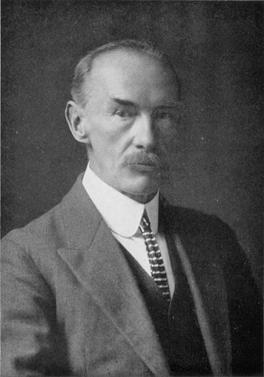
Why Reginald Brill matters
Reginald Brill is a mid-tier but institutionally durable figure in twentieth-century British art, a Slade-trained, Prix de Rome painter who spent three decades shaping British art education as Principal of Kingston School of Art while building a body of large-scale, socially conscious figure paintings. His market is thin and irregular, but his paintings sit inside Tate Britain, the Wellcome Collection, and a dedicated civic collection in Kingston, making him a useful case study in how museum presence and auction scarcity can coexist for a well-documented but commercially under-tracked artist.
- Born
- 1902-05-06, Hither Green, Lewisham, London, England
- Nationality
- British
- Media
- Painting, Watercolour, Drawing
- Movement
- British social realism, Figurative painting
- Education
- St Martin's School of Art, London, evening classes, c. 1917 to 1920; Slade School of Fine Art, 1921 to 1924, under Henry Tonks; British School at Rome, 1927 to 1929, following the Prix de Rome in Decorative Painting, 1927
- Signature motifs
- Monumental labourer figures, Social realist genre scenes, Kingston topographical watercolours
- Representation
- No confirmed current gallery or estate representation. Secondary-market activity is led by Waterhouse & Dodd, London, with individual works also handled by smaller UK dealers.
By the numbers
- GBP 80,500Auction highExcavators, Sotheby's, 'Made in Britain' sale; exact sale date not confirmed in sources
- 1927Prix de RomeDecorative Painting, British School at Rome, 1927 to 1929
- Principal, c. 1934 to 1962Kingston School of ArtStart year given variably as 1934 or 1938 across sources
- 2 paintingsTate Britain holdingsRest (1956), acquired 1998; Unemployed (1934-6), acquired 2019
Biography
Reginald Charles Brill was born in Hither Green, Lewisham, London, on 6 May 1902. As a teenager working in a City office, he attended evening classes at St Martin's School of Art before winning a scholarship to the Slade School of Fine Art, where he studied under Henry Tonks from 1921 to 1924. In 1927 he won the Prix de Rome in Decorative Painting and spent two years, 1927 to 1929, at the British School at Rome. He worked in Cairo in 1930. In 1925 he married the artist and artist's model Ethel Rosie Clarke, known as Rosalie; the couple had no children.
In January 1934 (some sources give a later start year of about 1938) Brill became Principal of Kingston School of Art, a post he held for close to three decades. While in Kingston he initiated a topographical collection of paintings of the town that grew into what is now known as The Brill Collection, held at Kingston Museum and Kingston History Centre. He exhibited regularly at the Royal Academy from 1931 through at least 1970, and also showed at the Leicester Galleries in London and, after settling at Little Hall in Lavenham, Suffolk, around East Anglia. He wrote two books, Modern Painting and Art as a Career. Brill died at Little Hall, Lavenham, Suffolk, on 14 June 1974. Later that year the Phoenix Gallery in Lavenham held the retrospective "Works of Reginald Brill."
Critical reception
Writers on Brill, largely gallery and museum sources rather than contemporaneous newspaper critics, consistently frame him as a chronicler of manual labour and everyday life who brought a monumental, large-scale figure style to socially observed subject matter, tempered by wit rather than polemic. His Prix de Rome training and Slade grounding under Henry Tonks are repeatedly cited as the technical foundation for this approach, and his decades running Kingston School of Art are treated as inseparable from his standing, positioning him as an educator-practitioner within British inter-war and postwar figuration. Tate's 2019 rehang inclusion of Unemployed has been read as a renewed institutional signal that his social realism merits reassessment alongside better-known contemporaries.
Market
Brill's auction record is thinly documented and shows a wide spread. His best-attested high price is GBP 80,500 for Excavators at a Sotheby's British postwar art sale titled "Made in Britain," reported at the time as a record for the artist and a substantial jump over an earlier record of GBP 38,900 set by Rest (1956) in 1998; the exact date of the Excavators sale is not confirmed in available sources. More recent activity has been far more modest: Asleep sold for GBP 4,100 at Reeman Dansie in Colchester on 14 May 2025, and other lots have traded for a few hundred pounds. Institutional interest has continued alongside this thin trading record; Tate acquired Unemployed (1934-6) in 2019 and included it in a rehang of the permanent collection, following the 1998 purchase of Rest through the Friends of the Tate Gallery.
Top auction results
| Work | Price | Sale |
|---|---|---|
| Excavators | GBP 80,500 | Sotheby's, London |
| Asleep (2025) | GBP 4,100 | Reeman Dansie, Colchester, UK, 2025-05-14 |
Selected exhibitions
| Years | Exhibition | Venues |
|---|---|---|
| 1931 to 1970 | Summer Exhibition (regular exhibitor) | Royal Academy, London |
| 1970 | Summer Exhibition, cat. no. 643 | Royal Academy, London |
| n.d. | Exhibited works | Leicester Galleries, London; various venues in East Anglia and Lavenham |
| 1974 | Works of Reginald Brill | Phoenix Gallery, Lavenham (posthumous retrospective) |
| 1985 | Retrospective | Kingston Polytechnic, the Royal Borough of Kingston, and Phoenix Gallery, Kingston |
| 1999 | Retrospective | Stanley Picker Gallery, Kingston University |
Museum collections
- Tate Britain, London
- Wellcome Collection, London
- Kingston Museum / Kingston History Centre (The Brill Collection), Kingston upon Thames
- The Box, Plymouth
- A public collection in Chelmsford (institution not further specified in available sources)
Awards and honors
- Prix de Rome in Decorative Painting (British School at Rome scholarship) (1927)
Authentication and provenance
No catalogue raisonne.
No catalogue raisonne is known, and no estate or foundation manages authentication for Brill. Provenance for his work traces largely through the Phoenix Gallery in Lavenham, where he was based and exhibited during his lifetime and where a posthumous retrospective was held in 1974, and through specialist dealers such as Waterhouse & Dodd.
Primary reference: https://artuk.org/discover/artists/brill-reginald-19021974
What collectors should know
There is no catalogue raisonne for Brill, and no estate or foundation administers authentication, so provenance research depends heavily on the exhibition record, particularly ties back to the Phoenix Gallery in Lavenham where he was based, and on specialist dealers such as Waterhouse & Dodd who have handled significant works. Auction supply is small and concentrated in UK regional and specialist British-art sales, and reported results range from the low hundreds of pounds to the tens of thousands, so any single result should be read in the context of the specific work rather than as a market trend. Given the absence of a formal representing gallery or estate, collectors should expect to lean on museum exhibition history, Royal Academy and retrospective records, and dealer provenance rather than a centralized authentication body.
Further reading and resources
Data current as of 2026-07-16.

