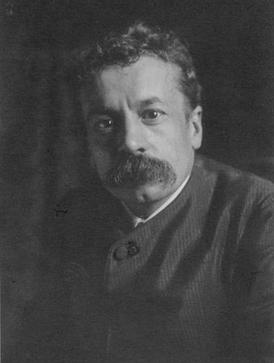
Why Rene Lalique matters
Rene Lalique is the defining name in Art Nouveau and Art Deco jewelry and glass, an artist whose career bridges two design movements and whose objects, from serpentine hair combs to illuminated glass fountains, remain benchmarks for how decorative art can carry fine-art ambition. For a collector, he is a study in a market built on rarity, condition, and connoisseurship of a decorative-arts oeuvre rather than on a single painting-style price ladder, and one where museum stewardship has done more to preserve his reputation than any living gallery ever could.
- Born
- 1860-04-06, Ay (Ay-Champagne), Marne, France
- Nationality
- French
- Media
- Jewelry, Glass design, Decorative arts
- Movement
- Art Nouveau, Art Deco
- Education
- College Turgot, Paris, from 1872; evening classes at the Ecole des Arts Decoratifs, Paris, c. 1874 to 1876; apprenticeship with goldsmith Louis Aucoc, Paris, mid-1870s; Crystal Palace School of Art (Sydenham), London, 1878 to 1880
- Signature motifs
- Naturalistic and floral forms, Insects and winged female figures, Frosted and opalescent glass, Perfume bottles and vases
- Representation
- "No gallery or estate representation; legacy stewarded by Lalique SA (Lalique Group) and the Musee Lalique, Wingen-sur-Moder"
By the numbers
- EUR 1.75MAuction highPorte aux Moineaux, chambranle cranté, sold 2011; auction house and exact date not verified
- Chevalier, 1897Legion d'HonneurAwarded for his display at the Brussels World's Fair; no further promotion is confirmed in available sources
- 1885 to 1945Career spanFounded his Paris jewelry and glass workshop in the mid-1880s; died in Paris in 1945
- Musee Lalique; Corning Museum of Glass; Musee des Arts Decoratifs; Chrysler Museum of ArtMuseum collections
Selected works
Click any work to view it full screen.
Biography
Rene Jules Lalique was born on 6 April 1860 in Ay, in the Marne region of France. He showed an early talent for drawing at the College Turgot in Paris, which he entered in 1872, and supplemented that schooling with evening classes at the Ecole des Arts Decoratifs in the mid-1870s. Following his father's death, he apprenticed with the Parisian goldsmith Louis Aucoc, learning the jewelry trade from the ground up. Around 1878 he moved to London and spent two years studying at the Crystal Palace School of Art in Sydenham, an experience that exposed him to the British Arts and Crafts sensibility he later folded into his own naturalistic style.
Back in Paris, Lalique established his own workshop in the mid-1880s, with sources placing the exact founding year between 1885 and 1888, initially producing jewelry for the great Parisian houses before designing under his own name. His jewelry, built around insects, flowers, and the female form rendered in enamel, horn, and semiprecious materials, won him the Croix de Chevalier de la Legion d'Honneur in 1897 for his display at the Brussels World's Fair. His display at the 1900 Exposition Universelle in Paris is widely credited with making his international reputation, though available sources do not confirm a specific medal or additional honor tied to that exhibition.
From the early 1900s Lalique increasingly turned from jewelry to glass, opening a shop at 24 Place Vendome in 1905 and eventually founding a glassworks at Wingen-sur-Moder in Alsace, the site that remains the sole Lalique factory today. His glass production, perfume bottles for Coty and other houses, vases, clocks, and architectural panels, reached its peak at the 1925 Exposition Internationale des Arts Decoratifs in Paris, where his fifty-foot illuminated glass fountain, Les Sources de France, was a centerpiece of the exhibition and a landmark of the Art Deco style.
Lalique died in Paris in 1945 at the age of 85. Sources disagree on the exact day: the Musee Lalique cites 1 May, while Encyclopaedia Britannica cites 5 May. A New York Times obituary appeared on 10 May 1945 but does not resolve which date is correct. The year, place, and cause (health decline in old age, not a documented illness or trial) are not in dispute. He was buried at Pere Lachaise Cemetery in Paris, and his son Marc Lalique took over the firm, later shifting its primary material to crystal.
Critical reception
Contemporary critics recognized Lalique's originality almost immediately. The jeweler and critic Henri Vever, describing Lalique's stand at the 1900 Exposition Universelle, wrote that visitors felt they were dreaming when they saw "a cockerel holding an enormous yellow diamond in its beak; a huge dragonfly with a woman's body and diaphanous wings, enameled country scenes sparkling with diamond dew-drops; ornaments like pine cones." That sense of Lalique as a jeweler who treated precious material as a vehicle for invention rather than status carried through his later glass period, when critics such as Roger Marx argued that the very originality that unsettled some observers had already secured his work's place in the history of French decorative art. Museums have reinforced that reading: institutions from the Corning Museum of Glass to the Musee des Arts Decoratifs in Paris treat his glass and jewelry as a continuous body of design experimentation rather than two separate careers.
Market
Lalique's market spans two distinct tiers. The bulk of activity is in jewelry, vases, perfume bottles, and smaller decorative glass, which trade at auction from modest sums into the low six figures. Above that sits a small number of exceptional architectural and glass works: specialist guides point to Porte aux Moineaux, chambranle cranté, a monumental glass door surround, as the artist's auction high at EUR 1,750,000 in 2011, though the specific auction house, city, and calendar date for that sale are not confirmed in available public records and should be treated as unverified pending further documentation. Market databases covering decorative arts and sculpture categories separately show high prices in the mid six figures for those categories, well below the 2011 architectural result, underscoring how thin the top tier of Lalique's market is.
Top auction results
| Work | Price | Sale |
|---|---|---|
| Porte aux Moineaux, chambranle cranté (2011) | EUR 1,750,000 |
Selected exhibitions
| Years | Exhibition | Venues |
|---|---|---|
| 1897 | Paris Salon | Societe des Artistes Francais, Paris (ivory and horn hair combs) |
| 1897 | Brussels World's Fair | Brussels |
| 1900 | Exposition Universelle | Paris |
| 1925 | Exposition Internationale des Arts Decoratifs et Industriels Modernes | Paris (Les Sources de France glass fountain) |
| mid-2010s | Rene Lalique: Enchanted by Glass | Corning Museum of Glass, Corning, New York (exact run dates unconfirmed) |
| unconfirmed | Rene Lalique: Enchanted by Glass (touring) | Chrysler Museum of Art, Norfolk, Virginia |
| 2015 | Maker and Muse: Women and 20th Century Art Jewelry | Richard H. Driehaus Museum, Chicago |
| unconfirmed | Rene Lalique, the inventor of modern jewellery | Musee Lalique, Wingen-sur-Moder (exact run dates unconfirmed) |
Museum collections
- Musee Lalique, Wingen-sur-Moder, France
- Corning Museum of Glass, Corning, New York
- Musee des Arts Decoratifs, Paris
- Chrysler Museum of Art, Norfolk, Virginia
Awards and honors
- Chevalier, Legion d'Honneur (Brussels World's Fair display) (1897)
Authentication and provenance
No catalogue raisonne.
A catalogue raisonne exists for Lalique's glass output, commonly cited by specialists as the R. Lalique catalogue raisonne, and is the standard reference for dating and authenticating his glassware. It does not cover his earlier jewelry production, so no single catalogue raisonne spans his full body of work. Authentication in practice relies on that glass catalogue, mold and mark study, the Musee Lalique archive, and the Lalique maison.
Primary reference: https://www.musee-lalique.com/en/discover/lalique-more-than-a-name/rene-lalique/
What collectors should know
There is no single, comprehensive catalogue raisonne covering Lalique's entire output. A widely used catalogue raisonne exists for his glass work and is the standard tool for authenticating marks, molds, and production variants, but his earlier jewelry is not covered by that same reference, which puts real weight on provenance, mold and signature study, and documentation from the Musee Lalique and the Lalique maison archive. Collectors should also be cautious with headline price figures: the reported EUR 1.75 million architectural record from 2011 lacks a confirmed auction house and sale date in public sources, and the broader market is dominated by far smaller decorative pieces, so any single top-end result should be read as an outlier rather than a market benchmark.
Further reading and resources
Data current as of 2026-07-11.

