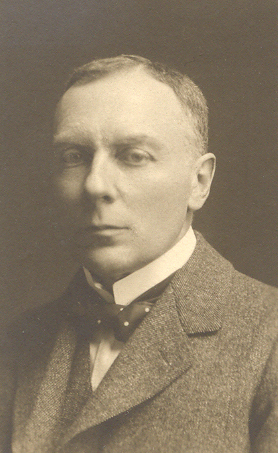
Why Robert Bevan matters
Robert Bevan, born Robert Polhill Bevan, is one of the founding members of the Camden Town Group, the circle of London painters who brought French Post-Impressionist color and structure into British art in the years before the First World War. He is best known for paintings of horses and horse fairs, London street and cab scenes, and landscapes of Sussex, Devon, and Cumberland, painted with the flat planes and strong color he absorbed from Gauguin and the Pont-Aven school. For a collector, he represents an entry point into early British modernism: a historically important, museum-collected figure whose auction market remains thin and comparatively affordable next to his Camden Town Group peers.
- Born
- 1865-08-05, Hove, Sussex, England
- Nationality
- British
- Media
- Painting, Watercolour, Lithography
- Movement
- Camden Town Group, Post-Impressionism, London Group
- Education
- Westminster School of Art, London, under Fred Brown, from 1888; Academie Julian, Paris, late 1880s to early 1890s. No degree recorded.
- Signature motifs
- Horses and horse fairs, Sussex and Devon landscapes, London street and cab scenes
- Representation
- Harry Moore-Gwyn Fine Art, Jenna Burlingham Fine Art
By the numbers
- GBP 500,000+Auction highAt Tattersall's, Sotheby's London, Modern and Post-War British Art sale; exact premium-inclusive price and sale date not published in sources reviewed, so cited as the best documented high result rather than a certified record
- Camden Town GroupFounding memberFirst group exhibition, 1911
- Tate, British Museum, V&A, National Portrait Gallery, Fitzwilliam MuseumMuseum collectionsAmong the public collections holding his work, per Art UK and Tate
- None confirmedCatalogue raisonne
Biography
Robert Polhill Bevan was born on 5 August 1865 in Hove, Sussex, England, the son of a wealthy Sussex banker. He studied at the Westminster School of Art in London under Fred Brown beginning in 1888, then continued his training at the Academie Julian in Paris. In 1890 and 1891 he worked in Pont-Aven, Brittany, and in the autumn of 1891 he traveled to Madrid to study Velazquez and Goya before continuing to Tangier. He returned to Brittany and met Paul Gauguin at Pont-Aven in 1894, an encounter that shaped his lifelong use of flattened form and bold, unmodulated color.
Bevan settled in London and married the Polish-born painter Stanislawa de Karlowska. His first one-man exhibition was held at the Baillie Gallery, London, in 1905. He became a founding member of the Camden Town Group, which held its first exhibition in 1911, and was also a founding member of the London Group and the Cumberland Market Group, associations that placed him at the center of London's pre-war avant-garde alongside artists such as Walter Sickert and Spencer Gore. Only one painting, The Cabyard, Night, entered a public collection during his lifetime: it was purchased by the Contemporary Art Society for the nation in 1913. He was elected to the New English Art Club in 1922.
Bevan died in London on 8 July 1925, following an operation for stomach cancer. Memorial exhibitions followed in 1926 at the Goupil Gallery in London and at the Brighton Public Art Galleries.
Critical reception
Bevan's reputation has centered on his ability to bring Post-Impressionist color discipline to distinctly English subjects, above all his paintings of horses, horse fairs, and London cab scenes. Reviewing the 1926 Goupil Gallery memorial exhibition, The Times praised his horse paintings, such as The Cabhorse, The Parade at Aldridges, and Crocks, for combining specialist knowledge with pictorial refinement. In his introduction to the same memorial exhibition catalogue, the painter John Nash noted that Bevan's late work showed him still developing in strength up to his death. Later museum scholarship, including Tate's ongoing engagement with the Camden Town Group, has continued to treat Bevan as a key bridge figure between French Post-Impressionism and British modern painting.
Market
Bevan's market is small and infrequent, consistent with an artist whose reputation rests primarily on museum and institutional standing rather than deep auction turnover. The best documented high result identified in current research is At Tattersall's, sold at Sotheby's London in a Modern and Post-War British Art sale for reportedly more than GBP 500,000 against a GBP 30,000 to 50,000 estimate; the exact premium-inclusive price and precise sale date have not been published in the sources reviewed, so this is presented as the highest documented result rather than a certified all-time record. One market database also cites a top price near USD 686,422 for an unspecified painting, a figure that could not be tied to a titled work, auction house, or date in available sources and is noted only as a point requiring further verification. No gallery or estate currently holds exclusive representation of Bevan's work. His paintings and prints circulate through UK secondary-market dealers, including Harry Moore-Gwyn Fine Art and Jenna Burlingham Fine Art, and through major auction houses such as Sotheby's, Christie's, and Lyon and Turnbull. The Fine Art Society mounted a dedicated exhibition of his prints and drawings in 2012, underscoring continued dealer interest in his work well after his death.
Top auction results
| Work | Price | Sale |
|---|---|---|
| At Tattersall's | GBP 500,000+ (exact figure not published) | Sotheby's, London |
Selected exhibitions
| Years | Exhibition | Venues |
|---|---|---|
| 1905 | First one-man exhibition | Baillie Gallery, London |
| 1911 | First Camden Town Group exhibition | London |
| 1926 | Robert Bevan Memorial Exhibition | Goupil Gallery, London |
| 1926 | Robert Bevan Memorial Exhibition | Brighton Public Art Galleries |
| 1940 | British Painting since Whistler | National Gallery, London |
| 1956 | Arts Council exhibition | Arts Council of Great Britain, touring |
| 1965 | Robert Bevan Centenary Exhibition | Ashmolean Museum, Oxford |
| 2012 | Pont-Aven to Camden Town: An Exhibition of Prints and Drawings | Fine Art Society, London |
Museum collections
- Tate, London
- British Museum, London
- Victoria and Albert Museum, London
- National Portrait Gallery, London
- Fitzwilliam Museum, Cambridge
- Herbert Art Gallery, Coventry
- Brighton Museum and Art Gallery
Awards and honors
- Elected member, New English Art Club (1922)
Authentication and provenance
No catalogue raisonne.
No published catalogue raisonne has been identified for Robert Bevan (born Robert Polhill Bevan). Works are verified primarily through exhibition history, family and estate provenance, and the specialist departments of auction houses such as Sotheby's and Christie's.
Primary reference: https://www.tate.org.uk/art/artists/robert-bevan-748
What collectors should know
There is no published catalogue raisonne for Bevan, so provenance, exhibition history, and specialist attribution from major auction houses carry particular weight when evaluating a work. He is not represented by a single exclusive gallery or a formally structured estate; interested collectors should expect to transact through secondary-market dealers or auction rather than a primary gallery relationship. His auction presence is thin, with relatively few high-value sales on record and limited public detail on exact prices and dates, so any single price point, including the At Tattersall's result noted above, should be read as an indicator rather than a dense trend line. His presence in major public collections, including Tate, the British Museum, the Victoria and Albert Museum, and the National Portrait Gallery, remains the strongest evidence of his lasting institutional standing.
Further reading and resources
Data current as of 2026-07-10.

