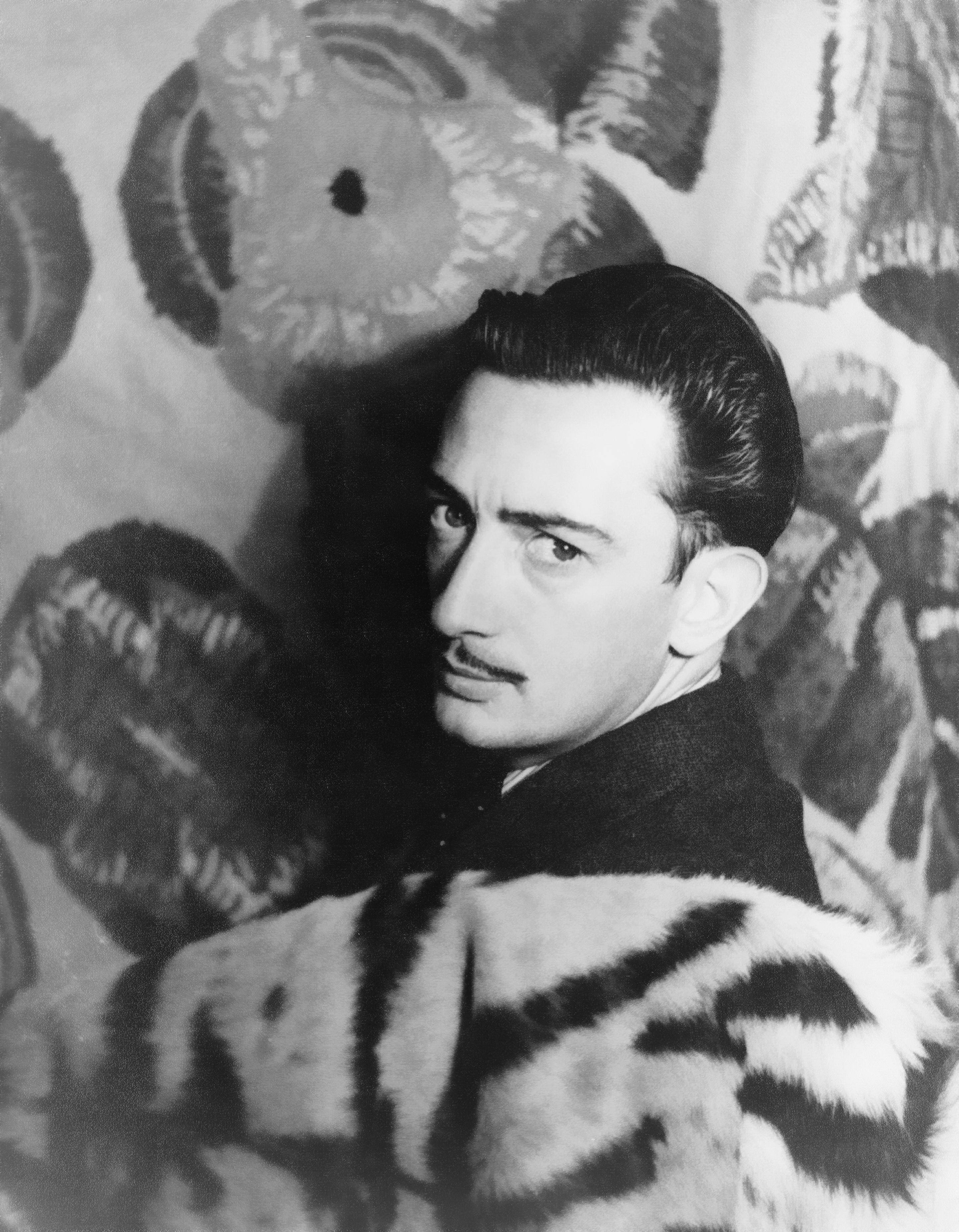
Why Salvador Dali matters
Salvador Dali is the most recognizable Surrealist who ever lived, an artist whose melting clocks are as close to universal visual literacy as modern painting gets. For a collector, he is a paradox worth understanding closely: a technically dazzling painter with a deep, multi-decade auction record on one side, and one of the most heavily forged names in the entire market on the other. The gap between those two facts is where most of the risk, and most of the opportunity, lives.
- Born
- 1904-05-11, Figueres, Catalonia, Spain
- Nationality
- Spanish
- Media
- Painting, Sculpture, Prints, Film
- Movement
- Surrealism, Modern
- Education
- Real Academia de Bellas Artes de San Fernando, Madrid (1921 to 1926, left without a degree)
- Signature motifs
- Melting clocks, Dream imagery, Double images, Religious and nuclear mysticism
- Representation
- Fundacio Gala-Salvador Dali
By the numbers
- USD 21.7MAuction highPortrait de Paul Eluard, Sotheby's London, 2011
- SurrealismMovement
- Online, paintings and sculptureCatalogue raisonneFundacio Gala-Salvador Dali
- Fundacio Gala-Salvador DaliEstate
Selected works
Click any work to view it full screen.
Biography
Salvador Dali was born on 11 May 1904 in Figueres, in the Catalonia region of Spain, and he died there on 23 January 1989. He enrolled at the Real Academia de Bellas Artes de San Fernando in Madrid in 1921, where he moved in a circle that included Luis Bunuel and Federico Garcia Lorca, but he left without a degree after a final expulsion in 1926. His early work passed through Impressionist and Cubist phases before he found the language that would define him.
In 1929 Dali aligned himself with the Paris Surrealists and co-created the film Un Chien Andalou with Bunuel. The early 1930s produced his signature works, above all The Persistence of Memory (1931), the small canvas of soft, melting watches that entered the Museum of Modern Art in New York in 1934. That same year he married Gala, the former wife of poet Paul Eluard, who became his lifelong muse and business partner. His relationship with the Surrealist group soured over his politics and his open embrace of commerce, and Andre Breton expelled him, recasting his name as the anagram Avida Dollars to mock his appetite for money.
After the Second World War, Dali moved into a self-described nuclear mysticism, fusing Catholic and classical imagery with an interest in science. He spent his later decades building the Teatre-Museu Dali in Figueres, which opened in 1974 and where he is buried beneath the stage. He left the bulk of his estate to the Spanish State, and the Fundacio Gala-Salvador Dali, which he established in 1983, manages his works, copyrights, and museums today.
Critical reception
They thought I was wasting my time. He had a reputation that was hard to salvage. I have had to work very hard to make it clear how serious he really was.
Dawn Ades, art historian, on Dali's scholarly standing (Smithsonian, 2005)
Dali's critical standing has swung more violently than almost any major twentieth-century artist. His early Surrealist paintings of the late 1920s and 1930s are widely regarded as among the movement's finest, but his postwar output and relentless self-promotion drew sustained hostility. The critic Robert Hughes dismissed much of the late work in terms that became typical of the skeptical view, faulting its repetition and its grandiosity. Against that, a scholarly rehabilitation led by historians such as Dawn Ades has worked to restore the seriousness of his achievement, and major institutions have followed. The 2004 to 2005 retrospective at the Philadelphia Museum of Art and the 2012 to 2013 survey at the Centre Pompidou, which traveled to the Reina Sofia in Madrid, both reframed Dali as a rigorous and historically central figure rather than a showman. The recurring debate is less about whether the early work matters than about how much of the later, commercial Dali belongs in the same conversation.
Watch
Market
Dali's auction high is Portrait de Paul Eluard (1929), the small portrait he painted the summer he met Gala. It sold for GBP 13,481,250 (about USD 21.7 million) at Sotheby's in London on 10 February 2011, more than tripling its high estimate and setting his auction record. Contemporary coverage described it as a record for any Surrealist work at the time, a claim that has since been overtaken by later sales of other Surrealists. His market is unusually deep for a deceased master: the paintings trade across a long history, while a vast secondary market in prints and multiples sits beneath them at far lower prices and far higher risk.
Top auction results
| Work | Price | Sale |
|---|---|---|
| Portrait de Paul Eluard (1929) | USD 21,700,000 (GBP 13,481,250) | Sotheby's, London, 2011-02-10 |
Selected exhibitions
| Years | Exhibition | Venues |
|---|---|---|
| 2012 to 2013 | Dali | Centre Pompidou, Paris |
| 2013 | Dali | Museo Nacional Centro de Arte Reina Sofia, Madrid |
| 2004 to 2005 | Salvador Dali | Philadelphia Museum of Art |
| 1974 | Teatre-Museu Dali opens | Figueres, Spain |
Museum collections
- Museum of Modern Art, New York
- The Dali Museum, St. Petersburg, Florida
- Teatre-Museu Dali, Figueres
- Museo Nacional Centro de Arte Reina Sofia, Madrid
- Tate, London
- Philadelphia Museum of Art
Authentication and provenance
Catalogue raisonne published.
An online catalogue raisonne of paintings and of sculpture is maintained by the Fundacio Gala-Salvador Dali through its Centre for Dalinian Studies. The painting market is well documented, but the print and multiples market carries exceptional forgery risk, so independent provenance and recognized expertise are essential before any acquisition.
Primary reference: https://www.salvador-dali.org/en/
What collectors should know
The single most important fact about the Dali market is authentication. Dali is frequently cited as the most forged artist in history, and the problem is concentrated almost entirely in prints and multiples. Beginning in the 1960s he signed large quantities of blank sheets in advance for print editions, and those signed blanks, along with outright forgeries, were used to flood the market with unauthorized reproductions. Estimates of how many sheets he signed vary wildly, from under thirty thousand in one expert account to several hundred thousand in others, and some of the larger numbers are believed to have been spread by the forgers themselves. The practical takeaway is a sharp divide: paintings documented in the catalogue raisonne maintained by the Fundacio Gala-Salvador Dali stand on firm ground, while unprovenanced prints should be treated with extreme caution. For any acquisition, independent provenance and recognized expertise matter more here than for almost any other blue-chip name.
Further reading and resources
Data current as of 2026-06-20.

