Sebastiaen Vrancx
Flemish (Southern Netherlands), 1573 to 1647
Painting · Drawing · Print design
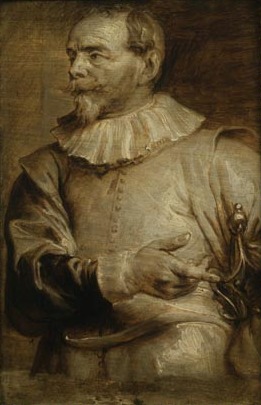
Why Sebastiaen Vrancx matters
Sebastiaen Vrancx is credited as one of the first painters in the Northern or Southern Netherlands to treat the battle scene as an independent genre in its own right, rather than as a backdrop to religious or historical narrative. Working in Antwerp through the turbulence of the Twelve Years' Truce and the early Thirty Years' War, he built a body of battle paintings, landscapes, allegories of the seasons and months, and village and city views that fed directly into the wider Flemish Baroque tradition. Peter Paul Rubens is recorded as having owned one of his battle scenes, a strong period marker of standing among his Antwerp peers.
- Born
- 1573-01-22, Antwerp, Duchy of Brabant (Spanish Netherlands)
- Nationality
- Flemish (Southern Netherlands)
- Media
- Painting, Drawing, Print design
- Movement
- Flemish Baroque, Antwerp School
- Education
- No formal school or degree documented. Trained as an apprentice in the Antwerp workshop of Adam van Noort, whose pupils also included Peter Paul Rubens, Jacob Jordaens, and Hendrick van Balen. Exact apprenticeship years are not recorded.
- Signature motifs
- Battle and skirmish scenes, Allegories of the Seasons and Months, Village and city genre views
By the numbers
- USD 1.87MAuction highThe Four Seasons, Spring and Autumn, Christie's London, 5 July 2012 (single trade-press source, not independently cross-verified)
- USD 17.92MCumulative auction salesTrailing 27 years, per HENI market data
- roughly 350 to 600 sales recordedAuction appearancesRange reported by Artprice depending on database view, predominantly paintings
- c. 1590s to 1647ActiveAntwerp
Selected works
Click any work to view it full screen.
Biography
Sebastiaen Vrancx (also recorded as Sebastiaan Vrancx, Sebastian Vrancx, and Sebastian Vranckx) was baptized on 22 January 1573 at St James' Church in Antwerp. He trained as an apprentice in the workshop of Adam van Noort, an Antwerp master whose pupils also included Rubens, Jacob Jordaens, and Hendrick van Balen; the exact years of Vrancx's apprenticeship are not documented, though guild practice of the period places it in his adolescence or early adulthood.
He became a master of the Antwerp Guild of Saint Luke around 1600. He was a member of the chamber of rhetoric De Violieren, a literary and dramatic society linked to the guild, and in 1618 collaborated with the group on an emblem design that won first prize. He was also a member of the city's citizens' guard and fencers' guild and is described in some sources as a captain in the Antwerp civil militia, though the exact years of that service are not documented; this civic and military affiliation is often connected to the close observational detail in his battle and skirmish paintings. Vrancx also wrote comedies and poetry in the milieu of Antwerp's rhetoric chambers. He died in Antwerp on 19 May 1647.
Critical reception
Museum and reference sources consistently place Vrancx among the founding figures of Netherlandish battle painting, describing him as among the first artists in the Low Countries to make the genre its own subject rather than an accessory to history or religious painting. His standing among contemporaries is anchored by Rubens's ownership of one of his battle scenes, a fact repeated across biographical sources as evidence of peer esteem. No verbatim critical assessment from a named modern critic in a major outlet could be confirmed in the available research, so none is reproduced here; his reputation rests instead on museum curatorial framing and continuous institutional collecting since the seventeenth century.
Market
Vrancx has no current gallery or estate representation; his market exists entirely at auction and through the secondary trade in Old Master paintings and drawings, with regular appearances at houses such as Christie's, Sotheby's, Lempertz, and Dorotheum. The highest price identified for the artist is USD 1,870,000 for The Four Seasons, Spring and Autumn at Christie's London on 5 July 2012, reported at the time by the trade press as a record for the artist; this figure could not be independently cross-checked against major auction-price aggregators and should be treated as provisional pending confirmation. Artprice records several hundred auction sales for the artist over the long run (reported variously as 354 and 598 depending on the database view), overwhelmingly paintings, and HENI reports cumulative auction turnover of about USD 17.92 million over the trailing 27 years. Smaller signed panels, particularly battle scenes and allegorical seasons and months compositions, have sold in the low-to-mid five figures at European houses such as Lempertz.
Top auction results
| Work | Price | Sale |
|---|---|---|
| The Four Seasons, Spring and Autumn | USD 1,870,000 | Christie's, London, 2012-07-05 |
Museum collections
- Museo Nacional del Prado, Madrid
- Kunsthistorisches Museum, Vienna
- Metropolitan Museum of Art, New York
- Musee du Louvre, Paris
- Morgan Library and Museum, New York
- Yale University Art Gallery
- Harvard Art Museums (Fogg Museum)
- National Gallery of Art, Washington, D.C.
- Plantin-Moretus Museum, Antwerp
Awards and honors
- Named master, Guild of Saint Luke, Antwerp (1600)
- First prize for an emblem design, with Chamber of Rhetoric 'De Violieren,' Antwerp (1618)
Authentication and provenance
No catalogue raisonne.
No published catalogue raisonne has been confirmed for Vrancx. The RKD (Netherlands Institute for Art History) maintains a scholarly artist record used as a primary reference point for attribution, alongside museum curatorial files and auction house specialist opinion. There is no gallery or estate program issuing certificates of authenticity.
Primary reference: https://rkd.nl/en/explore/artists/81998
What collectors should know
Vrancx is an Old Master with no catalogue raisonne and no gallery or estate program; attribution and condition assessment depend on curatorial scholarship, the RKD artist record, and specialist opinion at the point of sale, so provenance documentation carries unusual weight. His market spans a wide price range, from a reported seven-figure Christie's 2012 result for a major, fully attributed panel, a figure drawn from a single trade-press source and not independently cross-verified, down to lower five- and six-figure results for smaller or more contested works, which means the subject, condition, and certainty of attribution of any individual painting matter more than a single headline price. Collectors should also treat one higher price figure reported by at least one aggregator, without a confirmed underlying sale record, with caution until it can be corroborated against a named auction house, date, and work.
Further reading and resources
Data current as of 2026-07-10.

