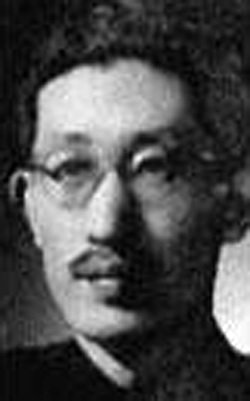
Why Sun Zongwei matters
Sun Zongwei was a Chinese painter whose career bridged the Republican-era transformation of Chinese art education, wartime documentary sketching, and the modern rediscovery of the Dunhuang mural tradition. He trained and later taught within the same institutional lineage that produced modern Chinese art academies, worked alongside Zhang Daqian on the Dunhuang copying project, and had a work entered in the painting event of the art competitions at the 1948 London Olympics. For collectors, he represents a historically significant but thinly traded corner of the market for 20th-century Chinese oil and ink painting, one where institutional and archival research still fills gaps that a formal catalogue raisonne would otherwise close.
- Nationality
- Chinese
- Media
- Oil painting, Chinese ink painting
- Movement
- "20th-century Chinese painting"
- Education
- Art Department, Central Art School, Beiping, enrolled 1934; later taught there. No confirmed degree or graduation date in available sources.
- Signature motifs
- Dunhuang mural-inspired figure painting, Border-region and Tibetan genre scenes
By the numbers
- Deceased, 1979StatusBorn July 1912
- Art Competitions entrant1948 OlympicsPainting, Graphic Arts, Open category, representing China; no medal recorded
- 121+ (MutualArt)Auction lots trackedRealized prices reported up to USD 865,314 for paintings; the specific lot has not been independently verified
- Central Art School; National Peiping Art Academy; Central Drama AcademyTeaching posts1934 to 1956
Biography
Sun Zongwei was born in July 1912. Sources differ slightly on his birthplace: several art-historical and market references give Changshu, Jiangsu Province, while at least one general reference gives the nearby city of Changzhou, also in Jiangsu.
He entered the Art Department of the Central Art School in Beiping in 1934 and later taught there, becoming involved in progressive student movements and the study of Marxist art theory. During the Second Sino-Japanese War he worked with Guo Moruo's wartime propaganda team, traveling to the front to sketch, and was present at the Battle of Tai'erzhuang in 1938. In 1940 he became an assistant to the painter Zhang Daqian and joined the research team copying murals at the Dunhuang Thousand Buddha Caves in Gansu Province, an experience that shaped his later figure painting and gave him recurring subjects drawn from the border regions and Tibetan life. From 1942 he taught at the Chinese Art Academy in Chongqing, and in 1946 he joined Xu Beihong's faculty at the National Peiping Art Academy. His work was entered in the painting event of the art competitions at the 1948 Summer Olympics in London, representing China, though no medal is recorded for him. In 1956 he became a professor at the Central Drama Academy. He died in May 1979; the exact day and place of death are not documented in the sources available for this profile.
Critical reception
Institutional attention to Sun Zongwei has been more archival than journalistic. The CAFA Art Museum in Beijing has mounted an exhibition titled "Modernity in Sun Zongwei's Practice of Painting," describing him in its own materials as a veteran artist of the Central Academy of Fine Arts lineage and framing the show around his approach to pictorial composition; the exhibition's exact year is not confirmed in available sources. Auction-house biographical notes also reference two posthumous retrospectives mounted after his 1979 death, titled "Westward Journey: The Art of Sun Zongwei" and "Seek Within Myself," though their venues and years are likewise undocumented in the sources reviewed for this profile. No signed, verbatim critical assessment from a named critic at a major outlet could be confirmed for this profile.
Market
Sun Zongwei's auction activity is tracked mainly through Asian-art specialist sales of Chinese ink scroll paintings and oils. MutualArt's aggregate data lists more than 120 of his works at auction, with realized prices reported up to USD 865,314 for paintings and USD 151,626 for works on paper; the identity of the specific record-setting lot, including its title, sale house, and exact date, is not published in the accessible portion of that database, so this figure should be read as an aggregate market indicator rather than a confirmed single-sale record. Separately, listings on Invaluable show smaller, mid five-figure results for ink scroll works with subjects such as camel caravans and travelers, consistent with his Dunhuang and border-region themes.
Collectors should also note that at least one price database lists a "SUN Zongwei" entry with life dates of 1908 to 2003 and a much smaller auction history of about seven lots. This may reflect a distinct, minor artist record or a data error rather than the painter profiled here, and it should not be conflated with him.
Selected exhibitions
| Years | Exhibition | Venues |
|---|---|---|
| 1948 | Art Competitions, Painting, Graphic Arts, Open | 1948 Summer Olympics, London (entrant representing China) |
| n.d. | Modernity in Sun Zongwei's Practice of Painting | CAFA Art Museum, Beijing |
| after 1979 | Westward Journey: The Art of Sun Zongwei | Venue not confirmed in available sources |
| after 1979 | Seek Within Myself | Venue not confirmed in available sources |
Museum collections
- China Art Institute
Authentication and provenance
No catalogue raisonne.
No catalogue raisonne has been identified for this artist and no certificate-of-authenticity program is documented. Institutional exhibition records, notably at the CAFA Art Museum, and auction-house cataloguing are the main available reference points for verifying works.
Primary reference: https://en.wikipedia.org/wiki/Sun_Zongwei
What collectors should know
There is no catalogue raisonne for Sun Zongwei, and no gallery or estate representation is documented in current sources, so provenance research and comparison against known institutional holdings, such as the works held by the China Art Institute, are the most reliable ways to verify a piece. Several biographical details, including his exact birthplace, and the day and place of his death, are recorded inconsistently or not at all across the sources reviewed, and should be treated as open questions rather than settled fact. Auction supply is real but dispersed across Chinese ink and oil-painting sale categories, and the widely cited high price for his paintings comes from an aggregate market database rather than a single, fully documented sale, so it should be treated as directional rather than definitive. Buyers should also take care to distinguish this artist, born 1912 and died 1979, from a same-named entry with different life dates in at least one price database, which may be a data error or a distinct, minor record.
Further reading and resources
Data current as of 2026-07-10.

