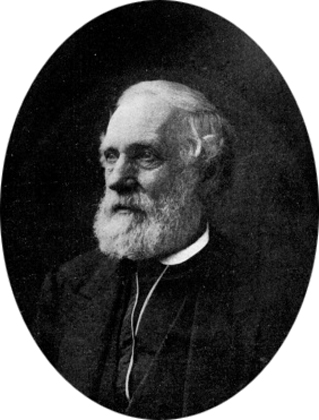
Why Titian Peale matters
Titian Peale (Titian Ramsay Peale, 1799 to 1885) was among the first artist-naturalists to work on United States government-sponsored scientific expeditions, a painter and illustrator whose watercolors and drawings documented insects, birds, and landscapes on two major American government expeditions. He is a historical rather than a market-active artist. His importance rests on his role in the Peale family's founding generation of American natural history art and on the scientific and archival value of his work, which is held almost entirely by museums, universities, and learned societies rather than traded through galleries or a live auction market.
- Nationality
- American
- Media
- Watercolor, Drawing, Scientific illustration
- Movement
- "Early American natural history illustration", "Peale family of painters"
- Education
- No formal degree documented. Education was home and museum based, under his father Charles Willson Peale, supplemented by non-degree study of anatomy at the University of Pennsylvania, where he attended Caspar Wistar's lectures. Exact years of that study are not recorded in surviving sources.
- Signature motifs
- "Lepidoptera and insect illustration", "Expedition landscapes and wildlife studies"
By the numbers
- DeceasedStatusDied March 13, 1885, Philadelphia
- US Exploring Expedition, 1838 to 1842Major expeditionArtist-naturalist under Lt. Charles Wilkes
- US Patent Office, 1849 to 1873Government serviceExaminer, until retirement
- No confirmed public recordAuction marketSee Market section
Selected works
Click any work to view it full screen.
Biography
Titian Ramsay Peale was born in Philadelphia in 1799, the youngest son of the painter and museum founder Charles Willson Peale. Sources disagree on his exact birth date, giving either November 2 or November 17, 1799; both figures appear in credible reference sources, and no single date can be confirmed with certainty. He was named after an older half-brother, Titian Ramsay Peale, who had died the year before at age eighteen.
His early education took place largely at home and inside his father's museum in Philadelphia, which functioned as his first classroom in drawing, specimen preparation, and natural history. As a young man he also studied anatomy at the University of Pennsylvania, attending the lectures of Caspar Wistar, though this appears to have been informal, non-degree study, and no specific years are recorded.
Peale's career was defined by two major government expeditions. He served as naturalist on the Stephen H. Long Expedition of 1819 to 1820, and again as artist and naturalist on the United States Exploring Expedition (the Wilkes Expedition) of 1838 to 1842, producing drawings of wildlife, insects, and landscapes across the Pacific and Antarctic regions. He later curated his father's Philadelphia museum, and in 1849 took a government position as an examiner at the US Patent Office in Washington, D.C., where he worked until his retirement in 1873. For years he worked on an unpublished manuscript, The Butterflies of North America, which remained unfinished; the magazine Mental Floss has described him as "America's first lepidopterist."
Titian Peale died on March 13, 1885, in Philadelphia. He was buried at Laurel Hill Cemetery in Philadelphia, Section 8, Lot 74, in a grave that remains unmarked.
Critical reception
Titian Peale is discussed primarily in scientific and museum literature rather than in art criticism. Institutions including the American Philosophical Society, which has featured him in its exhibition Sketching Splendor: American Natural History, 1750 to 1850, and the Pennsylvania Academy of the Fine Arts, which has included him in Peale-family exhibitions, treat him as a significant figure in the documentary tradition of early American natural history illustration. A 2021 essay on the art history site Eclectic Light, titled "How Titian Ramsay Peale Has Been Overlooked," reflects a recurring theme in modern assessments: that his scientific illustration has drawn less sustained art-historical attention than the portraiture of his father, Charles Willson Peale, even though his expedition drawings are now recognized as important records of nineteenth-century American natural history. No verbatim critical assessment from a named critic in a major outlet could be confirmed for this profile.
Market
No verified all-time auction record could be confirmed for Titian Peale in the sources available for this profile. His work, chiefly watercolors and drawings of natural history subjects, is not documented moving through major auction houses in the way that his contemporaries in decorative and fine-art painting are. A specialist online research group has suggested that individual watercolors attributed to Peale can sell for more than USD 20,000 in the twenty-first century, but this figure is not tied to a specific work, house, or sale date, and it should not be treated as a confirmed record. Collectors should also take care not to confuse Titian Peale's market, such as it is, with the substantial and well-documented auction market for the Italian Renaissance painter Titian (Tiziano Vecellio), a different artist entirely.
Selected exhibitions
| Years | Exhibition | Venues |
|---|---|---|
| 2026 | The Peale Family & The Artist in His Museum | Pennsylvania Academy of the Fine Arts, Philadelphia |
| 2026 | A Nation of Artists (250th anniversary exhibition) | Philadelphia Museum of Art and Pennsylvania Academy of the Fine Arts, with the Middleton Family Collection |
| n.d. | Sketching Splendor: American Natural History, 1750 to 1850 | American Philosophical Society Museum, Philadelphia |
| Ongoing | Philadelphia: Three Centuries of American Art | Philadelphia Museum of Art |
| Ongoing | New Early American Galleries | Philadelphia Museum of Art |
Museum collections
- Academy of Natural Sciences of Drexel University, Philadelphia
- American Museum of Natural History, New York
- American Philosophical Society, Philadelphia
- Smithsonian Institution, Washington, D.C.
- Yale University Art Gallery, New Haven
- Pennsylvania Academy of the Fine Arts, Philadelphia
- Philadelphia Museum of Art
- Amon Carter Museum of American Art, Fort Worth
Authentication and provenance
No catalogue raisonne.
No catalogue raisonne exists for Titian Peale. Attribution and verification rest on institutional archives, principally the Academy of Natural Sciences of Drexel University, which holds his butterfly and moth collection, the American Philosophical Society, which holds expedition drawings, and the American Museum of Natural History, which holds his unpublished manuscript, The Butterflies of North America.
Primary reference: https://siarchives.si.edu/collections/auth_per_fbr_eacp736
What collectors should know
Titian Peale has no catalogue raisonne, no gallery, and no estate representation in the commercial sense; his work is held almost entirely by museums, universities, and scientific societies, including the Academy of Natural Sciences of Drexel University, the American Philosophical Society, the American Museum of Natural History, and Yale University Art Gallery. There is no confirmed public auction record for his work, which makes provenance research and institutional verification especially important for anyone considering a purchase. Buyers should also confirm they are looking at Titian Ramsay Peale, the American naturalist and expedition artist, and not at Titian, the Italian Renaissance painter, or at his own half-brother and namesake, Titian Ramsay Peale, who died in 1798; the shared and overlapping names are a documented source of market and cataloguing confusion.
Further reading and resources
- Titian Ramsay Peale, authority recordSmithsonian Institution Archives
- Titian Ramsay Peale, biographical profileFlorida Museum of Natural History
- Titian Ramsay Peale CollectionNational Park Service, Jefferson National Expansion Memorial
- Titian Ramsay Peale, Sketching SplendorAmerican Philosophical Society
Data current as of 2026-07-16.

