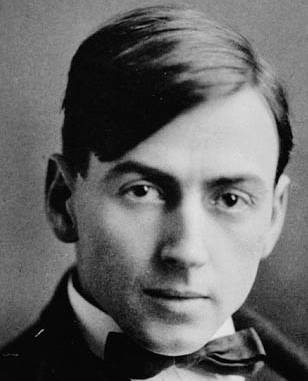
Why Tom Thomson matters
Tom Thomson is a foundational figure in Canadian art history, the painter whose Algonquin Park sketches set the visual template that the Group of Seven formalized into a national movement after his death. He never lived to see that movement take shape, but his small, direct oil sketches of northern lakes and forests are treated by Canadian museums as the origin point of a distinctly Canadian landscape idiom. For collectors, he represents an unusual case: a historical artist with essentially fixed supply, deep institutional validation, and a market driven almost entirely by scarcity and provenance rather than by ongoing production or gallery promotion.
- Born
- 1877-08-05, Claremont, Ontario, Canada
- Nationality
- Canadian
- Media
- Painting, Oil sketch on wood panel
- Movement
- Canadian landscape painting, Precursor to the Group of Seven
- Education
- No university degree or art-school diploma documented. Canada Business College, Chatham, Ontario, 1901. Acme Business College, Seattle, 1902. Night classes, Central Ontario School of Art and Industrial Design, Toronto, during his early Toronto years, with possible informal study under William Cruikshank.
- Signature motifs
- Algonquin Park wilderness landscapes, Small oil sketches on wood panel
- Representation
- "No current commercial gallery or estate representation; his work is held, studied, and exhibited by Canadian public museums."
By the numbers
- CAD 2.75MAuction highEarly Spring, Canoe Lake, Heffel, Toronto, 2009
- 1912 to 1917Career spanWorking life cut short by death at age 39
- Precursor to the Group of SevenMovementDied three years before the group's 1920 founding
- No commercial galleryRepresented byWork stewarded by Canadian public museums
Selected works
Click any work to view it full screen.
Biography
Tom Thomson was born on August 5, 1877, in Claremont, Ontario, and grew up near Leith, Ontario, where illness interrupted his early schooling. His path to painting was indirect. He studied business subjects, bookkeeping, stenography, and penmanship, at Canada Business College in Chatham, Ontario, beginning in 1901, and at Acme Business College in Seattle in 1902. He did not pursue a college degree or an art-school diploma. His only documented formal art instruction was night classes during his early years in Toronto at the Central Ontario School of Art and Industrial Design, and he may also have taken informal night classes from the painter William Cruikshank.
Thomson's public career as a painter was brief, running from roughly 1912 to his death in 1917. He first exhibited with the Ontario Society of Artists in Toronto in March 1913, where the Ontario government purchased his painting Northern Lake for 250 dollars. In November 1915 he donated a painting to a Toronto exhibition benefiting the Canadian Patriotic Fund, and in March 1916 he showed four canvases with the Society, including Spring Ice and Moonlight. The National Gallery of Canada, under director Eric Brown, began acquiring his work in this period, buying Moonlight for 150 dollars, Northern River for 500 dollars, and Spring Ice for 300 dollars, an unusual level of institutional attention for a still largely unknown painter.
On the morning of July 8, 1917, Thomson set out by canoe from Canoe Lake in Algonquin Park, Ontario. He was reported missing that day, and his body was recovered from the lake eight days later. The official cause of death was recorded as accidental drowning. The exact circumstances, whether accident, suicide, or foul play, have been debated by researchers and journalists for more than a century, but the fact and date of his death are not in dispute among major art-historical and museum sources. He was 39 years old.
Critical reception
Art historians consistently frame Thomson as the forerunner whose direct, largely self-taught approach to painting the Ontario wilderness set the course that the Group of Seven followed after his death. Because he died three years before the Group formally organized in 1920, Oeno Gallery describes him as "often considered an unofficial member" whose work is "typically exhibited with the rest of the Group's." The research resource Canadian Mysteries calls him "one of Canada's most influential painters of the 20th century." Historica Canada situates his lack of formal art training as central to that public image of a self-taught wilderness painter rather than an academy-trained one. The recurring theme across these sources is his outsized posthumous influence: a painting career of only a few years, cut short at 39, that nonetheless came to define a national school of landscape art.
Market
Thomson's auction market is thin by volume but capable of producing large individual results. His all-time auction record is Early Spring, Canoe Lake, which sold for CAD 2,749,500 at Heffel Fine Art Auction House in Toronto in 2009; public market summaries confirm the year and price but not the exact calendar date of the sale. A second notable result came in May 2018, when Sketch for Lake in Algonquin Park (1913), a small panel discovered in a basement, sold for CAD 481,250 at Heffel, more than double its high estimate. Because Thomson's known body of work is fixed and largely absorbed into museum and long-held private collections, results depend heavily on the individual work's size, subject, and provenance rather than on any broader trend line, and public sale data remains too sparse to support a reliable price index.
Top auction results
| Work | Price | Sale |
|---|---|---|
| Early Spring, Canoe Lake (2009) | USD 2,592,642 (CAD 2,749,500) | Heffel Fine Art Auction House, Toronto, Canada |
Selected exhibitions
| Years | Exhibition | Venues |
|---|---|---|
| 1913 | Ontario Society of Artists Exhibition | Toronto |
| 1915 | Canadian Patriotic Fund exhibition | Toronto |
| 1916 | Ontario Society of Artists Exhibition | Toronto |
| 2002 | Tom Thomson | National Gallery of Canada, Ottawa |
| 2023 to 2024 | Tom Thomson: North Star | McMichael Canadian Art Collection, Kleinburg, Ontario |
| 2024 | Tom Thomson: North Star | Art Gallery of Alberta, Edmonton |
| 2024 | Tom Thomson: North Star | Audain Art Museum, Whistler, British Columbia |
Museum collections
- National Gallery of Canada, Ottawa
- McMichael Canadian Art Collection, Kleinburg, Ontario
- Art Gallery of Ontario, Toronto
- Tom Thomson Art Gallery, Owen Sound, Ontario
Authentication and provenance
No catalogue raisonne.
No published catalogue raisonne has been confirmed for Thomson. Attribution and verification of his sketches and canvases rely on provenance research and scholarship coordinated through major Canadian public collections, including the National Gallery of Canada and the McMichael Canadian Art Collection.
Primary reference: https://www.aci-iac.ca/art-books/tom-thomson/biography/
What collectors should know
There is no published catalogue raisonne for Thomson, so attribution and verification rest on provenance research and on the scholarship maintained by the National Gallery of Canada, the McMichael Canadian Art Collection, and the Tom Thomson Art Gallery in Owen Sound. He is not represented by any commercial gallery or dealer; his estate, in the practical sense, is stewarded by these public institutions rather than managed for market purposes. Because his working life ended at 39 and his surviving output is fixed, supply is genuinely limited, and the gap between his small sketches and his larger, more finished canvases can produce very different results at auction. Collectors should treat any single Thomson sale price as specific to that work's size, subject, and documented history rather than as a stable market signal.
Further reading and resources
Data current as of 2026-07-10.

