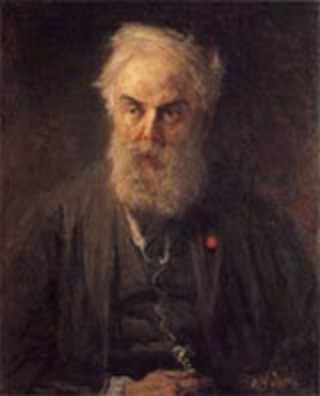
Why Willem Roelofs matters
Willem Roelofs (1822 to 1897) is regarded by Dutch art historians as a forerunner of the Hague School, the generation of Dutch landscape and marine painters who redefined Dutch art in the second half of the nineteenth century. His move toward direct, observational landscape painting placed him at the transition point between Romantic landscape convention and the more atmospheric realism that later defined the Hague School. For collectors, he represents a foundational, historically significant figure whose work anchors museum collections across the Netherlands, Belgium, and beyond, even though his auction market is thin and modestly priced compared to the Hague School painters he influenced.
- Born
- 1822-03-10, Amsterdam, Netherlands
- Nationality
- Dutch
- Media
- Painting, Watercolor
- Movement
- Hague School (forerunner)
- Education
- Private lessons under Abraham Hendrik Winter, Utrecht, late 1830s; Academy for Visual Arts, The Hague, 1839 to 1840; apprenticeship under Hendrik van de Sande Bakhuyzen, 1840 to 1841. No formal degree or diploma is documented.
- Signature motifs
- Dutch polder and pasture landscapes, Atmospheric skies and cloud studies, Watercolor landscape technique
- Representation
- Simonis & Buunk, Galerie Trompenburgh, Kunsthandel Bies
By the numbers
- 1822 to 1897LifespanAmsterdam to Berchem, Belgium
- EUR 12,200 (incl. premium)Documented auction resultLandscape with a Stream and Two Anglers, Lempertz; exact sale date not confirmed in sources reviewed
- Gold medal, 1848 (reported)Brussels SalonPer dealer literature (Kunsthandel Bies); not corroborated by neutral encyclopedic sources reviewed for this profile
- Chevalier, Order of LeopoldBelgian honorConfirmed in French Wikipedia; exact year of the honor not documented in sources reviewed
Selected works
Click any work to view it full screen.
Biography
Willem Roelofs was born on 10 March 1822 in Amsterdam and grew up in Utrecht, where he received early private painting lessons from Abraham Hendrik Winter. In June 1839 his family moved to The Hague so he could study at the Academy for Visual Arts, where he trained from 1839 to 1840, and in 1840 he entered the atelier of landscape and animal painter Hendrik van de Sande Bakhuyzen, with whom he traveled to Germany on a study trip in 1841. No formal degree or diploma from either the Academy or the apprenticeship is documented.
Roelofs settled in Brussels and built the remainder of his career there. According to dealer sources, he exhibited two Dutch landscapes at the 1848 Brussels Salon and won a gold medal, with a second work purchased by the King of Belgium, though this account comes from commercial gallery literature and is not corroborated by the neutral encyclopedic sources reviewed for this profile. He was later named a Chevalier of Belgium's Order of Leopold, though the exact year of that honor is not documented in the sources reviewed. He is widely credited as a forerunner of the Hague School and as an influence on the landscape painters who followed it, and he also pursued entomology alongside his art. Roelofs died on 12 May 1897 in Berchem, near Antwerp, Belgium.
Critical reception
Roelofs is consistently described in Dutch and Belgian art-trade and museum sources as a pioneering figure for Dutch landscape painting. Kunsthandel Bies, a dealer specializing in the period, describes him as "one of the most important representatives of the Hague School" who developed "from a classic romantic painter to a true Impressionist." Galerie Trompenburgh likewise describes him as a forerunner of the Hague School, the group of landscape painters who reshaped Dutch art in the later nineteenth century. The recurring theme across these assessments is Roelofs's role as a transitional figure, bridging Romantic landscape convention and the more direct, atmospheric observation that later defined the Hague School.
Market
Roelofs's auction market is that of a historically important but commercially modest nineteenth-century Dutch landscape painter. Documented results at Lempertz include a landscape titled Landscape with a Stream and Two Anglers, which realized EUR 12,200 including premium, alongside smaller landscapes selling in the low four figures. Other houses, including Sotheby's, have carried presale estimates as high as EUR 35,000 to 50,000 for individual works, though the realized prices for those specific lots could not be confirmed from the sources reviewed for this profile. No single result could be confidently identified as his all-time auction record, and this profile does not assert one. Roelofs's market is best understood as thin and comparatively low value relative to the later Hague School painters he influenced, with activity concentrated among Dutch and Belgian specialist auction houses and dealers such as Lempertz, Simonis & Buunk, Galerie Trompenburgh, and Kunsthandel Bies.
Top auction results
| Work | Price | Sale |
|---|---|---|
| Landscape with a Stream and Two Anglers | EUR 12,200 (including premium) | Lempertz |
Selected exhibitions
| Years | Exhibition | Venues |
|---|---|---|
| 1848 | Brussels Salon | Brussels Salon, Brussels |
| 2009 | New Horizons: The Hague School and the Modern Dutch Landscape | Kunsthal Rotterdam |
| 2012 | Sweet & Salt: Water and the Dutch | Kunsthal Rotterdam |
| 2021 | Thinking of Holland | Kunstmuseum Den Haag |
| 2022 | Longing for Nature | Rijksmuseum Schiphol, Amsterdam |
Museum collections
- Rijksmuseum, Amsterdam
- Kunstmuseum Den Haag (Gemeentemuseum), The Hague
- Museum Boijmans Van Beuningen, Rotterdam
- Kroller-Muller Museum, Otterlo
- Teylers Museum, Haarlem
- Royal Museums of Fine Arts of Belgium, Brussels
- Hermitage Museum, Saint Petersburg
- Brooklyn Museum, New York
Awards and honors
- Gold medal, Brussels Salon (reported by dealer sources; not independently corroborated) (1848)
- Chevalier de l'Ordre de Leopold, Belgium (exact year undocumented)
Authentication and provenance
No catalogue raisonne.
No published catalogue raisonne has been identified for Roelofs. As a nineteenth-century painter who died in 1897, his works are typically authenticated through auction house specialists and Dutch and Belgian dealers experienced with the Hague School, including Simonis & Buunk, Galerie Trompenburgh, and Kunsthandel Bies, rather than through an artist-controlled program.
Primary reference: https://en.wikipedia.org/wiki/Willem_Roelofs
What collectors should know
Roelofs died in 1897, and no catalogue raisonne has been identified in current research, so provenance and attribution rest on auction house expertise and specialist dealers rather than an artist-controlled authentication body. His market is illiquid by modern standards, with documented results concentrated in the low to mid five figures in euros and infrequent appearances at major international auction houses, which means published estimates can run well above realized prices and any single sale should be read with caution rather than treated as a market benchmark. His deep representation in Dutch, Belgian, and other European museum collections is the strongest evidence of his historical standing, and collectors should weigh that institutional presence alongside the market's thinness when evaluating any specific work.
Further reading and resources
Data current as of 2026-07-18.

