Why William Brodie matters
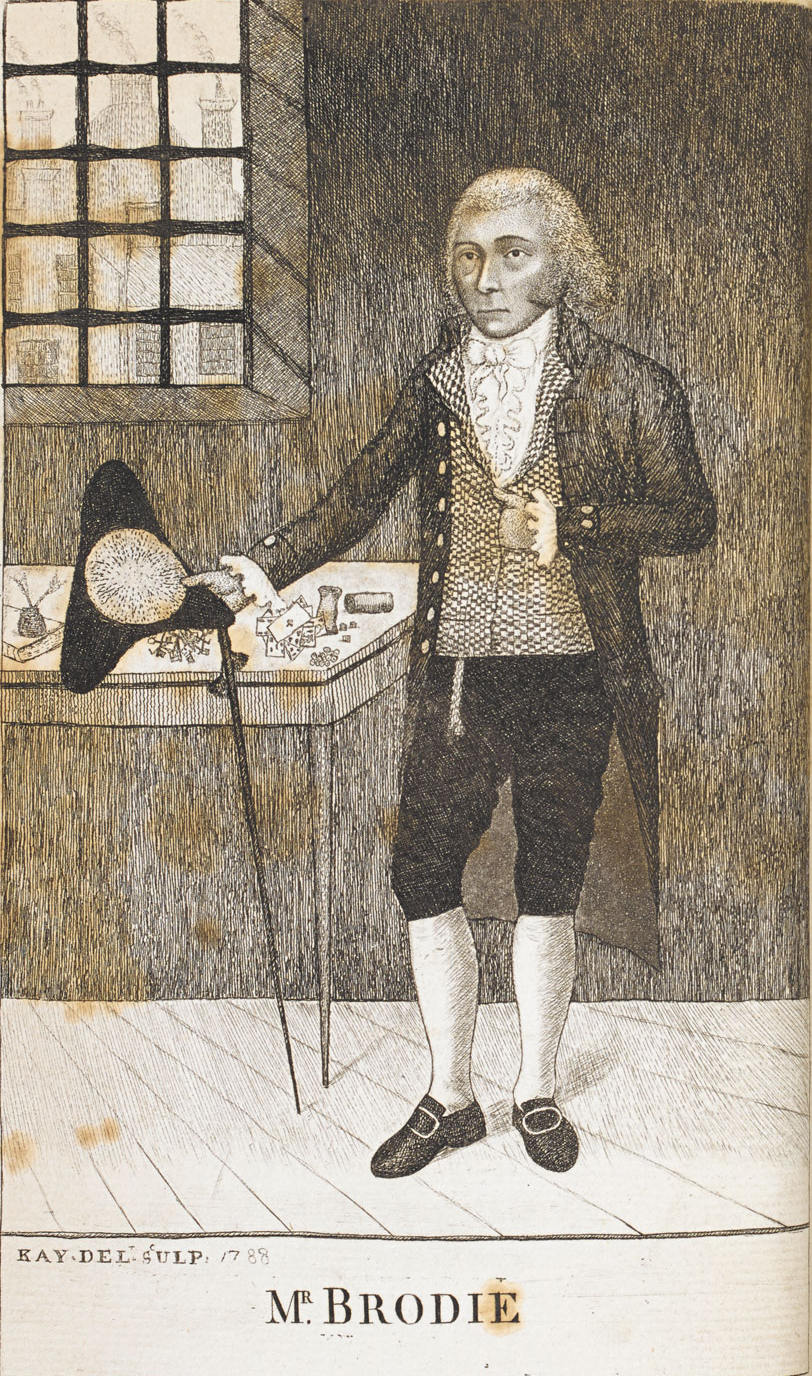
William Brodie was one of the leading portrait sculptors of Victorian Scotland, an Edinburgh-based artist whose public statues and busts still populate the streets and museums of Edinburgh and Glasgow. He is best known today as the sculptor of Greyfriars Bobby, the bronze statue of the loyal Skye terrier on George IV Bridge, but his broader career as a prolific portraitist in marble and bronze, and as an officer of the Royal Scottish Academy, is what secures his place in the history of British sculpture. For anyone researching his name, it is also worth noting that he is a distinct historical figure from the far better known Deacon William Brodie, an 18th-century Edinburgh cabinetmaker and burglar executed in 1788, whose story inspired Robert Louis Stevenson's Dr. Jekyll and Mr. Hyde. The sculptor and the criminal share a name and a city but nothing else.
- Born
- 1815-01-22, Banff, Scotland
- Nationality
- British (Scottish)
- Media
- Sculpture, Portrait busts
- Movement
- 19th-century Scottish sculpture, Victorian classicism
- Education
- Apprenticed to a plumber in Aberdeen; studied evenings at the Aberdeen Mechanics' Institute. Moved to Edinburgh in 1847 and studied about four years at the Trustees' School of Design, though sources vary slightly on the exact span. Studied under the sculptor Laurence Macdonald in Rome, about 1853 to 1854. No university degree is documented.
- Signature motifs
- Portrait busts, Public commemorative statues, Animal sculpture
By the numbers
- Greyfriars Bobby, 1872Best-known workGeorge IV Bridge, Edinburgh
- 1859Elected RSAFull member, Royal Scottish Academy
- 1876 to 1881RSA Secretary
- 1851Great ExhibitionCrystal Palace, London
Selected works
Click any work to view it full screen.
Biography
William Brodie was born on 22 January 1815 in Banff, Scotland, the son of a local shipmaster. As a young man he was apprenticed to a plumber in Aberdeen, studying in his spare time at the Aberdeen Mechanics' Institute. He moved to Edinburgh in 1847 to study art formally, enrolling at the Trustees' School of Design, where he trained for roughly four years and, in 1848, won the school's highest premiums for modelling from the life and from the Antique.
About 1853 Brodie traveled to Rome to study under the Scottish sculptor Laurence Macdonald, returning to Scotland around 1854 to establish his own practice in Edinburgh, specializing in portrait busts and public statuary. He exhibited annually at the Royal Scottish Academy from 1847 onward and also sent work to the Royal Academy in London and the Royal Glasgow Institute of the Fine Arts. He was elected an Associate of the Royal Scottish Academy; sources conflict on the year, with Public Sculpture of Britain giving 1852 and both Wikipedia and Glasgow Sculpture giving 1857. He became a full member in 1859, and from 1876 until his death served as the Academy's secretary.
Brodie's public commissions include the statue of Lord Cockburn (1863, Parliament Hall, Edinburgh), Sir David Brewster (1870, University of Edinburgh), Thomas Graham (1871, George Square, Glasgow), Greyfriars Bobby (1872, George IV Bridge, Edinburgh), and Sir James Young Simpson (1877, Princes Street Gardens, Edinburgh), along with numerous portrait busts. William Brodie died at his home at 9 Cambridge Street, Edinburgh, on 30 October 1881.
Critical reception
Brodie's contemporaries recognized him chiefly as a portraitist. An obituary notice cited in the Gunnis Dictionary of British Sculptors credited him with an unusually large output of portrait busts over his three-decade career in Edinburgh. Writing on Victorian Web, critics have described him as one of the most proficient and prolific British exponents of bust portraiture in the classicizing tradition of Sir Francis Chantrey. That combination, technical fluency in a classicizing idiom applied to an unusually large body of portrait subjects, remains the throughline of critical assessment of his career, alongside the enduring popular affection for Greyfriars Bobby, which is often singled out as his single most famous and best-loved public work.
Market
Brodie's market is that of a historically significant but thinly traded 19th-century sculptor. His work has appeared in major sculpture sales, including a 2022 Sotheby's auction of Master Sculpture from Four Millennia, but no verifiable, well-documented all-time auction high for his sculpture could be confirmed from available public records as of this writing. Separately, Lyon and Turnbull has sold furniture attributed to a Brodie cabinetmaking workshop; that material relates to the unrelated Edinburgh firm associated with Deacon Brodie, not to this sculptor, and no confirmed price for it is included here. The bulk of William Brodie's known output resides in Scottish public collections and as public monuments rather than in active private circulation, so collectors should expect a sparse and irregular secondary market rather than a continuous price history.
Selected exhibitions
| Years | Exhibition | Venues |
|---|---|---|
| 1847 to 1881 | Annual exhibitor | Royal Scottish Academy, Edinburgh |
| 1851 | Great Exhibition of the Works of Industry of All Nations | Crystal Palace, London (exhibited Little Nell and her grandfather) |
| not specified | Exhibited works | Royal Academy, London |
| not specified | Exhibited works | Royal Glasgow Institute of the Fine Arts, Glasgow |
| 1926 | Centenary Exhibition of the Royal Scottish Academy | Royal Scottish Academy, Edinburgh (posthumous) |
Museum collections
- Scottish National Portrait Gallery, Edinburgh (National Galleries of Scotland)
- National Gallery of Scotland, Edinburgh
- Kelvingrove Art Gallery and Museum, Glasgow
- Perth Museum
- Glasgow Art Gallery (Glasgow Museums)
- David Livingstone Centre, High Blantyre
Awards and honors
- Highest premiums for modelling from the life and the Antique, Trustees' School of Design, Edinburgh (1848)
- Elected Associate of the Royal Scottish Academy (ARSA); sources conflict, with Public Sculpture of Britain giving 1852 and both Wikipedia and Glasgow Sculpture giving 1857 (1852)
- Elected full member, Royal Scottish Academy (RSA) (1859)
- Appointed Secretary of the Royal Scottish Academy, served to 1881 (1876)
Authentication and provenance
No catalogue raisonne.
No catalogue raisonne has been published for Brodie's sculpture, and there is no certificate-of-authenticity program. Works are documented and verified through museum accession records, the Public Sculpture of Britain survey, and institutional archives such as Glasgow Museums and the National Galleries of Scotland.
Primary reference: https://en.wikipedia.org/wiki/William_Brodie_(sculptor)
What collectors should know
There is no catalogue raisonne for William Brodie, and attribution and provenance rest on museum accession records and surveys such as Public Sculpture of Britain rather than any dedicated authentication body. Because so much of his output sits in institutional collections, including the Scottish National Portrait Gallery, Kelvingrove, and Perth Museum, opportunities to acquire his work privately are infrequent, and no reliable public record price could be confirmed to anchor expectations. Buyers should also take care with the name itself: works or ephemera connected to Deacon William Brodie, the 18th-century cabinetmaker and thief, are a different market entirely and should not be confused with sculpture by this artist.
Further reading and resources
Data current as of 2026-07-16.

