Why William M. Harnett matters
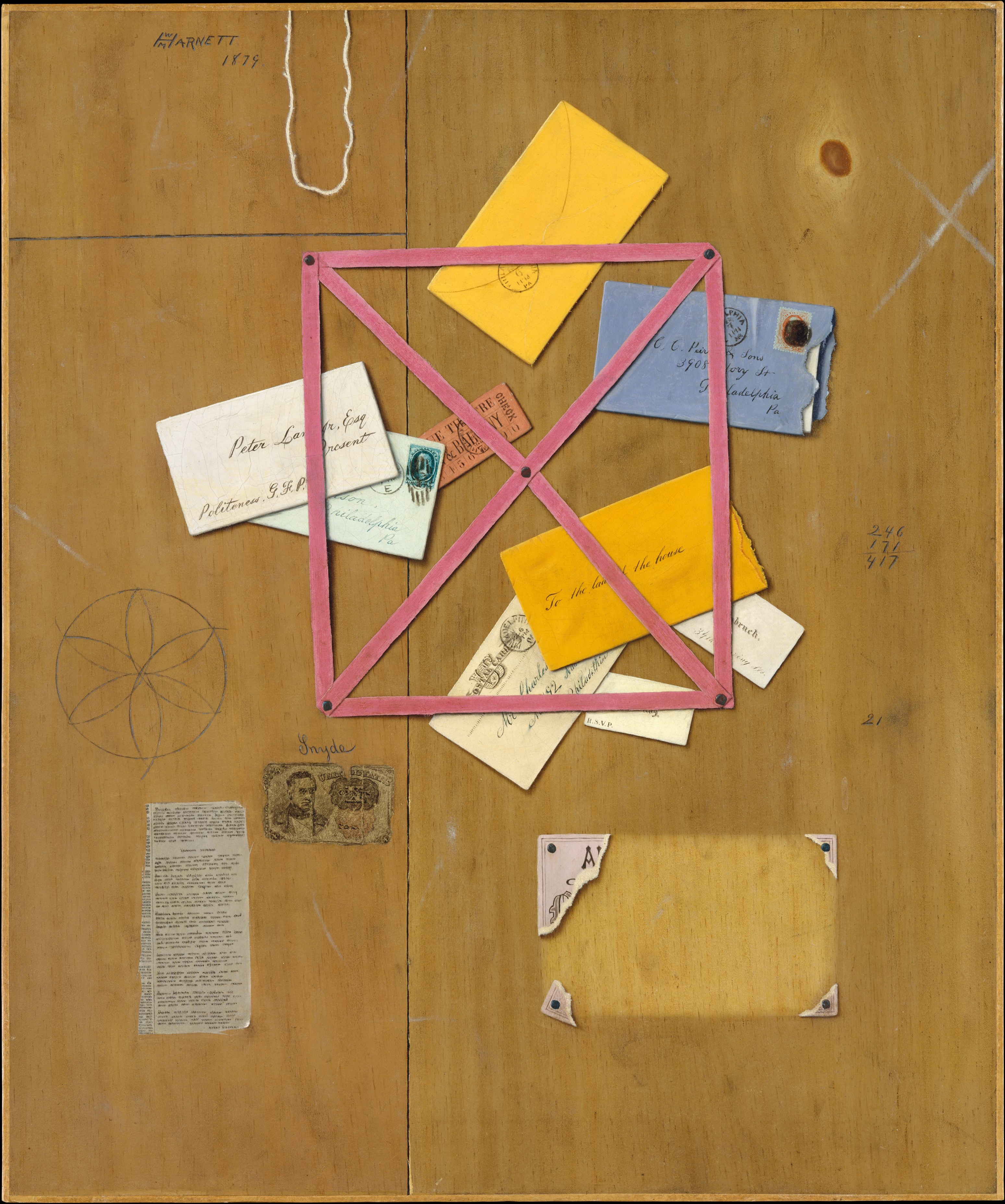
William M. Harnett is the artist most credited with establishing American trompe l'oeil still-life painting as a serious pictorial tradition, using illusionistic renderings of dead game, musical instruments, firearms, and printed matter to fool the eye and hold it. He worked for barely two decades before illness ended his career, which makes his surviving output small, museum-heavy, and closely tied to a single 20th-century rediscovery story rather than a continuous market history. For a collector, he is a case study in how a short, historically important career, no catalogue raisonne, and a rediscovery narrative driven by dealers and museums combine to produce a market that is thin, prestige-driven, and highly dependent on provenance.
- Born
- 1848-08-10, Clonakilty, County Cork, Ireland
- Nationality
- American
- Media
- Painting
- Movement
- American Realism, Trompe l'oeil still life
- Education
- Evening drawing classes at the Pennsylvania Academy of the Fine Arts, Philadelphia, from 1866; evening classes at Cooper Union and the National Academy of Design, New York, from 1869; further study in Munich and Paris, 1880 to 1886. No formal degree is documented.
- Signature motifs
- Trompe l'oeil illusionism, Still life with musical instruments, firearms, and printed ephemera
- Representation
- "No current gallery representation identified. The artist died in 1892 with no living estate; works circulate through auction houses and are held in major museum collections."
By the numbers
- USD 1,008,000Auction highCoeur d'Alene Art Auction world-record claim; exact work title and sale date not publicly documented
- c. 1875 to 1891Active careerFull-time painting career in Philadelphia and New York, ended by illness
- Metropolitan Museum of Art and Amon Carter Museum1992 retrospectiveFirst major museum retrospective, organized jointly
- National Gallery of Art, Met, Art Institute of Chicago, Fine Arts Museums of San FranciscoMuseum collectionsSelected confirmed institutional holdings
Selected works
Click any work to view it full screen.
Biography
William Michael Harnett was born on August 10, 1848, in Clonakilty, County Cork, Ireland. His family emigrated to the United States while he was an infant and settled in Philadelphia, where he was raised before training as a metal engraver. From 1866 he attended evening drawing classes at the Pennsylvania Academy of the Fine Arts while continuing to work. In 1869 he moved to New York, working as an engraver, reportedly for Tiffany & Co., while taking evening classes at Cooper Union and the National Academy of Design.
By the mid-1870s Harnett had committed to painting full time. Around 1880 he traveled to Europe, spending time in London, roughly six months in Frankfurt, several years in Munich, and a period in Paris, before returning to the United States and settling again in New York. In his later years, rheumatism and kidney disease increasingly limited his work, and he stopped painting altogether in 1891. He died at New York Hospital in New York City on October 29, 1892, at the age of 44. A memorial exhibition of his work was held at Earle's Galleries in Philadelphia later that year.
Critical reception
Newspaper critics and some in the art community praised Harnett's technique during his lifetime, though he was never elected to the National Academy of Design, and his patrons were primarily private collectors rather than academies. He is widely described today as one of the most famous and skillful still-life painters of late nineteenth-century America. His reputation grew substantially in the twentieth century, notably through his inclusion in the Museum of Modern Art's 1943 exhibition American Realists and Magic Realists. That rediscovery culminated in the first full museum retrospective, organized jointly by the Metropolitan Museum of Art and the Amon Carter Museum in 1992.
Market
Harnett's market is defined by scarcity rather than volume. The Coeur d'Alene Art Auction states that it holds the world-record price for a work by William M. Harnett at USD 1,008,000, a figure corroborated by independent market databases as his all-time auction high. The specific painting and exact sale date behind that record are not disclosed in public sources, and no later sale is documented as having surpassed it through mid-2026. There is no catalogue raisonne, so provenance and documented exhibition history carry unusual weight in establishing value and attribution.
Selected exhibitions
| Years | Exhibition | Venues |
|---|---|---|
| 1892 | Memorial exhibition of William M. Harnett | Earle's Galleries, Philadelphia |
| 1943 | American Realists and Magic Realists | Museum of Modern Art, New York |
| 1992 | William M. Harnett retrospective | Amon Carter Museum, Fort Worth, and The Metropolitan Museum of Art, New York |
Museum collections
- National Gallery of Art, Washington, D.C.
- The Metropolitan Museum of Art, New York
- Art Institute of Chicago
- Fine Arts Museums of San Francisco
Awards and honors
- Inducted into The Cooper Union Hall of Fame (posthumous) (2009)
Authentication and provenance
No catalogue raisonne.
No catalogue raisonne has been published. Attribution and authentication today rely chiefly on the 1992 retrospective catalogue organized jointly by the Metropolitan Museum of Art and the Amon Carter Museum, together with documented provenance and exhibition history.
Primary reference: https://www.nga.gov/artists/1373-william-michael-harnett
What collectors should know
Harnett's oeuvre is small and largely absorbed into major museum collections, including the National Gallery of Art, the Metropolitan Museum of Art, the Art Institute of Chicago, and the Fine Arts Museums of San Francisco, which leaves a limited pool of works in private hands. The absence of a catalogue raisonne means that provenance and documented exhibition history carry more weight than they would for an artist with a settled scholarly record. The one clearly documented auction record, at Coeur d'Alene Art Auction, lacks a published title and sale date, so collectors should treat headline price claims for this artist with some caution until primary sale documentation is available.
Further reading and resources
Data current as of 2026-07-11.

