William Russell Flint
Scottish, 1880 to 1969
Watercolour · Painting · Illustration · Printmaking
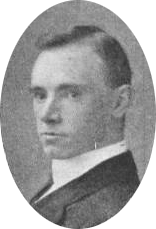
Why William Russell Flint matters
Sir William Russell Flint was one of the most commercially successful British watercolourists of the twentieth century, a Royal Academician and, from 1936, president of the Royal Society of Painters in Watercolour. He built a large public following on romanticized watercolours of women and Mediterranean landscapes, and his images were reproduced as prints on a scale that made him a household name well beyond the gallery world. For collectors, his market is a study in range: it stretches from mass-market prints to rare, museum-quality watercolours and oils, and knowing which category a given work falls into matters more than almost anything else.
- Born
- 1880-04-04, Edinburgh, Scotland
- Nationality
- Scottish
- Media
- Watercolour, Painting, Illustration, Printmaking
- Movement
- British watercolour tradition
- Education
- General schooling at Daniel Stewart's College and Edinburgh Institution, Edinburgh; apprenticed as a lithographic draughtsman at Banks & Co., Edinburgh, 1894 to 1900, with evening classes at the Royal Institution School of Art, Edinburgh; part-time study at Heatherley School of Fine Art, London, from 1900, plus independent study at the British Museum. No university degree is documented.
- Signature motifs
- Watercolours of women, Spanish and Mediterranean landscapes, Romantic genre scenes
- Representation
- "No current gallery or estate representation confirmed; market activity is concentrated in auction houses and specialist secondary-market dealers"
By the numbers
- GBP 88,900Highest documented auction saleGabrielle, Sotheby's London, 7 November 1991; some aggregated price databases cite a higher figure (a work titled Nicollet, around USD 556,942) without full lot details, so it is not used here as the confirmed record
- Elected 1933Royal AcademicianAssociate of the Royal Academy from 1924
- From 1936President, Royal Society of Painters in Watercolour
- 1947KnightedFor services to art
Biography
William Russell Flint was born on 4 April 1880 in Edinburgh, the son of the artist and watercolourist Francis Wighton Flint. He was educated at Daniel Stewart's College and the Edinburgh Institution before leaving school at around age fourteen. From 1894 to 1900 he was apprenticed as a lithographic draughtsman to Banks & Co. in Edinburgh, taking evening classes at the Royal Institution School of Art at the same time. In 1900 he moved to London, working as a medical illustrator and later for The Illustrated London News, while studying part time at the Heatherley School of Fine Art in Chelsea and independently at the British Museum.
Flint served with the Royal Naval Air Service during the First World War. In the following decades his practice shifted toward the watercolours of women in Spanish, Mediterranean, and pastoral settings for which he became best known, alongside landscapes and figure studies in oil and tempera. He was elected a member of the Royal Institute of Oil Painters in 1912, an Associate of the Royal Academy in 1924, and a full Royal Academician in 1933, then became president of the Royal Society of Painters in Watercolour in 1936. He was knighted for services to art in 1947.
Flint died in London in late December 1969 at the age of 89; sources give the exact date as either 27 or 30 December, and Rehs Galleries attributes his death to leukemia. By the sheer volume of his work in reproduction, he remained one of the most widely reproduced watercolourists of his generation.
Critical reception
Flint was recognized in his lifetime through the institutional route rather than the avant-garde one: Royal Academy membership, the presidency of the Royal Society of Painters in Watercolour, and a knighthood all point to establishment esteem for his technical control of watercolour. Commentary since has tended to note the same technical facility while questioning the repetitiveness of his favored subject, decorative depictions of women, as the picture-postcard reproduction of his prints outpaced serious critical engagement with his work. No verifiable verbatim critical quotation from a named critic in a major outlet could be confirmed for this profile.
Market
Flint's market divides between his unique watercolours and oils, and the large body of limited-edition and later reproduction prints issued under his name during and after his lifetime, which trade at very different price levels. A fully documented top-tier sale is Gabrielle, which sold for GBP 88,900 at Sotheby's London on 7 November 1991. Some aggregated auction databases report a higher all-time figure for a Flint painting (a work titled Nicollet, cited around USD 556,942), but without a confirmed auction house or sale date attached to that figure, it cannot be verified as the record here. Flint appears regularly but in relatively modest volume at UK and Commonwealth auction houses, and his results vary widely depending on subject, medium, and whether a work is an original or a print.
Top auction results
| Work | Price | Sale |
|---|---|---|
| Gabrielle (1991) | GBP 88,900 | Sotheby's, London, 1991-11-07 |
Selected exhibitions
| Years | Exhibition | Venues |
|---|---|---|
| 1906 to 1907 | Summer Exhibition | Royal Academy, London |
| 1909 | International exhibition | Venice |
| 1914 | International exhibitions | Venice and Berlin |
| 1922 | International exhibition of watercolours | Art Institute of Chicago |
| 1962 | Special exhibition and retrospective | Royal Academy Diploma Galleries, London |
Museum collections
- Victoria and Albert Museum, London
- British Museum, London
- Walker Art Gallery, Liverpool
- Whitworth Art Gallery, Manchester
- National Galleries of Scotland, Edinburgh
- Art Institute of Chicago
Awards and honors
- Elected member, Royal Institute of Oil Painters (ROI) (1912)
- Associate of the Royal Academy (ARA) (1924)
- Royal Academician (RA) (1933)
- President, Royal Society of Painters in Watercolour (1936)
- Knighted for services to art (1947)
Authentication and provenance
No catalogue raisonne.
No published catalogue raisonne exists for Flint. Given the volume of reproductions and limited-edition prints issued in his name during his lifetime and after his 1969 death, works are typically verified through provenance research, comparison with documented exhibition history, and specialist dealers or auction house department heads rather than a single certifying authority.
Primary reference: https://www.nationalgalleries.org/art-and-artists/artists/sir-william-russell-flint
What collectors should know
Because Flint's name is attached to a very large number of prints, reproductions, and posthumous editions in addition to unique watercolours and oils, the single most important step for a buyer is confirming exactly what category of object is being offered. There is no catalogue raisonne, so provenance, exhibition history, and consultation with specialist dealers or auction house watercolour departments carry more weight than they would for an artist with a settled scholarly record. Given the spread between a modest print and a museum-caliber watercolour, price comparisons across "a Flint" are only meaningful once the medium and edition status are established.
Further reading and resources
Data current as of 2026-07-11.

