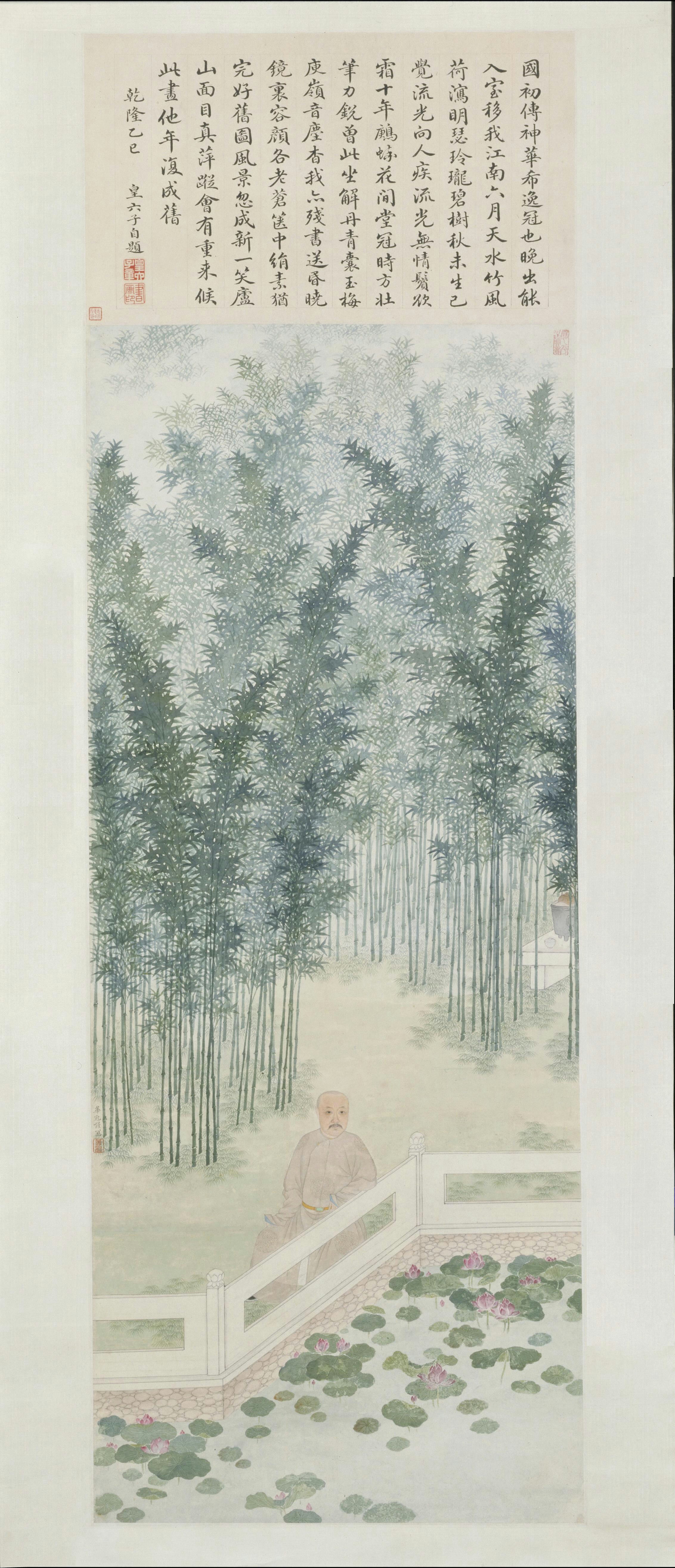
Why Yongrong matters
Yongrong is an unusual entry in an auction-facing artist roster: a Qing dynasty imperial prince, born 28 January 1744 as the sixth son of the Qianlong Emperor, who was also a working calligrapher, landscape painter, and poet. He is best known to art historians as the general editor of the Siku Quanshu, the vast imperial manuscript library project, which places his artistic output inside one of the most significant scholarly undertakings of the eighteenth century. For collectors, he matters less as an active auction name and more as a documented figure in Qing court art, whose surviving calligraphy and painting appear occasionally in museum collections and specialist auction house lots.
- Born
- 1744-01-28
- Nationality
- Chinese (Qing dynasty)
- Media
- Calligraphy, Painting
- Movement
- Qing dynasty court art
- Education
- Not documented in available sources. As a Qing imperial prince he would have received the classical education customary for princes of the court, but no specific tutors, curriculum, or dates are confirmed.
- Signature motifs
- Chinese landscape painting, Calligraphy
By the numbers
- 1744 to 1790LifespanSixth son of the Qianlong Emperor
- Prince Zhizhuang of the First RankPosthumous titleQing imperial honor
- Museum Rietberg, ZurichMuseum holdingWork dated 1779
- None publishedCatalogue raisonne
Selected works
Click any work to view it full screen.
Biography
Yongrong (Chinese: 永瑢), also romanized Yong Rong, was born into the Aisin Gioro clan on 28 January 1744, the sixth son of the Qianlong Emperor. He rose through a series of court titles during the Qianlong reign, including beile, before later being named Prince Zhizhuang and, posthumously, Prince Zhizhuang of the First Rank. Alongside his court duties he practiced calligraphy and Chinese landscape painting, wrote poetry, and held knowledge of astronomy and mathematics. His best documented calligraphic work is a manuscript titled Twenty-One Hymns to the Rescuer Mother of Buddhas. He served as general editor of the Siku Quanshu, the imperial encyclopedia and manuscript compilation that remains one of the major scholarly projects of the Qing dynasty. He died on 13 June 1790. Wikidata records the cause as natural causes, specifically typhoid fever, though this detail is drawn from a single reference source and has not been independently corroborated in the available dossier.
Critical reception
There is no body of modern art criticism specifically evaluating Yongrong as a painter or calligrapher in the way contemporary artists are reviewed. His standing rests instead on his documented historical role: sixth son of the Qianlong Emperor, holder of successive princely titles, and general editor of the Siku Quanshu, alongside surviving calligraphic and painted works that place him within the broader tradition of Qing imperial scholar art. A work attributed to him and dated 1779 is held by the Museum Rietberg in Zurich, which corroborates his activity as a painter outside the purely biographical record. No verbatim critical assessment from a named critic in a major outlet could be located and reproduced, so none is quoted here.
Market
No verified auction sale price for a work by Yongrong could be confirmed as of this writing. Christie's has listed at least one lot under the name Yong Rong (1743 to 1790), describing his court titles and lineage, but the available record for that lot does not disclose a realized price, sale date, or sale location, so no auction high can be stated with confidence. Separately, market databases and aggregator listings reference other individuals with similar romanized names, including a Yongrong Zhang described as born in 1948 with a single recorded watercolor sale, and a Yongrong Dai associated with commercial decorative reproductions born in 1979. Neither of these appears, on current evidence, to be connected to the eighteenth century Qing prince, and their sale records should not be attributed to him.
Museum collections
- Museum Rietberg, Zurich
Authentication and provenance
No catalogue raisonne.
No catalogue raisonne has been located for Yongrong. Authentication of Qing court calligraphy and painting of this kind is normally established through inscriptions, seals, and documented imperial provenance rather than a certificate program or published catalogue.
Primary reference: https://en.wikipedia.org/wiki/Yongrong
What collectors should know
Anyone researching this name should first confirm which "Yongrong" is meant. The auction-market and museum record points to the eighteenth century Qing dynasty prince and calligrapher (1744 to 1790), cross-referenced through Christie's lot documentation and the Museum Rietberg collection, rather than to any of several unrelated modern individuals who share the same or a similar romanized name. There is no catalogue raisonne and no gallery or estate representation for this artist; attribution rests on inscriptions, seals, and documented provenance. Because no confirmed public sale price could be located, collectors should treat any auction estimate or listing for "Yongrong" or "Yong Rong" with caution and verify it directly against the originating auction house record before relying on it.
Further reading and resources
Data current as of 2026-07-16.

