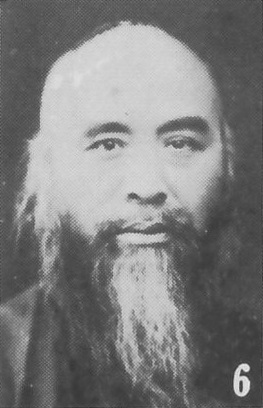
Why Yu Youren matters
Yu Youren stands at the intersection of modern Chinese political history and modern Chinese calligraphy. As an early leader of the Kuomintang and the longest-serving President of the Control Yuan in Republic of China history, he shaped the institutions of twentieth-century Chinese governance. As a calligrapher, he standardized cursive "grass" script for practical modern use and is remembered as one of the "Four Great Calligraphers of the Republic of China." For collectors, he represents a category distinct from Western contemporary art: a historical calligrapher whose standing rests on museum and institutional recognition and a broad, thinly documented secondary market rather than on a catalogue raisonne or gallery system.
- Born
- 1879-04-11, Sanyuan County, Shaanxi Province, Qing China
- Nationality
- Chinese
- Media
- Calligraphy, Ink on paper
- Movement
- Modern Chinese calligraphy, Republican-era Chinese art
- Education
- Traditional classical schooling in Shaanxi, including the Dao Academy, Weijing Academy, and Guanzhong Academy. Passed the juren civil-service examination in 1903. No modern university degree is documented.
- Signature motifs
- Cursive "grass" script, Standard cursive script system
By the numbers
- USD 121,000Auction high (documented)Calligraphy scroll, Clars Auction Gallery, Oakland, March 19, 2006. Not confirmed as a global all-time record.
- 1879 to 1964LifespanSanyuan, Shaanxi to Taipei, Taiwan
- 34 yearsControl Yuan presidencyRepublic of China, based in Taipei
- None publishedCatalogue raisonne
Biography
Yu Youren was born on April 11, 1879, in Hedaogang, Sanyuan County, Shaanxi Province, in the late Qing dynasty. He received a traditional classical education, studying at private schools and academies in Shaanxi, including the Dao Academy, Weijing Academy, and Guanzhong Academy. In 1903 he passed the juren civil-service examination, the highest level of the traditional examination system; no modern university degree is documented for him.
Yu became a revolutionary journalist and publisher and joined the movement that founded the Republic of China, later becoming an early leader of the Kuomintang. He held senior government posts, including vice minister of communications, founded Shanghai University in 1922 and served as its first principal, and was President of the Control Yuan for 34 years, reportedly the longest tenure in that institution's history. Throughout his political career he continued to develop his calligraphy, and in 1932 he founded the Standard Cursive Calligraphy Society and later published "A Thousand Words of Standard Cursive," a work intended to make cursive script more legible and teachable.
He relocated with the Nationalist government to Chongqing during the war and then to Taiwan in 1949, settling in Taipei. In his last years he lived at a retreat known as the Plum Garden. Yu Youren died of pneumonia on November 10, 1964, at Taipei Veterans General Hospital, at age 85. His remains were interred at Datun Mountain in Taipei's Yangmingshan National Park.
Critical reception
Institutional and museum framing consistently treats Yu Youren as a towering, dual-legacy figure: a central actor in the founding of the Republic of China and, separately, one of the era's most important calligraphers. Taiwan's Ministry of Culture describes him as the "Modern Sage of Cursive Script" and groups him with Tan Yankai, Hu Hanmin, and Wu Zhihui as the "Four Great Calligraphers of the Republic of China." Recent university and museum programming, including the University of Maryland Art Gallery's "Water on the Petal" and a cursive calligraphy exhibition at the National Art Museum of China in Beijing, has reinforced his position as a subject of ongoing scholarly and curatorial attention.
Market
The highest price documented with clear sale details in the research dossier is USD 121,000, paid for a calligraphy scroll at Clars Auction Gallery in Oakland, California, on March 19, 2006. Aggregator sites such as MutualArt report higher ceiling figures, up to roughly USD 2.2 million for works on paper and roughly USD 571,000 for paintings, but the underlying lot, price, house, and date for those figures could not be confirmed, so they are not treated as a verified record here. Because the readily available English-language auction record for Yu Youren is thin and does not fully capture results from major mainland Chinese, Taiwanese, or Hong Kong sale rooms, the USD 121,000 Clars result should be treated as the highest documented price rather than a confirmed global record. There is no standing commercial gallery or named estate representative; his work moves through general auction houses including Heritage Auctions, Clars Auction Gallery, and Christie's.
Top auction results
| Work | Price | Sale |
|---|---|---|
| Calligraphy scroll (specific title not given in source reporting) (2006) | USD 121,000 (USD 121,000) | Clars Auction Gallery, Oakland, California, USA, 2006-03-19 |
Selected exhibitions
| Years | Exhibition | Venues |
|---|---|---|
| Date not confirmed | Yu Youren: Water on the Petal | University of Maryland Art Gallery, College Park, USA |
| Date not confirmed | Cursive calligraphy exhibition (scale not confirmed) | National Art Museum of China, Beijing |
Museum collections
- Asian Art Museum, San Francisco
Awards and honors
- First National Literary Award, Ministry of Education, Republic of China (Taiwan) (1956)
- Posthumous honorific, 'Modern Sage of Cursive Script'; statue installed at the National Dr. Sun Yat-sen Memorial Hall, Taipei
Authentication and provenance
No catalogue raisonne.
No catalogue raisonne is documented for Yu Youren. Attribution and authentication of his calligraphy typically rely on provenance, museum-linked scholarship, and the specialist departments of auction houses that regularly handle his work, including Heritage Auctions, Clars Auction Gallery, and Christie's.
Primary reference: https://en.wikipedia.org/wiki/Yu_Youren
What collectors should know
There is no catalogue raisonne for Yu Youren, and attribution rests on provenance, museum-linked scholarship, and the judgment of the specialist Asian art departments at the auction houses that regularly handle his work. Reported prices vary enormously, from low four figures for smaller or uncertain-attribution pieces to the low six figures for the best-documented scrolls, so any single price point, including the USD 121,000 Clars result, should be read as one data point rather than a reliable index of value. Because so much of his surviving calligraphy sits in museum and institutional holdings rather than in a centralized, English-language auction record, and because English-language market data does not fully cover Greater China sale rooms, collectors should expect gaps in publicly available pricing and should treat any claim of an "all-time record" with caution.
Further reading and resources
Data current as of 2026-07-09.

