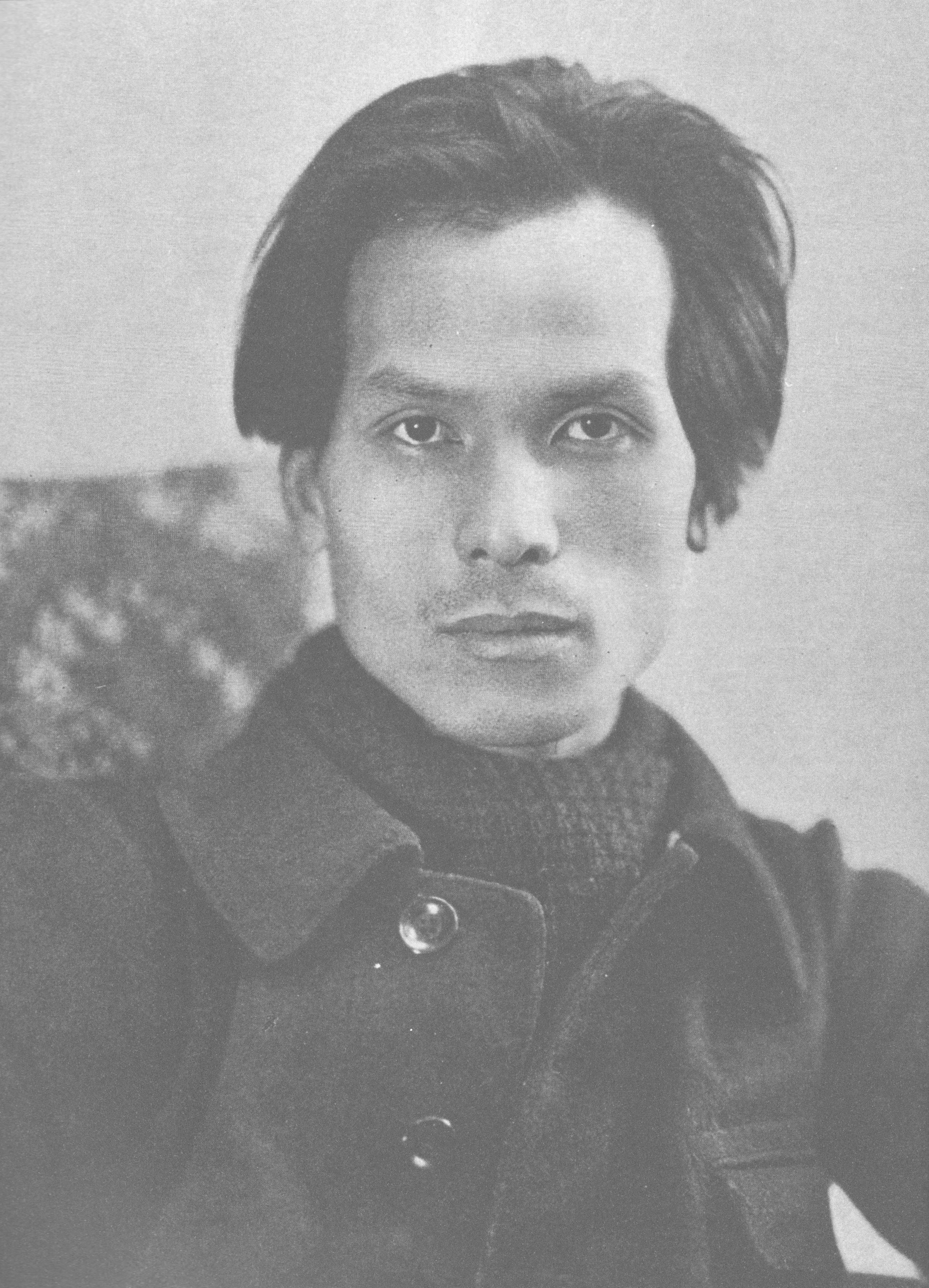
Why Yuzo Saeki matters
Yuzo Saeki (Saeki Yuzo) is one of the pivotal figures in early twentieth century Japanese Western-style painting, part of the first generation of Japanese artists to train in Paris and translate what they learned there into a distinct visual language. He is best known for dense, heavily worked paintings of Paris streets, walls, and shopfronts, made in a compressed four-year working life that ended with his death from tuberculosis at 30. For collectors, he represents a historically important but thinly traded artist whose legacy is stewarded almost entirely by Japanese museums rather than the commercial gallery system.
- Born
- 1898-04-28, Osaka, Japan
- Nationality
- Japanese
- Media
- Painting
- Movement
- "Yoga (Western-style painting)", "Fauvist Expressionism", "Japanese modernism"
- Education
- Tokyo School of Fine Arts (Tokyo Bijutsu Gakko), Western Painting Department, graduated 1923; Academie de la Grande Chaumiere, Paris, 1924 to 1926
- Signature motifs
- "Parisian streetscapes", "Peeling walls and advertisement posters", "Urban landscape as self-portrait"
By the numbers
- 1898 to 1928LifespanDied at 30 in Neuilly-sur-Marne, France
- 13th Nika Exhibition, 1926Nika PrizeSpecial display of 19 works, Tokyo
- Nakanoshima Museum of Art, OsakaPrimary collectionApproximately 60 works, the largest single Saeki holding
- None confirmedCatalogue raisonneProvenance research runs through museum scholarship
Selected works
Click any work to view it full screen.
Biography
Saeki was born on 28 April 1898 in Nakatsu, in what is now Kita Ward, Osaka, at the temple Kotokuji, where his father served as a Buddhist priest. He attended Osaka Prefectural Kitano Middle School from 1912 to 1917 and, while still a student, began studying Western-style oil painting under Rinsaku Akamatsu in Osaka. After graduating in 1917 he moved to Tokyo, studied at the Kawabata Painting School under Takeji Fujishima, and in April 1918 entered the Western Painting Department of the Tokyo School of Fine Arts, graduating in 1923.
In January 1924 Saeki traveled to Paris and enrolled at the Academie de la Grande Chaumiere. There he showed his work to the French Fauvist painter Maurice de Vlaminck, who is recorded as having criticized it as academic. The encounter is generally described as the turning point that pushed Saeki toward the rougher, more built-up surfaces and urban subject matter that define his mature work: peeling walls, advertisement posters, and the facades of small shops. Two of his paintings were accepted into the Salon d'Automne in Paris in 1925. He returned to Japan in 1926 and, in May, co-founded the "1930 Association" with fellow painters Katsuzo Satomi, Zentaro Kojima, Kanji Maeta, and Takanori Kinoshita, a group that promoted modernist Western-style painting in Japan. That September he was given a special display of nineteen works at the 13th Nika Exhibition in Tokyo, for which he received the Nika Prize.
Saeki returned to Paris in 1927 for a second, intensive period of painting streetscapes, working at a punishing pace. His health deteriorated through the following year, and he died on 16 August 1928 at age 30 in a hospital in Neuilly-sur-Marne, a suburb of Paris, of tuberculosis; some sources also cite a contributing nervous breakdown. In 1929 the 1930 Association organized a memorial exhibition of 89 of his works in Tokyo, followed by a showing in Osaka, helping establish his posthumous reputation.
Critical reception
Saeki's reputation rests heavily on institutional and museum framing rather than a large body of contemporary press criticism. Vlaminck's early dismissal of his work as academic is the most reliably documented critical episode of his lifetime, and it is consistently credited with reorienting his style toward the raw, textured urban paintings for which he is now known. Later institutional voices have been more admiring: the Pola Museum of Art, mounting an 80th-anniversary retrospective in 2008, described him as one of the foremost artists in Japanese modern art history, and the Nakanoshima Museum of Art has framed his Paris cityscapes as a form of self-portraiture, arguing that their weathered surfaces carry a sense of the painter's inner life. Recent retrospectives, including a 2023 exhibition at the Tokyo Station Gallery and further presentation at the Nakanoshima Museum, indicate continued curatorial interest in his short but concentrated body of work.
Market
No confirmed all-time auction record for Saeki could be established from available public sources; he does not appear on public lists of leading Japanese auction results, and no single sale could be verified as his benchmark price. His market is thin and largely domestic to Japan, running through Japanese auction houses and dealers rather than an international primary market, since he has no living representation or estate program. Collectors researching a specific work should expect to rely on Japanese auction databases and museum provenance records rather than a single, well-publicized market benchmark.
Selected exhibitions
| Years | Exhibition | Venues |
|---|---|---|
| 1925 | Salon d'Automne | Paris |
| 1926 | 13th Nika Exhibition (special display of 19 works, Nika Prize) | Tokyo |
| 1926 | First exhibition of the 1930 Association | Tokyo |
| 1929 | Memorial exhibition (89 works), organized by the 1930 Association | Tokyo, then Osaka |
| 2008 to 2009 | Saeki Yuzo, Enchanted by France | Pola Museum of Art, Hakone |
| 2023 | Saeki Yuzo: Emerging from the Urban Landscape | Tokyo Station Gallery |
| 2023 | Saeki Yuzo retrospective | Nakanoshima Museum of Art, Osaka |
Museum collections
- Nakanoshima Museum of Art, Osaka
- Artizon Museum, Tokyo
- Pola Museum of Art, Hakone
Awards and honors
- Nika Prize, 13th Nika Exhibition (1926)
Authentication and provenance
No catalogue raisonne.
No published catalogue raisonne has been confirmed for Saeki. There is no gallery or estate managing his authentication; the Nakanoshima Museum of Art in Osaka, which holds the largest single collection of his work, and other Japanese museums are the primary sources for provenance and attribution research.
Primary reference: https://artplatform.go.jp/artists/A1407
What collectors should know
Saeki has no gallery or estate representation; his legacy is concentrated in Japanese public museums, above all the Nakanoshima Museum of Art in Osaka, which holds roughly 60 works and is the largest single repository of his output. No catalogue raisonne has been confirmed, so provenance research depends on museum scholarship, exhibition histories, and documented private collections such as the Yamamoto Hatsujiro and Yoshitaro Wakimura holdings that underpin several institutional collections. No verifiable all-time auction record could be confirmed for this profile, and collectors should treat any single sale result with caution given the small, largely domestic pool of public transactions. Given the short working life, small surviving body of work, and absence of commercial market infrastructure, any acquisition should be paired with independent verification through the museums that steward his archive.
Further reading and resources
Data current as of 2026-07-18.

