Art Market Explainers | How the Market Works
Masterworks Research · October 2026
The best new work is placed before the show opens. Here is the ladder collectors climb to be offered it, what each rung costs, and whether the climb pays.
Collectors get access to sought-after art through relationships, and they usually build them in a set order: museum patron groups first, then acquisition committees, then the dealers, fair organizers and auction specialists who serve the same people. A new painting by an in-demand artist is typically offered before the exhibition opens, to museums and to collectors the dealer expects to keep it, so a stranger who arrives on opening night sees what is left. In New York the young-patron groups at MoMA, the Whitney, the Guggenheim and the Met cost $750 to $1,750 a year at their entry levels, according to the museums' own pages in October 2026, and the councils that fund acquisitions, with the leadership circles above them, run from $5,000 to $25,000 and up.
Investors should care because most art changes hands privately. Dealers sold $34.8 billion of the $59.6 billion in global art sales in 2025, according to the Art Basel and UBS Global Art Market Report, and the auction houses brokered just under another $4.2 billion privately [1]. Prices in that private market are rarely published, and the first offer on a scarce work goes to someone the seller already knows.
What You Need to Know
- In the primary market, where a gallery sells a work for the first time, the gallery chooses the buyer whenever demand exceeds supply.
- Museum patron groups are the usual first rung, from $750 a year at the Whitney to $25,000 or more for MoMA's Director's Council, and several councils fund what the museum buys.
- Art fairs open to invited guests before the public, and fair sales made up 35% of dealer turnover in 2025 [1].
- Christie's sold $1.5 billion privately in 2025, and its three largest sales of the year were private [2].
- Access costs more than dues, and an allocation in a falling artist market can lose money.
1. Why is the primary market closed to most buyers?
A gallery that represents a living artist sets the price of each new work and decides who may buy it. When an artist is in demand, a show can be spoken for before it opens, with images and prices sent privately to the gallery's best clients. Museums, trustees and members of acquisition committees tend to sit near the top of that list, followed by long-standing clients who have supported the artist and buyers the dealer expects to hold [3].
Dealers guard the order for practical reasons. A work bought at the gallery and flipped at auction a year later sets a public price for the artist that the gallery did not choose, and a weak result hurts everyone who owns the artist. Galleries often write resale restrictions or a right of first refusal into the invoice, so a buyer who wants to sell must offer the work back first [4]. A museum placement does the opposite: it takes a work off the market for good and adds to the artist's standing.
The 2026 market has loosened some of this. ARTnews reported in September 2026 that waiting lists are rarer than during the boom, though the New York advisor Alex Glauber told the magazine that "among discerning collectors there is still competition for quality examples of an artist's work" [5]. Just under half (49%) of the buyers that dealers sold to in 2025 were new to the business [1]. The scarcest works by the most sought-after artists still go first to people the gallery knows.
2. What do museum patron groups cost in New York?
Anyone can apply to the museum groups, which makes them the most open rung on the ladder, and they put a collector in the company of curators, artists, dealers and other collectors several times a year. Dues as published on each museum's website on October 6, 2026:
Museum · Program · Annual dues · Notes
MoMA · Young Patrons Council · $1,200 ($2,000 for two) · Ages 21 to 40; founded 1990 as the Junior Associates
MoMA · Photography Council · $5,000 ($6,000 dual) · Dues fund acquisitions for the photography collection
MoMA · Contemporary Arts Council · $7,000 ($8,000 dual), plus a $2,500 joining fee · Founded 1949; supports contemporary acquisitions
MoMA · Director's Council · from $25,000 · Programs with museum leadership
Whitney · Whitney Contemporaries · $750 (Contemporaries Patron $1,250) · Ages 21 to 40
Whitney · Artists Council · from $7,500 · Studio visits with emerging artists
Whitney · Director's Council · from $20,000 · Includes an annual multi-day art trip
Guggenheim · Young Collectors Council · $1,750 · Ages 21 to 40; meets twice a year on acquisitions
The Met · Apollo Circle · $1,500 (Apollo Circle Patron $3,500) · Ages 21 to 39 (to 45 at the Patron level)
The Met · Patrons Circle · $2,500 to $50,000 · Five levels, Insider to Luminary
The Met · The Modern Circle · $15,000 · By invitation; modern and contemporary department
Sources: [6], [7], [8], [10], [11].
Part of the fee is usually tax-deductible: at the Met, $899 of the $1,500 Apollo Circle fee, within legal limits [10]. Several groups also screen who joins. MoMA says its councils are "subject to approval" and restricts participation by some arts professionals, and the Met's curatorial Friends Groups, at $5,000 to $15,000, are "by invitation" with limited group sizes [6][12].
3. What do patron dues actually buy?
Each museum publishes a list of programs. The Guggenheim's Young Collectors Council offers curator-led tours, artist talks and private collection visits, and its members meet twice a year on acquisitions of emerging contemporary art; the museum says the group has funded more than 140 works over twenty years [8][9]. The Met's Modern Circle meets about eight times a year, tours exhibitions with curators while the museum is closed, visits studios and private collections, and travels abroad [11].
The dues also buy a seat at the studio visits and dinners where dealers, curators and collectors see each other. A dealer deciding who should be offered a painting knows which collectors sit on the museum's committees and which have helped the museum buy an artist's work. We think that recognition does more for a collector's buying than any benefit on the list. Several groups include fair access as well: the Met's Apollo Circle Patron level lists "VIP access to major art fairs," and the Whitney Contemporaries receive invitations to select fairs [7][10].
4. How do art fair VIP previews work?
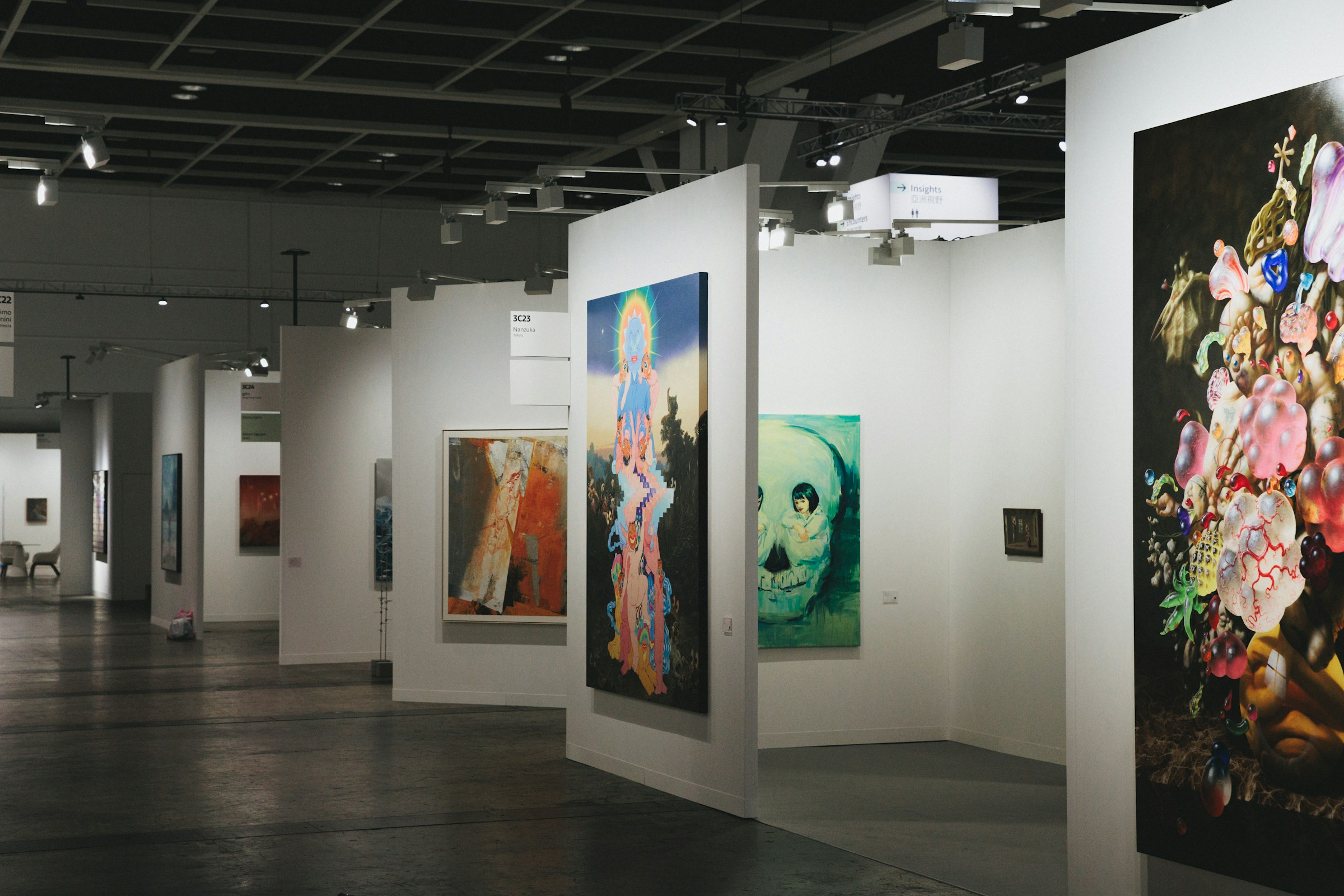
Every major fair opens to invited guests a day or two before the public. Art Basel ran invitation-only preview days in Basel on June 16 and 17, 2026, and under a new rule its participating galleries held back at least one major work from all pre-fair selling to show it for the first time in a "First Choice" hour on the opening morning [13]. Art Basel Paris has a gallery preview on October 20, invitation-only preview days on October 21 and 22, and public days from October 23 to 25 [14].
Some early access is for sale. Art Basel Paris offers a €120 Vernissage ticket for the afternoon of October 22 [14]. Frieze, whose London fair runs October 14 to 18, 2026, sells memberships, and one of them, Frieze Connect, is by application and promises what Frieze calls "premier access" to its fairs [15]. The Armory Show held its 2026 VIP Preview at the Javits Center on September 24, by invitation only [16]. Those early hours count because fair sales made up 35% of dealer turnover in 2025, their highest share since 2022 [1]. For how the fairs set prices for the season, see what Art Basel is and why it moves the market.
5. What do auction houses offer their best clients?
At auction, access means hearing about a work before it is public. Christie's Client Advisory team works with senior specialists on clients' purchases "both at auction and privately" [17]. Sotheby's Preferred, an invitation-only program, offers early access to auctions, notice of rare works before they are shown publicly, and out-of-hours viewing [18].
That access pays most at the private sales desks. Christie's sold $1.5 billion privately in 2025, about 24% of its total [2]. In the first half of 2026, Christie's reported more than $1 billion in private sales and Sotheby's $826 million, a record for the house [19]. Those works never reached a public catalogue, so the buyers were people the specialists called. Great works tend to come to market for the reasons the trade calls the three D's, death, divorce and debt, and a family that wants discretion often takes a private offer. We compare the two channels in private sales vs. public auctions.
Previews, the public side of the auction business, cost nothing. Sotheby's New York page states that "Sotheby's is free and open to the public," and anyone can walk a presale exhibition and question a specialist [20]. We cover how in auction previews: what they are and how to use one.
6. What does an art advisor do, and what does one cost?
An art advisor works for the buyer. A good one knows which galleries hold which artists, which works are actually available and how a dealer ranks its clients, and an advisor's introduction is often the fastest route onto a gallery's list. Advisors charge a percentage of each purchase, a yearly retainer or a project fee, on top of the price of the art [21].
Advisors need no license, so the written agreement does most of the work of protecting the client. The Association of Professional Art Advisors requires members to be paid by only one source per transaction and bars them from keeping inventory or taking work on consignment [22]. In March 2025 the New York advisor Lisa Schiff was sentenced to 30 months in prison for defrauding clients of about $6.5 million, money they had sent her for art purchases and sales [23]. Paying the gallery or auction house directly removes most of that risk.
7. Is access an investing edge, and what does it cost?
We think access is a real edge in a market where most of the best work trades privately and prices are set by people who know each other. A collector offered a painting at the gallery's price, by an artist whose work sells for more at auction, owns the difference on paper from the day of purchase. A collector who hears from a specialist about a privately offered Rothko sees inventory that never reaches a catalogue. We have long believed that access, more than knowledge, is what keeps most people from owning great art.
Dues are usually the smallest cost of access. Dealers favor buyers who support the whole program, so the larger costs are the purchases a dealer expects before offering the work a collector wants, the promise not to resell, and an advisor's fee on each acquisition [3].
An allocation is also a bet on an artist market, and that market can turn. Auction sales of Young Contemporary art, the category that drew the speculative buying of 2021 and 2022, were down 88% from their 2022 peak in the first half of 2026, according to ArtTactic data cited by Merrill [19]. In June 2026 Pace, one of the largest galleries, said it would cut about 50 artists from its roster [24]. A collector offered a sought-after young painter's work in 2021 had access and may still hold a work worth less than its invoice. Our view is that the artist market comes first, because even the best example by an artist whose market fails will probably end up worth little.
The ladder is open to anyone with patience and a budget, and it rewards collectors who climb it for years, buy steadily and hold. Masterworks Club is organized on the patron-circle model in New York, by application, with tours, previews and talks at galleries, museums and auction houses (what membership includes and how to apply).
Sources
- Arts Economics. "The Art Basel and UBS Global Art Market Report 2026." Art Basel and UBS, March 2026. https://www.artbasel.com/stories/the-art-basel-and-ubs-global-art-market-report-2026
- Anny Shaw. "Christie's and Sotheby's end 2025 with increased sales, thanks to luxury goods, trophy lots and private deals." The Art Newspaper, December 17, 2025. https://www.theartnewspaper.com/2025/12/17/christies-and-sothebys-end-2025-with-increased-sales-thanks-to-luxury-goods-trophy-lots-and-private-deals
- Artsy Editorial. "25 Art Market Terms Every Collector Should Know." Artsy, May 2025. https://www.artsy.net/article/artsy-editorial-25-art-market-terms-collector
- Taylor Wessing. "Artistic control or market manipulation? Enforceability of Non-Resale Clauses." Taylor Wessing, June 2024. https://www.taylorwessing.com/en/insights-and-events/insights/2024/06/artistic-control-or-market-manipulation
- Brian Boucher. "Some Collectors Feel 'Energized,' Some 'Burned': As the Curtain Rises on the New York Fall Season, Mixed Signals from Market Insiders." ARTnews, September 2026. https://www.artnews.com/art-news/market/new-york-fall-2026-market-season-preview-1234798210/
- The Museum of Modern Art. "Patron Program and Affiliate Groups." MoMA, accessed October 6, 2026. https://www.moma.org/support/patron-program-and-affiliate-groups/
- Whitney Museum of American Art. "Membership Benefits." Whitney Museum, accessed October 6, 2026. https://whitney.org/support/membership/benefits
- Solomon R. Guggenheim Museum. "Membership." Guggenheim, accessed October 6, 2026. https://www.guggenheim.org/membership
- Solomon R. Guggenheim Museum. "Individuals." Guggenheim, accessed October 6, 2026. https://www.guggenheim.org/contribute/individuals
- The Metropolitan Museum of Art. "Apollo Circle" and "Patrons Circle." The Met, accessed October 6, 2026. https://engage.metmuseum.org/members/apollo-circle/ and https://engage.metmuseum.org/members/patrons-circle/
- The Metropolitan Museum of Art. "The Modern Circle." The Met, accessed October 6, 2026. https://www.metmuseum.org/support/friends-groups/the-modern-circle
- The Metropolitan Museum of Art. "The Met's Friends Groups." The Met, accessed October 6, 2026. https://www.metmuseum.org/support/friends-groups
- Art Basel. "Art Basel unveils Basel Exclusive and highlights for its flagship show." Art Basel, 2026. https://www.artbasel.com/stories/art-basel-unveils-basel-exclusive-and-highlights-for-its-flagship-show
- Art Basel. "Art Basel Paris 2026 Press Dossier." Art Basel, 2026. https://www.artbasel.com/stories/art-basel-paris-2026-press-dossier
- Frieze. "Frieze London" and "Frieze Connect." Frieze, accessed October 6, 2026. https://www.frieze.com/fairs/frieze-london and https://www.frieze.com/frieze-connect
- The Armory Show. "Plan your visit." The Armory Show, accessed October 6, 2026. https://www.thearmoryshow.com/visit
- Christie's. "Client Advisory." Christie's, accessed October 6, 2026. https://www.christies.com/en/services/client-advisory/overview
- Sotheby's. "Welcome to Sotheby's Preferred." Sotheby's, accessed October 6, 2026. https://www.sothebys.com/en/preferred-login
- Merrill. "Art Market Update: Fall 2026." Merrill / Bank of America, September 2026. https://www.ml.com/articles/art-market-fall-update.html
- Sotheby's. "Sotheby's New York." Sotheby's, accessed October 6, 2026. https://www.sothebys.com/en/about/locations/new-york
- Ralph DeLuca. "A Collector's Guide to Choosing an Art Advisor." Cultured, February 26, 2025. https://www.culturedmag.com/article/2025/02/26/collector-how-to-choose-art-advisor/
- Association of Professional Art Advisors. "About APAA." APAA, accessed October 6, 2026. https://www.artadvisors.org/association-of-professional-art-advisors-mission
- Hyperallergic. "NYC Art Advisor Lisa Schiff Sentenced to 2.5 Years in Prison." Hyperallergic, March 19, 2025. https://hyperallergic.com/nyc-art-advisor-lisa-schiff-sentenced-to-2-5-years-in-prison/
- Hyperallergic. "Pace Cuts 50 Workers and 50 Artists, Citing a 'Broken' Gallery Model." Hyperallergic, June 4, 2026. https://hyperallergic.com/pace-cuts-50-workers-and-50-artists-citing-a-broken-gallery-model/
Disclosures
Investing involves risk. Past results are not indicative of future outcomes.
Masterworks is providing this communication as an agent for its issuer entities, not Masterworks Advisers. This material is produced by Masterworks for informational purposes only and does not constitute investment advice, a recommendation, or an offer or solicitation to buy or sell any security. Masterworks is not a licensed broker-dealer by the SEC or FINRA.
Masterworks can only make and accept sales after an offering statement has been filed, and "qualified", by the SEC. Any offers may be revoked before notice of qualification. Indications of interest involve no obligation. For further disclosure visit the offering documents filed with the SEC and Important Disclosures at masterworks.com/cd.
Forward-looking statements and internal estimates are based on assumptions that may prove incorrect, and actual outcomes may differ materially. Figures denoted in brackets are subject to confirmation. Investing in art and alternative assets involves risk, including loss of principal.
Art sales price data is comparative only. Each painting is unique and historical data is not a direct proxy for any specific painting or investment. Data represents whole art, not an investment into our offerings which includes fees and expenses. Any comparative images are not currently live offerings and are provided for educational purposes only.
Masterworks, LLC is located at 1 World Trade Center, 57th Floor, New York, NY 10007.
Membership is a social and educational program. It is not a security, it does not represent an investment in Masterworks or in any artwork, and it confers no ownership interest, economic interest or right to any return. Membership neither requires nor commits a member to make any investment, and the membership fee gives a member no preferential access, pricing or terms in connection with any Masterworks offering.